A stainless steel grade chart groups grades by family, and the grades here fall into four. Austenitic grades (303, 304, 316, 321) are non-magnetic and corrosion resistant. Ferritic grades (430, 446) are magnetic and cheaper. Martensitic grades (410, 420, 431, 440C) can be hardened. Duplex grades such as 329 combine strength with chloride resistance. All contain at least 10.5% chromium.
Stainless steel is not one material. It is a family of iron alloys with at least 10.5% chromium, which forms a thin, self-repairing oxide film on the surface. Change the other ingredients, especially nickel, carbon and molybdenum, and you change the crystal structure, and with it whether the steel is magnetic, whether it can be hardened, how it welds and how it handles chlorides. The chart below covers the thirteen grades we deal in, with limits from the ASTM bar and pipe standards.
The four families in one paragraph each
Austenitic (300 series): chromium plus enough nickel to give a face-centred cubic structure. Non-magnetic when annealed, very ductile, easy to weld, hardened only by cold work. This is where 304 and 316 sit, along with free-machining 303 and titanium-stabilised 321.
Ferritic (400 series, low carbon): chromium without significant nickel. Magnetic, cannot be hardened by heat treatment, cheaper than austenitic, and resistant to chloride stress corrosion cracking. 430 is the everyday grade; 446, with 23–27% chromium, is used for its scaling resistance at high temperature.
Martensitic (400 series, higher carbon): enough carbon to harden by quenching and tempering, like a tool steel. Magnetic, strong and wear resistant, but less corrosion resistant than austenitic grades. 410, 420, 431 and 440C climb in carbon and hardness roughly in that order, with 431 adding nickel for toughness.
Duplex: roughly half austenite, half ferrite. Magnetic, with higher yield strength than the austenitic grades and good resistance to chloride stress corrosion. 329 is an early duplex grade; modern grades such as 2205 are covered on our duplex steel page.
Which stainless steel grades are magnetic?
Ferritic, martensitic and duplex grades are magnetic: 410, 420, 430, 431, 440C, 446 and 329 will all pull a magnet firmly. Austenitic grades are non-magnetic when annealed but can pick up some magnetism after cold work or in welds. So a magnet tells you the family, not the grade, and never separates 304 from 316. We list the magnetic group together under magnetic stainless steel grades.
- Fe (balance)
- Cr
- Ni
- Mo
- Ti
- Other
View as table
| Grade | Cr | Ni | Mo | Ti |
|---|---|---|---|---|
| SS 303 | 18.0 | 9.0 | 0.0 | 0.0 |
| SS 304 | 18.5 | 9.2 | 0.0 | 0.0 |
| SS 304L | 18.5 | 10.0 | 0.0 | 0.0 |
| SS 316 | 17.0 | 12.0 | 2.5 | 0.0 |
| SS 316L | 17.0 | 12.0 | 2.5 | 0.0 |
| SS 321 | 18.0 | 10.5 | 0.0 | 5.0 |
| SS 410 | 12.5 | 0.0 | 0.0 | 0.0 |
| SS 420 | 13.0 | 0.0 | 0.0 | 0.0 |
| SS 430 | 17.0 | 0.0 | 0.0 | 0.0 |
| SS 431 | 16.0 | 1.9 | 0.0 | 0.0 |
| SS 440 | 17.0 | 0.0 | 0.0 | 0.0 |
| SS 446 | 25 | 0.0 | 0.0 | 0.0 |
| SS 329 | 26 | 3.5 | 1.5 | 0.0 |
Reading the composition columns
Values are percentages by weight, written the way the standards write them: a single number is a maximum, a range is a minimum and maximum. Austenitic, ferritic and martensitic grades are from ASTM A276 (bars and shapes), 303 from ASTM A582 (free-machining bars) and 329 from ASTM A789 (duplex tubing). Limits in other product standards, such as A240 for plate or A312 for pipe, differ slightly, so always check the standard you are buying to.
Two patterns stand out. Carbon climbs from 0.030 max in the L grades to 0.95–1.20 in 440C, which is what lets 440C reach knife-blade hardness. And only 316, 316L and 329 contain deliberate molybdenum, which is why they lead on pitting resistance; 440C may contain up to 0.75 Mo but not for that purpose.
View as table
| Grade | PREN |
|---|---|
| SS 410 | 12.5 |
| SS 420 | 13.0 |
| SS 431 | 16.0 |
| SS 430 | 17.0 |
| SS 440 | 17.0 |
| SS 303 | 18.0 |
| SS 321 | 18.0 |
| SS 304 | 18.5 |
| SS 304L | 18.5 |
| SS 446 | 25.0 |
| SS 316 | 25.2 |
| SS 316L | 25.2 |
| SS 329 | 30.4 |
Corrosion resistance, roughly ranked
For general and chloride corrosion, the grades in this chart fall into a rough order. The duplex 329 and the molybdenum grades 316 and 316L lead. Next come 304, 304L and 321, then 446 with its very high chromium, then 430 and 431. 303 sits below 304 because its sulphide inclusions act as pit starters. The plain martensitic grades 410 and 420 are lowest, and 440C performs best when hardened and polished. The ranking shifts with environment: high-chromium ferritic 446 is excellent in hot oxidising gases where its corrosion rank in water would not suggest it.
Use this as orientation only. Real selection depends on chemical, concentration, temperature and crevices, and for anything aggressive an isocorrosion table or a trial coupon is worth more than a ranking.
| Grade | UNS | EN / W.Nr. | Family | C | Cr | Ni | Mo / other | Magnetic |
|---|---|---|---|---|---|---|---|---|
| 303 | S30300 | 1.4305 | Austenitic | 0.15 max | 17.0–19.0 | 8.0–10.0 | S 0.15 min | No |
| 304 | S30400 | 1.4301 | Austenitic | 0.08 max | 18.0–20.0 | 8.0–11.0 | — | No |
| 304L | S30403 | 1.4307 / 1.4306 | Austenitic | 0.030 max | 18.0–20.0 | 8.0–12.0 | — | No |
| 316 | S31600 | 1.4401 | Austenitic | 0.08 max | 16.0–18.0 | 10.0–14.0 | Mo 2.00–3.00 | No |
| 316L | S31603 | 1.4404 | Austenitic | 0.030 max | 16.0–18.0 | 10.0–14.0 | Mo 2.00–3.00 | No |
| 321 | S32100 | 1.4541 | Austenitic | 0.08 max | 17.0–19.0 | 9.0–12.0 | Ti 5×(C+N) min, 0.70 max | No |
| 410 | S41000 | 1.4006 | Martensitic | 0.08–0.15 | 11.5–13.5 | — | — | Yes |
| 420 | S42000 | 1.4021 | Martensitic | 0.15 min | 12.0–14.0 | — | — | Yes |
| 430 | S43000 | 1.4016 | Ferritic | 0.12 max | 16.0–18.0 | — | — | Yes |
| 431 | S43100 | 1.4057 | Martensitic | 0.20 max | 15.0–17.0 | 1.25–2.50 | — | Yes |
| 440C | S44004 | 1.4125 | Martensitic | 0.95–1.20 | 16.0–18.0 | — | Mo 0.75 max | Yes |
| 446 | S44600 | ≈ 1.4749 | Ferritic | 0.20 max | 23.0–27.0 | 0.75 max | N 0.25 max | Yes |
| 329 | S32900 | ≈ 1.4460 | Duplex | 0.08 max | 23.0–28.0 | 2.5–5.0 | Mo 1.00–2.00 | Yes |
Matching grade to job
- General fabrication, tanks, food equipment: 304 or 304L
- Salt, brine, coastal, pharma water: 316 or 316L (see our 304 vs 316 guide)
- High-volume turned parts, nuts, shafts on autolathes: 303
- Welded parts in 425–815 °C service, exhaust and furnace parts: 321
- Pump shafts, valve trim, fasteners needing moderate hardness: 410 or 431
- Cutlery, surgical tools, moulds: 420
- Bearings, valve seats, high-wear parts: 440C
- Decorative trim, appliance panels, indoor use on a budget: 430
- Furnace parts and burner nozzles in oxidising heat: 446
Welding by family
Austenitic grades are the easiest stainless steels to weld, with L grades or 321 preferred when welds will see corrosive service. 303 is a poor welding grade because its sulphur causes hot cracking. Ferritic 430 welds but the weld zone can become coarse-grained and brittle. Martensitic grades need preheat and post-weld tempering to avoid cracking, and 440C is generally not welded. Duplex 329 needs controlled heat input to keep its phase balance. When a drawing calls for welding a magnetic grade, check the procedure before buying.
A note on 303 and 321
303 is 304 with deliberate sulphur, at least 0.15%, which forms manganese sulphide inclusions that break chips cleanly. The machining gain is real, but corrosion resistance and weldability drop, so 303 is a poor choice for welded or marine parts. 321 adds titanium, at least five times the carbon plus nitrogen, so carbon ties up with titanium instead of chromium during welding or service in the sensitising range. That keeps intergranular corrosion away at elevated temperatures where an L grade would not.
Grades not in this chart
Duplex 2205, super duplex and nickel alloys such as Inconel and Hastelloy go beyond the 300 and 400 series and are covered under our special alloys. 200 series grades, which replace part of the nickel with manganese, are common in utensils and furniture but are not part of the range described here.
Forms we supply in these grades
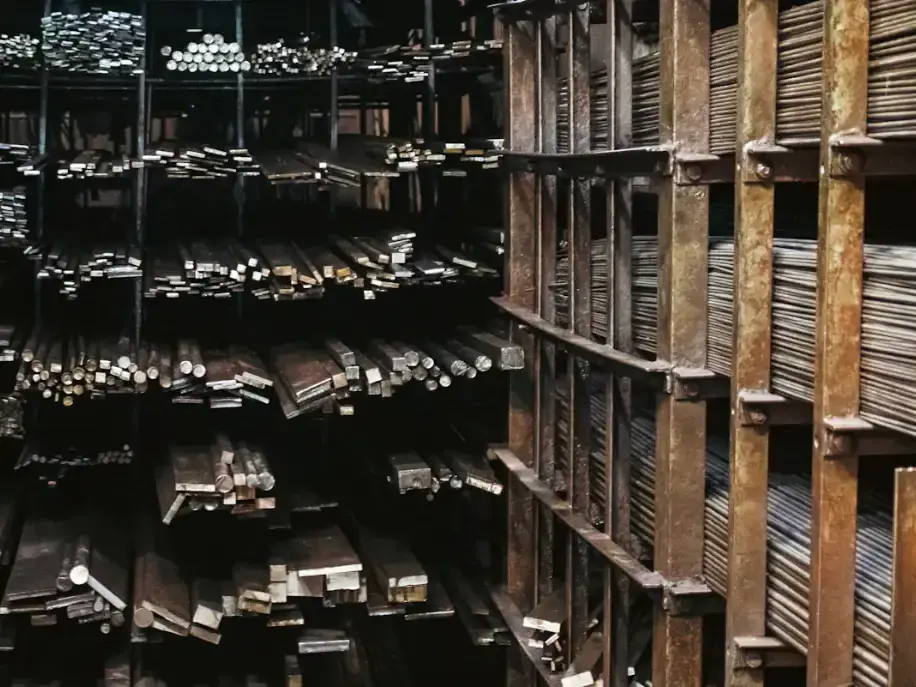
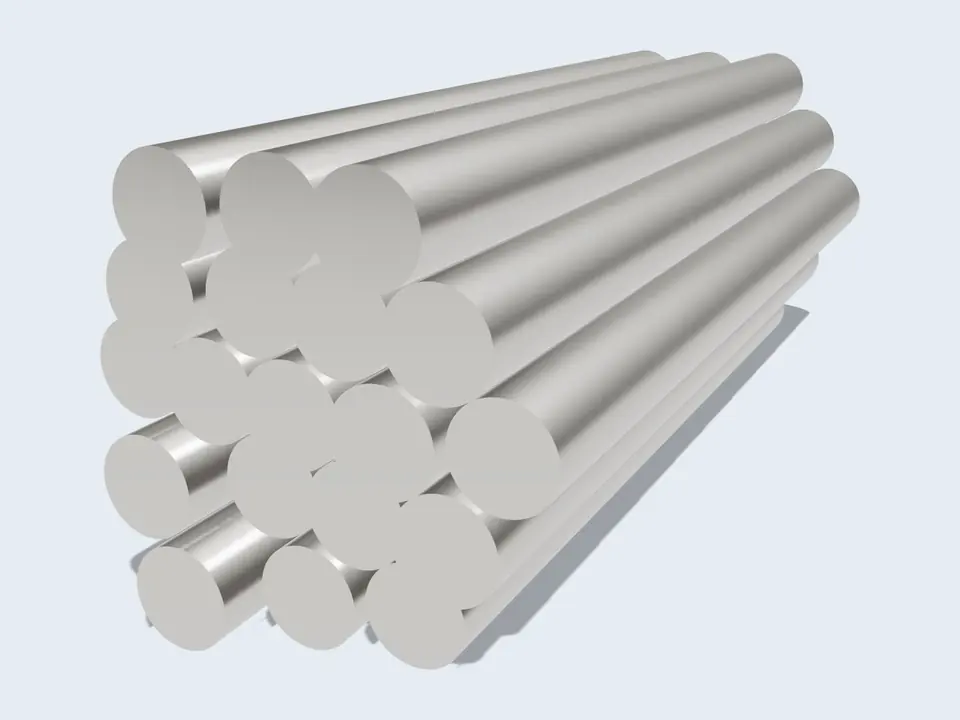
All the grades in this chart are offered in round, square and hex stainless bars, wire, pipe, tube and sheet, with test certificates. Availability varies more for the magnetic grades than for 304 and 316, so give the grade, form, size and quantity in your enquiry and we will confirm what can be supplied.
Frequently asked questions
What are the main types of stainless steel?
There are five main families: austenitic (such as 304 and 316), ferritic (430, 446), martensitic (410, 420, 440C), duplex (329, 2205) and precipitation-hardening (17-4 PH). They differ in crystal structure, which controls magnetism, hardenability, weldability and corrosion resistance.
What does the L in 316L mean?
L means low carbon. 316L and 304L are limited to 0.030% carbon in ASTM A276 and A240, against 0.08% for 316 and 304 in A276 (0.07% for 304 in A240). The lower carbon reduces chromium carbide formation during welding, protecting the heat-affected zone from intergranular corrosion.
What is the difference between 200 series and 300 series stainless steel?
200 series austenitic stainless steels replace part of the nickel with manganese and nitrogen, which lowers cost. 300 series grades rely on nickel. 200 series grades generally have lower corrosion resistance, especially to chlorides and acids, so 300 series is preferred for process plant, food and pressure equipment.
Which stainless steel is easiest to machine?
303 is the standard free-machining stainless steel. Its minimum 0.15% sulphur forms inclusions that break chips and reduce tool wear, so it suits high-volume turning. The cost is lower corrosion resistance and poor weldability compared with 304.
Which stainless steel grades can be hardened by heat treatment?
Martensitic grades such as 410, 420, 431 and 440C can be hardened by heating, quenching and tempering, much like carbon tool steel. Austenitic and ferritic grades cannot be hardened by heat treatment; austenitic grades gain strength only through cold working.
Is 430 stainless steel good quality?
430 is a sound ferritic grade for the right job. With 16–18% chromium and only residual nickel (0.75% max), it is cheaper than 304 and resists mild indoor corrosion well, so it suits appliance panels, trim and kitchen parts. It is less formable and weldable than 304 and is not suited to chloride or wet outdoor service.