
SS 316 stainless steel for salt, chlorides and chemicals
SS 316 (UNS S31600) is an austenitic stainless steel containing 2–3% molybdenum, which gives it much better resistance to pitting and crevice corrosion from chlorides than 304. It is used in coastal, chemical, pharmaceutical and food-processing equipment. Jubilant Impex supplies 316 pipe, bar and sheet in Bangalore with a test certificate.
SS 316 specifications
Per ASTM A240 (plate, sheet and strip), UNS S31600, weight %
| C | 0.08 max |
|---|---|
| Mn | 2.00 max |
| P | 0.045 max |
| S | 0.030 max |
| Si | 0.75 max |
| Cr | 16.0–18.0 |
| Ni | 10.0–14.0 |
| Mo | 2.00–3.00 |
| N | 0.10 max |
ASTM A240 (annealed)
| Tensile strength | 515 MPa min |
|---|---|
| Yield strength (0.2% offset) | 205 MPa min |
| Elongation in 50 mm | 40% min |
| Hardness | 217 HB max / 95 HRBW max |
Typical values
| Density | 8.0 g/cm³ |
|---|---|
| Elastic modulus | 193 GPa |
| Mean thermal expansion, 0–100 °C | 15.9 µm/m·°C |
| Thermal conductivity at 100 °C | 16.3 W/m·K |
| Specific heat, 0–100 °C | 500 J/kg·K |
| Electrical resistivity | 0.74 µΩ·m |
Designations in other standards
| UNS | S31600 |
|---|---|
| EN / W.Nr. (DIN) | 1.4401 / X5CrNiMo17-12-2 |
| JIS | SUS316 |
| BS | 316S31 |
Available forms
Enquire about SS 316
Tell us grade, size, quantity and delivery location. Every consignment ships with a test certificate.
Request a quoteWhatsApp +91 98441 25506Or call 080-41159995
How SS 316 measures up
- Fe 68%
- Cr 17.0%
- Ni 12.0%
- Mo 2.5%
View as table
| Element | Nominal % |
|---|---|
| Fe | 68% |
| Cr | 17.0% |
| Ni | 12.0% |
| Mo | 2.5% |
View as table
| Property | Specified |
|---|---|
| Tensile strength | 515 MPa min |
| Yield strength | 205 MPa min |
View as table
| Grade | PREN |
|---|---|
| SS 303 | 18.0 |
| SS 321 | 18.0 |
| SS 304 | 18.5 |
| SS 304L | 18.5 |
| SS 316 | 25.2 |
| SS 316L | 25.2 |
Molybdenum is the whole story with 316. Two to three percent of it, plus a little extra nickel to keep the structure austenitic, turns ordinary 18/8 into a grade that can live with salt, brine and many process chemicals that would pit 304 within a season.
People often call it marine grade. That label is useful but slightly optimistic, and this page explains why.
What does molybdenum actually do?
Stainless steel survives because of a thin chromium oxide film on its surface. Chloride ions attack that film at weak points and start pits. Once a pit forms, the chemistry inside it turns acidic and the pit grows downward faster than the surface around it.
Molybdenum strengthens the passive film and helps it heal, so pits are harder to start and slower to grow. Engineers compare grades using PREN (pitting resistance equivalent number), roughly Cr + 3.3 × Mo + 16 × N. Typical 304 lands around 18 to 20. Typical 316 lands around 24. That gap is the difference between staining on a sea-facing railing and a railing that stays bright.
Is 316 really marine grade?
For atmospheric marine exposure, coastal buildings, boat fittings above the waterline and handrails at the seafront, 316 is a sound choice and clearly better than 304. Regular rinsing keeps it looking good.
Fully immersed in warm seawater, especially in crevices under gaskets, bolts or marine growth, 316 can still pit and crevice-corrode. For permanent seawater immersion, pumps and offshore pipework, engineers often move up to duplex or super-duplex steels. See our duplex steel page for that step. Our marine and offshore page covers material choice for coastal and shipboard work.
| Property | 316 | 304 |
|---|---|---|
| Chromium | 16.0–18.0% | 17.5–19.5% |
| Nickel | 10.0–14.0% | 8.0–10.5% |
| Molybdenum | 2.00–3.00% | None specified |
| Typical PREN | About 24 | About 18–20 |
| Tensile / yield, min | 515 / 205 MPa | 515 / 205 MPa |
| Chloride pitting resistance | Good | Limited |
| Relative cost | Higher | Lower |
Where 316 pays for itself
316 costs more than 304 because of the molybdenum and extra nickel. It earns that back wherever 304 would fail early. In South India that often means coastal plants near Mangaluru, Karwar or Chennai, sugar mills and distilleries handling acidic juice and spent wash, salt-laden food processing, pharmaceutical plants with aggressive cleaning agents, and chemical plants dealing with dilute sulphuric acid or chloride-bearing streams.
- Pitting and crevice corrosion resistance well above 304
- Better resistance to dilute sulphuric and phosphoric acids
- Somewhat higher creep strength than 304 at high temperature
- Same ease of welding, forming and polishing as 304
316 or 316L?
Straight 316 allows up to 0.08% carbon, while 316L is limited to 0.030%. For welded equipment going into corrosive service, 316L is the safer choice because it resists sensitisation in the heat-affected zone. Standard 316 keeps a higher minimum strength and is preferred for some bar, fastener and higher-temperature uses. As with 304, a lot of today's material is dual-certified 316/316L.
Fabricating 316 without losing the advantage
The molybdenum only helps if the surface is clean and the welds are done properly. Most early failures we hear about in 316 equipment start at a weld or at a spot contaminated with carbon steel, not in the parent metal.
Use 316 or 316L filler so the weld metal keeps its molybdenum. Welding 316 with 308 filler leaves a weld bead with lower pitting resistance than the plate around it. Remove heat tint after welding by pickling paste or bath, then passivate. Use stainless-only wire brushes and grinding discs, and do not store 316 sheet on bare carbon steel racks where iron particles can transfer to it. These steps cost little and add years of service in chloride conditions.
Which standard to quote for 316
State the product standard on your enquiry, not just the grade. ASTM A240 covers 316 plate, sheet and strip. ASTM A312 covers pipe, while A269 and A213 cover tube. ASTM A276 and A479 cover bar, and A182 covers forged flanges and fittings. Chemistry limits are close across them, but test requirements and tolerances differ, and your inspector will check the certificate against the standard named on the purchase order.
Supply from our Bangalore stock
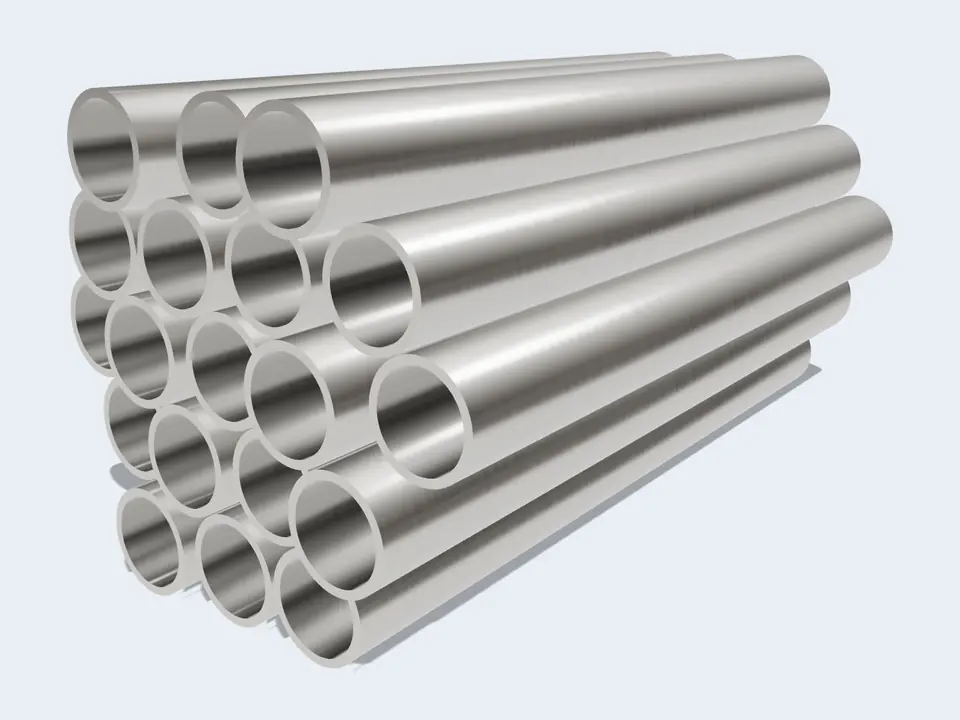
We supply 316 as seamless and ERW pipe and tube, capillary tube, round, square and hex bar, wire, sheet, strip, angles, channels, flanges and pipe fittings. Shim, perforated and corrugated sheet are also available in 316. Sizes are confirmed at enquiry, and each consignment comes with a test certificate through a government-recognised test house. For a cost-benefit view against 304, read our 304 vs 316 guide.
Where SS 316 is used
Questions about SS 316
Still unsure? Call 080-41159995 or WhatsApp +91 98441 25506 and we will answer from the trade desk.
Why is 316 stainless more expensive than 304?
316 contains 2–3% molybdenum and more nickel, 10–14% against 8–10.5% in 304. Both are costly alloying elements and their prices move with global metal markets. The extra cost buys significantly better resistance to chloride pitting and many acids.
Does 316 stainless steel rust in seawater?
316 resists splash and salt air well, but fully submerged in seawater it can suffer pitting and crevice corrosion, particularly in warm water, stagnant conditions or under gaskets and fouling. For continuous immersion, duplex or super-duplex stainless steels or copper-nickel alloys are usually specified.
Can 316 stainless be used for boat and jetty fittings?
Yes, 316 is the usual choice for deck hardware, railings, cleats and jetty fittings above the waterline, where it resists salt spray far better than 304. Rinse it with fresh water regularly and avoid tight crevices that trap seawater. For parts permanently below the waterline, consider duplex grades.
How can I check if steel is 316 or 304?
The reliable way is chemical analysis. A test certificate should show 2.00–3.00% molybdenum for 316. On site, a handheld XRF or spark spectrometer gives a PMI reading in seconds. Molybdenum test drops also exist. A magnet test cannot separate the two grades.
Is 316 better than 304 for food equipment?
For most foods 304 is perfectly adequate. 316 is the better choice when the product or cleaning regime involves salt, brine, chlorides or acids, such as pickles, sauces, cheese brine or chlorinated sanitisers. Many dairy and pharma plants use 316L for product-contact surfaces for that reason.
Keep exploring
Non-Magnetic (Austenitic) Stainless Steel Grades
Austenitic stainless steel grades are the nickel-bearing 300 series: non-magnetic when annealed and hardenable only by cold work.
View details →
SS 316L
SS 316L (UNS S31603) is 316 stainless steel with carbon held to 0.030% maximum.
View details →
SS 304
SS 304 (UNS S30400) is an austenitic stainless steel with about 18% chromium and 8% nickel, which is why it is called 18/8.
View details →
304 vs 316 Stainless Steel
The main difference between 304 and 316 stainless steel is molybdenum.
View details →
Marine & Offshore
Marine grade metals are alloys that resist seawater corrosion: 316L stainless for deck hardware and fittings, duplex for seawater…
View details →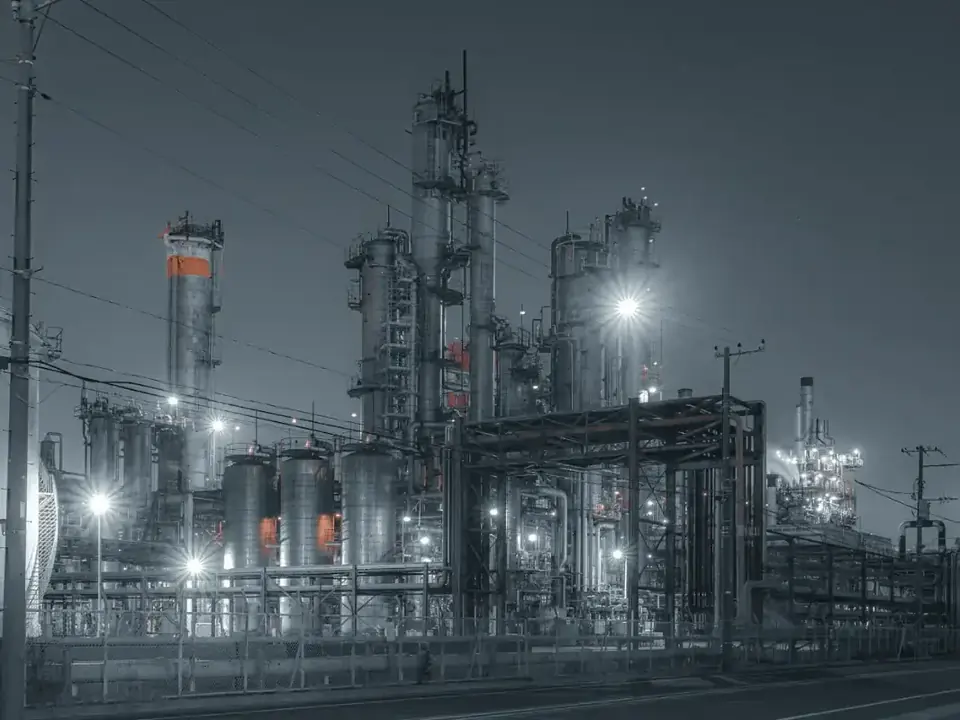
Chemical & Process Plants
In chemical plants the metal is chosen by the fluid it handles.
View details →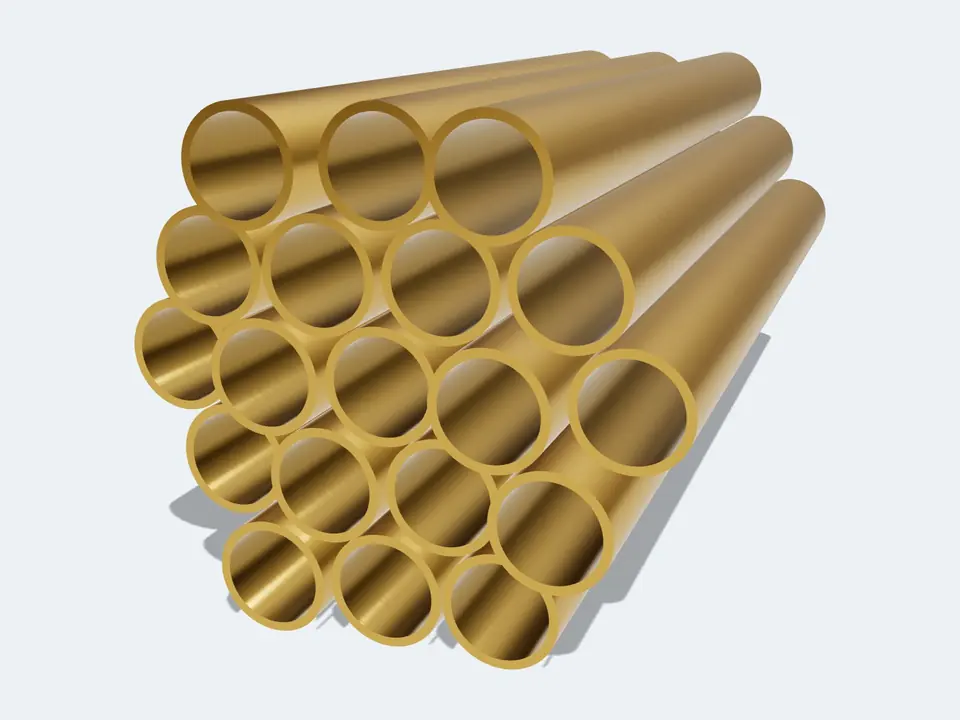
Sugar Mills & Distilleries
Sugar mill tubes are the heat-exchange tubes in juice heaters, evaporators and pans, traditionally drawn in 70/30 brass for its…
View details →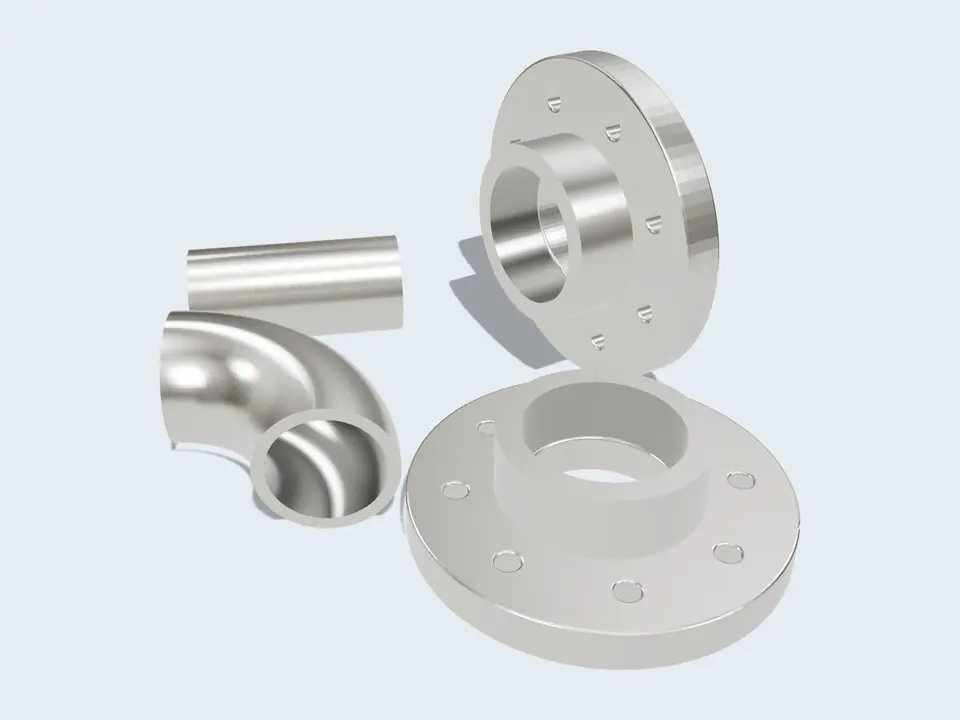
Stainless Steel Pipe Fittings & Flanges
SS pipe fittings join stainless pipe and tube by butt welding (ASME B16.9, ASTM A403), socket welding or threading (ASME B16.11,…
View details →Need SS 316 with a test certificate?
Send the material, grade, size and quantity. We confirm availability and price, with the test certificate details.