
SS 303 stainless steel, the grade turners ask for by name
SS 303 (UNS S30300) is an 18/8 austenitic stainless steel with at least 0.15% sulphur added so chips break short and tools last longer. It is chosen for turned parts such as shafts, nuts, bushes and valve components. Jubilant Impex supplies 303 bar and wire from S.P. Road, Bangalore, with a test certificate.

SS 303 specifications
Per ASTM A582 (free-machining stainless bar), UNS S30300, weight %
| C | 0.15 max |
|---|---|
| Mn | 2.00 max |
| P | 0.20 max |
| S | 0.15 min |
| Si | 1.00 max |
| Cr | 17.0–19.0 |
| Ni | 8.0–10.0 |
Typical values
| Density | approx. 8.0 g/cm³ |
|---|---|
| Thermal conductivity at 100 °C | 16.2 W/m·K |
| Electrical resistivity at 20 °C | 0.72 µΩ·m |
| Magnetic response (annealed) | Non-magnetic; slight response after cold work |
Designations in other standards
| UNS | S30300 |
|---|---|
| EN / W.Nr. (DIN) | 1.4305 / X8CrNiS18-9 |
| JIS | SUS303 |
| BS | 303S31 |
Enquire about SS 303
Tell us grade, size, quantity and delivery location. Every consignment ships with a test certificate.
Request a quoteWhatsApp +91 98441 25506Or call 080-41159995
How SS 303 measures up
- Fe 73%
- Cr 18.0%
- Ni 9.0%
View as table
| Element | Nominal % |
|---|---|
| Fe | 73% |
| Cr | 18.0% |
| Ni | 9.0% |
View as table
| Metal | Density |
|---|---|
| Aluminium | 2.70 g/cm³ |
| Antimony | 6.68 g/cm³ |
| Zinc | 7.14 g/cm³ |
| Tin | 7.29 g/cm³ |
| Duplex 2205 | 7.80 g/cm³ |
| Carbon & mild steel | 7.85 g/cm³ |
| Stainless 304 | 7.93 g/cm³ |
| Incoloy 825 | 8.14 g/cm³ |
| Inconel 625 | 8.44 g/cm³ |
| Brass 70/30 | 8.53 g/cm³ |
| Gun metal | 8.72 g/cm³ |
| Monel 400 | 8.80 g/cm³ |
| Phosphor bronze | 8.86 g/cm³ |
| Hastelloy C276 | 8.89 g/cm³ |
| Nickel | 8.90 g/cm³ |
| Copper | 8.94 g/cm³ |
| Lead | 11.34 g/cm³ |
View as table
| Grade | PREN |
|---|---|
| SS 303 | 18.0 |
| SS 321 | 18.0 |
| SS 304 | 18.5 |
| SS 304L | 18.5 |
| SS 316 | 25.2 |
| SS 316L | 25.2 |
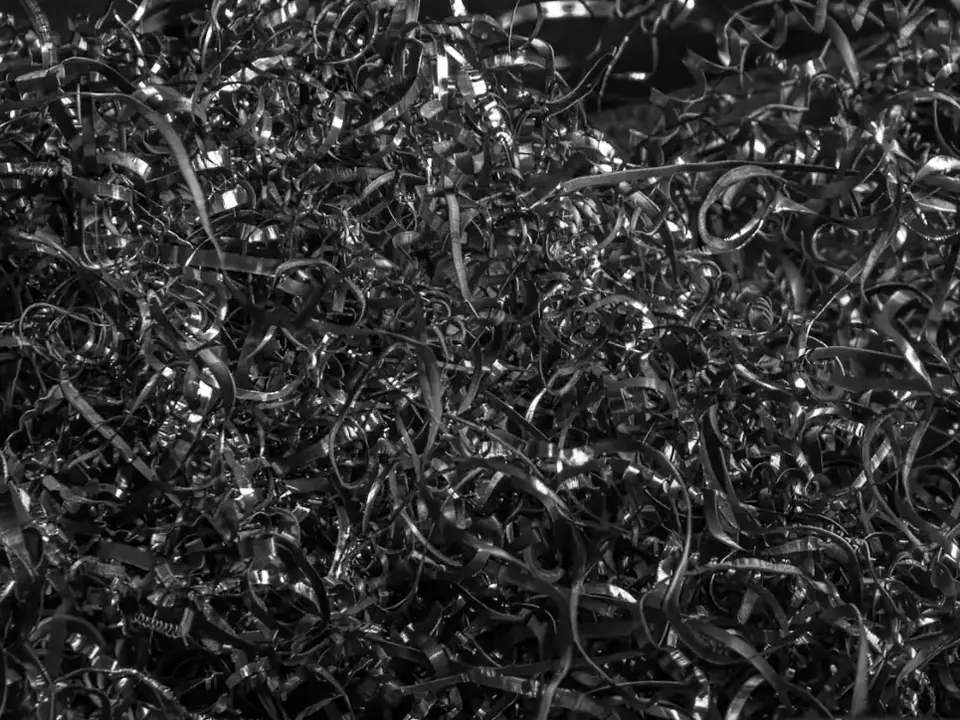
Ask any CNC setter who has fought long, stringy 304 swarf wrapped round a part and they will tell you why 303 exists. It is basically 304 with sulphur deliberately added. That one change makes it the easiest austenitic stainless to turn, drill and thread.
The trade-off is real, though. You lose some corrosion resistance and nearly all of the weldability. This page covers what 303 is good for, where it lets you down, and how to order SS 303 bar from us without surprises.
Why 303 machines so much faster than 304
Plain 304 is tough to cut for two reasons. It work-hardens quickly in front of the tool, and it produces continuous chips that do not want to break. Inserts wear, the job needs frequent chip clearing, and surface finish suffers once the edge builds up.
In 303 the added sulphur combines with manganese to form manganese sulphide inclusions. These sit in the steel as fine stringers along the rolling direction. When the tool passes, the chip fractures at these inclusions instead of tearing off in one ribbon. The result is short, broken chips, lower cutting forces and more parts per insert edge.
For a sliding-head auto or a CNC lathe running thousands of small parts, that adds up fast. It is why so many precision component shops in Peenya and Bommasandra keep 303 hex and round bar on the rack for fittings, spindles and fasteners.
What the sulphur costs you
The same inclusions that break chips also weaken the steel in a few places. Be honest with yourself about these before you switch a drawing from 304 to 303.
- Corrosion resistance is lower than 304. Sulphide inclusions are starting points for pitting, especially in chloride or acidic service.
- Welding is a poor idea. 303 is prone to hot cracking in the weld and heat-affected zone, so it is not used for fabricated or pressure parts. If a part must be welded, 304 or 304L is the answer.
- Cold heading, tight bending and heavy forming are not recommended because ductility across the grain is reduced.
- It does not harden by heat treatment. Like 304, it gains strength only by cold work.
| Property | 303 | 304 |
|---|---|---|
| Sulphur | 0.15% min | 0.030% max |
| Chip formation | Short, broken chips | Long, stringy chips |
| Machinability | Best of the austenitic grades | Fair; work-hardens at the tool |
| Weldability | Poor (hot cracking) | Excellent |
| Corrosion resistance | Lower than 304 | Good general resistance |
| Cold heading / bending | Not recommended | Good |
| Typical forms | Bar, rod, wire | Every form: pipe, sheet, bar, wire |
Where 303 earns its place
303 is the right call when a part is mostly machined, will not be welded, and lives indoors or in mildly corrosive service. Think shafts for small pumps and gearboxes, nuts and bolts, bushes, screw-machine parts, instrument components and valve parts that sit in clean water or air.
If the part goes into seawater, a chloride-rich process or a hygienic line that sees aggressive cleaning chemicals, use SS 304 or SS 316 and accept the slower machining. A cheaper cycle time does not help if the component pits in service.
Passivate the parts after machining
Machining leaves free iron from tooling on the surface and exposes sulphide inclusions. On 303 this matters more than on 304, because those exposed sulphides are where rust spots and pits usually begin. A proper passivation treatment after machining dissolves the surface iron and lets the chromium oxide film re-form evenly.
Free-machining grades need gentler handling in the passivation bath than 304, since a strong acid can attack the sulphides and leave a frosted or pitted look. ASTM A967 includes treatments suitable for these grades. If your parts are going to a plating or finishing shop, tell them the material is 303 so they choose the right process.
Reading the chemistry on a 303 test certificate
The governing bar specification for 303 is ASTM A582, which covers free-machining stainless bars. The number to check first is sulphur. It must be 0.15% minimum. If a certificate marked 303 shows sulphur around 0.030%, you have been sent 304 that has been relabelled, and it will machine like 304.
Phosphorus is also allowed higher than in 304 (up to 0.20%). Chromium and nickel sit in the usual 18/8 window. Every lot we supply carries a test certificate through a government-recognised test house, so these values are on paper before the bar reaches your shop. Our guide on how to read a test certificate explains each column.
Ordering SS 303 from Jubilant Impex
303 is mostly a bar and wire grade. We supply bright round bar, hex bar and square bar, plus wire and rod for auto-lathe feed. Bright drawn bar is commonly available in small diameters suited to screw machines, with larger rounds in peeled or turned condition. Tell us the size, length and tolerance you need and we will confirm what we can supply.
For the full range of bar shapes see our stainless steel bars page. If you are unsure whether 303 is right for a particular drawing, send it across on WhatsApp and we will tell you plainly.
Where SS 303 is used
Questions about SS 303
Still unsure? Call 080-41159995 or WhatsApp +91 98441 25506 and we will answer from the trade desk.
Should 303 parts be passivated after machining?
Yes, for any part going into wet or corrosive service. Machining leaves iron particles from tooling on the surface and exposes sulphide inclusions. Passivation removes the free iron and restores an even chromium oxide film. Use a treatment suited to free-machining grades, since harsh acid baths can etch the sulphides.
Which is better, 303 or 304 stainless steel?
Neither is better overall. 303 machines far more easily because of its added sulphur, so it suits turned parts. 304 has better corrosion resistance, welds well and can be formed, so it suits fabricated equipment, pipework and anything in wetter or more aggressive service. Choose by how the part is made and where it will live.
Is 303 stainless steel magnetic?
In the annealed condition 303 is essentially non-magnetic because its structure is austenitic, like 304. Heavily cold-drawn bar or machined surfaces can show a slight pull to a magnet because some austenite transforms during cold work. This does not mean the material is wrong grade.
Does 303 stainless steel rust?
It resists rust well in normal indoor air and clean water, but less well than 304. The manganese sulphide inclusions can act as pit initiation sites in chloride-bearing or acidic conditions, and you may see light staining on machined surfaces in humid coastal air. Passivation after machining helps restore the surface.
Can 303 stainless steel be hardened?
Not by heat treatment. 303 is austenitic, so quenching does nothing to its hardness. It can only be strengthened by cold working such as cold drawing. If you need a hardenable stainless that still machines reasonably, look at a martensitic grade like 410 or 420 instead.
How can I tell 303 from 304 on a test certificate?
Check the sulphur value. ASTM A582 requires 303 to have at least 0.15% sulphur, while 304 is limited to 0.030% maximum. Phosphorus can also be higher in 303. If the certificate says 303 but sulphur is low, the bar will machine like 304.
Keep exploring
Non-Magnetic (Austenitic) Stainless Steel Grades
Austenitic stainless steel grades are the nickel-bearing 300 series: non-magnetic when annealed and hardenable only by cold work.
View details →
SS 304
SS 304 (UNS S30400) is an austenitic stainless steel with about 18% chromium and 8% nickel, which is why it is called 18/8.
View details →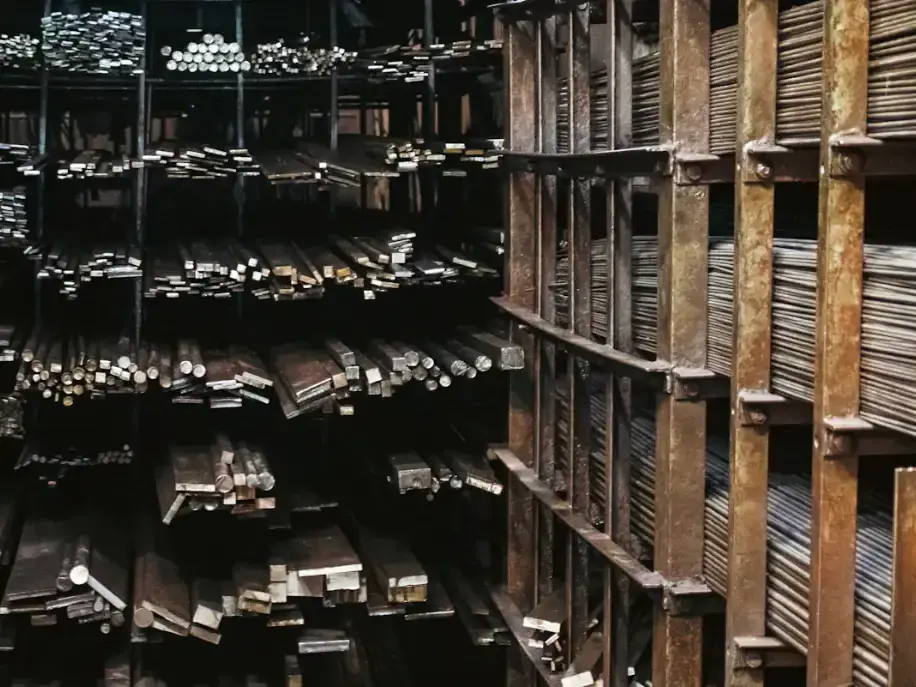
Stainless Steel Round, Square & Hex Bars
Jubilant Impex is an SS round bar supplier in Bangalore for round, square and hexagonal stainless bar in grades 303, 304, 304L,…
View details →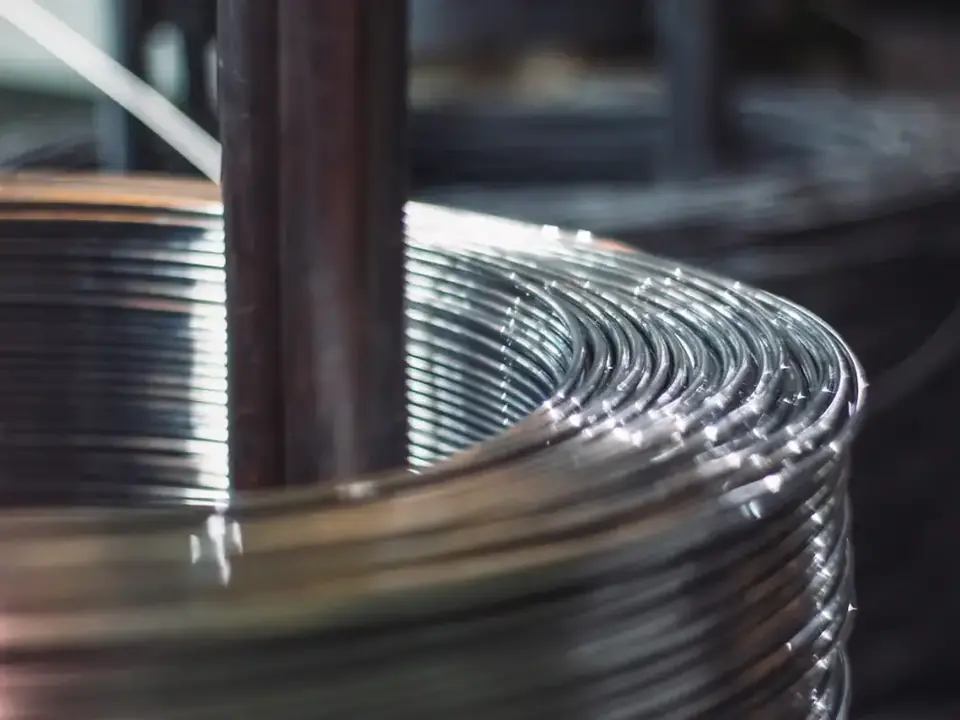
Stainless Steel Wire
Jubilant Impex is a stainless steel wire supplier in Bangalore for 304, 316 and other 300 and 400 series grades in round, square…
View details →Engineering & Machining
Machine shops buy bar stock by how it cuts and what the part must do.
View details →
How to Read a Mill Test Certificate
To read a mill test certificate, first match the heat number on the certificate to the marking on the material.
View details →
SS 410
SS 410 (UNS S41000) is a martensitic stainless steel with 11.5–13.5% chromium and 0.08–0.15% carbon.
View details →Need SS 303 with a test certificate?
Send the material, grade, size and quantity. We confirm availability and price, with the test certificate details.