
- Home
- All Products
- Electroplating Anodes
Electroplating Anodes: Flat and Oval Nickel Anodes
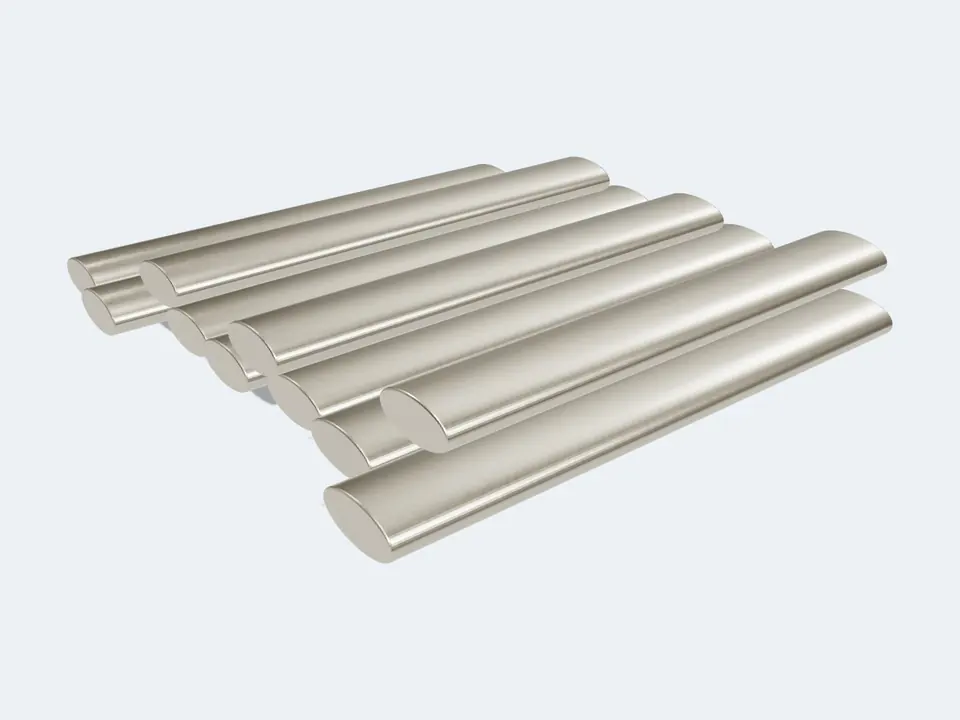
Nickel anodes are the soluble electrodes that replace the nickel deposited on parts in a nickel plating bath. They are made from high-purity nickel, commonly 99.9 percent or better, and supplied as flat or oval bars that hang on hooks inside anode bags. Jubilant Impex is a nickel anode supplier in Bangalore offering both shapes.
Electroplating Anodes: grades and products

Flat Nickel Anodes
A flat nickel anode is a rectangular slab or plate of refined nickel, usually 99.9 percent nickel or higher, hung on a hook in a…
View details →Oval Nickel Anodes
An oval nickel anode is an elliptical bar of refined nickel, hung on a hook inside an anode bag, used as the soluble anode in…
View details →Electroplating Anodes by the numbers
View as table
| Metal | Density |
|---|---|
| Aluminium | 2.70 g/cm³ |
| Zinc | 7.14 g/cm³ |
| Tin | 7.29 g/cm³ |
| Stainless 304 | 7.93 g/cm³ |
| Brass 70/30 | 8.53 g/cm³ |
| Nickel | 8.90 g/cm³ |
| Copper | 8.94 g/cm³ |
| Lead | 11.34 g/cm³ |
A nickel bath is only as steady as its anodes. When they dissolve evenly, nickel content stays in range, the deposit is bright and ductile, and the chemist spends less time adding salts. When they go passive or shed sludge, the tank tells you through rough deposits, pitting and creeping voltage.
Our product sheet lists electroplating anodes, nickel anodes in flats and ovals. Bangalore and Hosur have a dense cluster of job platers and in-house plating lines serving the auto, fastener and electrical industries, and this page is written for the people who run those tanks.
What does the anode actually do?
In nickel electroplating, current flows from the anode, through the electrolyte, to the work hung on the cathode bar. Nickel leaves the anode as ions and the same amount, in theory, plates onto the work. A soluble nickel anode therefore does two jobs: it completes the circuit and it replenishes the bath.
By Faraday's law, one ampere-hour moves about 1.095 grams of nickel. A tank running at 500 amperes for an eight-hour shift will dissolve close to 4.4 kg of nickel from the anodes, assuming close to full efficiency. That arithmetic is the starting point for planning how much anode material to keep on hand.
Flat or oval: choosing the shape
Flat anodes are slabs or plates with a hole or hook at the top. They pack closely along the anode bar and suit narrow tanks and work that is itself flat. Details are on the flat nickel anodes page.
Oval anodes are elliptical bars. The rounded edges spread current more evenly than a sharp-edged slab and offer more surface per hook. They are a long-standing choice for general rack plating. See oval nickel anodes for sizing and handling.
| Form | How it is used | Notes |
|---|---|---|
| Flat anode (slab or plate) | Hung directly on hooks, bagged | Compact; suits narrow tanks and flat work |
| Oval anode (elliptical bar) | Hung directly on hooks, bagged | Even current distribution, more area per hook |
| Rounds, squares, pellets | Loaded into titanium baskets | Keeps area constant as metal dissolves; Jubilant Impex lists flat and oval only |
Bags, hooks and housekeeping
Bar anodes should hang in close-fitting anode bags of polypropylene or similar cloth. The bag holds back the fine particles and residues that would otherwise drift onto the work and cause roughness. Hooks should be titanium or another material that will not dissolve in the bath, and must make firm contact with the anode bar.
Keep anode-to-cathode area roughly constant, replace anodes before they become thin slivers, and wash bags at every major tank clean. Plating chemistry is a wider topic; our electroplating and surface finishing page covers the other materials those shops buy from us.
Purity and paperwork
Impurities in the anode end up in the bath. Copper and zinc cause dark deposits in low-current areas, and iron causes roughness. That is why plating anodes are made from electrolytic or refined nickel and why you should see the analysis. Jubilant Impex supplies anodes with a test certificate from a Government-recognised test house on request, showing nickel content and the main impurities.
When you ask for a quote, give us the bath type, tank dimensions, typical current and the anode shape and size you use now. As a nickel anode supplier in Bangalore we would rather match what your bath already runs on than suggest a change you did not ask for.
Questions about Electroplating Anodes
Still unsure? Call 080-41159995 or WhatsApp +91 98441 25506 and we will answer from the trade desk.
What is an anode in electroplating?
The anode is the positive electrode in a plating tank. Current flows from it through the solution to the parts being plated, which are the cathode. In nickel, copper and zinc plating the anode is usually made of the plating metal itself, so it dissolves and replaces the metal that deposits on the parts.
Why are anode bags used in nickel plating?
Anode bags trap fine particles and insoluble residue released as the nickel dissolves. Without a bag, that material can drift through the solution and settle on the work, causing roughness and nodules. Bags are usually polypropylene, must fit the anode closely, and need regular washing or replacement to keep solution flowing through them.
How much nickel does a plating tank consume?
In theory 1.095 grams of nickel per ampere-hour, from Faraday's law for divalent nickel. Multiply your rectifier current by plating hours to estimate it. For example, 300 amperes for 100 hours is 30,000 ampere-hours, or about 33 kg of nickel. Real consumption also includes drag-out losses and anode scrap.
Can stainless steel be used as an anode for nickel plating?
Not as a substitute for nickel anodes in a normal Watts bath. Stainless steel would either dissolve and contaminate the bath with iron and chromium, or behave as an insoluble anode, which means nickel must be replenished with salts and the chemistry changes. Soluble nickel anodes are the standard choice.
What purity should nickel anodes be?
Plating anodes are made from refined nickel, commonly 99.9 percent nickel or better, with low copper, iron, zinc and lead. Purity matters because impurities in the anode dissolve into the bath and show up as dark, rough or brittle deposits. Ask for the analysis on the test certificate.
Keep exploring
Flat Nickel Anodes
A flat nickel anode is a rectangular slab or plate of refined nickel, usually 99.9 percent nickel or higher, hung on a hook in a…
View details →Oval Nickel Anodes
An oval nickel anode is an elliptical bar of refined nickel, hung on a hook inside an anode bag, used as the soluble anode in…
View details →Electroplating & Surface Finishing
Electroplating materials are the metals a plating line consumes or conducts through: nickel anodes for nickel baths, lead-tin or…
View details →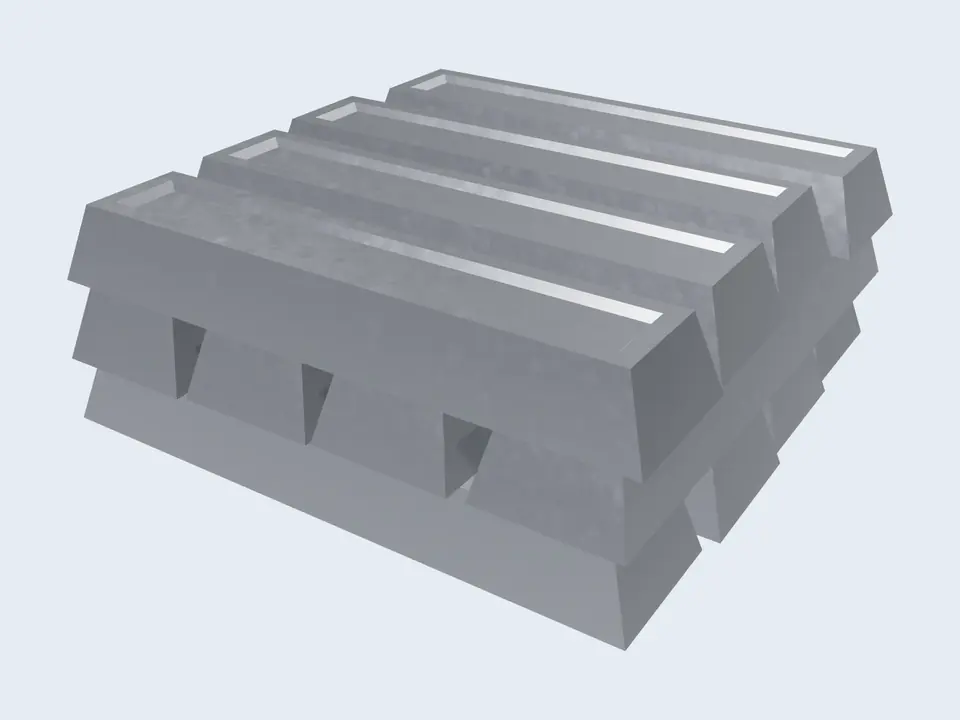
Ingots
Jubilant Impex supplies lead, zinc and tin ingots and aluminium LM4 and LM6 alloy ingots from Bangalore.
View details →
Zinc
A zinc anode is a block of zinc alloy fixed to steel so that the zinc corrodes instead of the steel.
View details →
How to Read a Mill Test Certificate
To read a mill test certificate, first match the heat number on the certificate to the marking on the material.
View details →
Request a Quote
To request a quote for stainless steel pipes or any metal from Jubilant Impex in Bangalore, send the material, grade, standard,…
View details →Buying electroplating anodes? Send us the spec.
Send the material, grade, size and quantity. We confirm availability and price, with the test certificate details.