
- Home
- All Products
- Copper
- Hard Drawn Copper
Hard Drawn Copper: Stronger Conductor, Small Conductivity Trade-off
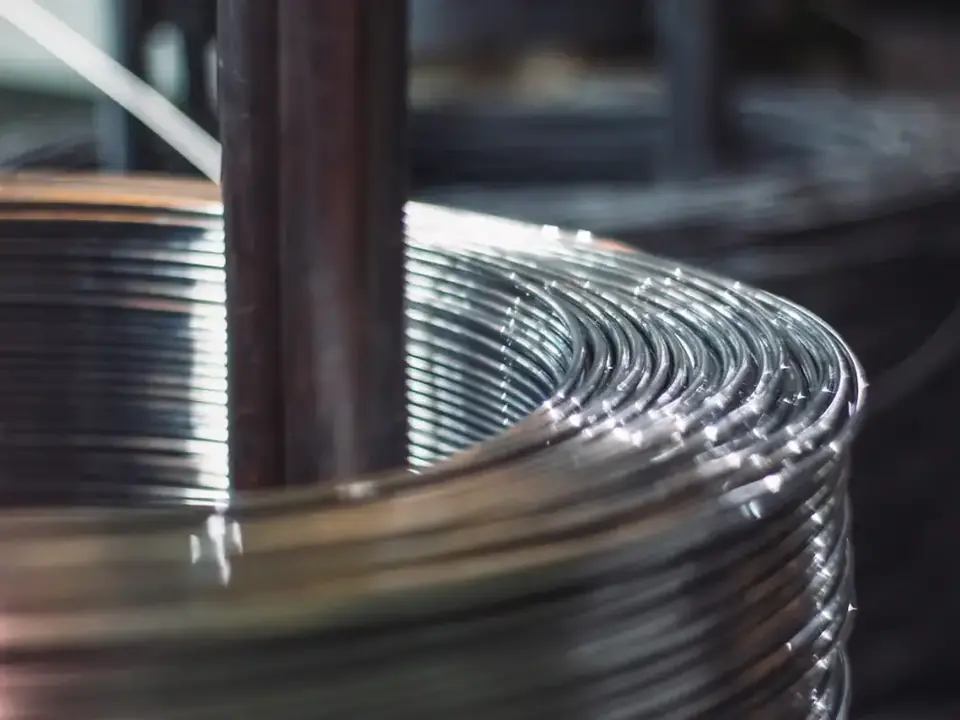
Hard drawn copper is copper that has been cold drawn or rolled to size and not annealed afterwards. Cold work roughly doubles its tensile strength compared with soft copper, while conductivity falls only to about 96–97 % IACS. Jubilant Impex in Bangalore supplies E.C. copper wire, bars and strip in this temper for overhead, earthing and busbar work.
Hard Drawn Copper specifications
ASTM B1 (hard drawn round copper wire, selected sizes)
| 11.684 mm (0.4600 in) | 340 MPa min, elongation 3.8 % min in 10 in |
|---|---|
| 8.252 mm (0.3249 in) | 375 MPa min, elongation 2.4 % min |
| 4.191 mm (0.1650 in) | 425 MPa min, elongation 1.5 % min |
| 2.052 mm (0.0808 in) | 455 MPa min, elongation 1.1 % min |
| 1.024 mm (0.0403 in) | 460 MPa min, elongation 1.0 % min |
| Resistivity at 20 °C, 11.68–8.25 mm | 0.15775 Ω·g/m² max (97.16 % IACS) |
| Resistivity at 20 °C, under 8.25–1.02 mm | 0.15940 Ω·g/m² max (96.16 % IACS) |
Enquire about Hard Drawn Copper
Tell us grade, size, quantity and delivery location. Every consignment ships with a test certificate.
Request a quoteWhatsApp +91 98441 25506Or call 080-41159995
How Hard Drawn Copper measures up
View as table
| Property | Specified |
|---|---|
| 11.684 mm | 340 MPa min |
| 8.252 mm | 375 MPa min |
| 4.191 mm | 425 MPa min |
| 2.052 mm | 455 MPa min |
| 1.024 mm | 460 MPa min |
View as table
| Material | Conductivity |
|---|---|
| Copper E.C. (Cu-ETP) | 100% IACS |
| Aluminium (EC grade 1350) | 61% IACS |
| Aluminium 6063 | 53% IACS |
| Brass 70/30 | 28% IACS |
| Phosphor bronze | 15% IACS |
| Carbon steel | 10% IACS |
| Stainless 304 | 2.5% IACS |
Every time copper is pulled through a die or passed through rolls cold, its grains get stretched and tangled. The metal gets stiffer and stronger with each pass, and slightly worse at conducting electricity. Stop there, without annealing, and you have hard drawn copper.
That trade is usually a good one. A bare conductor strung between poles, a long busbar run that must not sag, or a down conductor clipped to a wall all benefit from the extra strength far more than they suffer from losing three percent of conductivity.
What is hard drawn copper used for?
Anywhere the copper has to carry its own weight, resist stretching or hold a straight line over a span. The classic use is bare overhead conductor and catenary or messenger wire, which is what ASTM B1 was written for. In buildings and plants you will see it as:
- Bare earth conductors run exposed on cable trays, walls and structures, where soft wire would kink and sag between clips
- Lightning protection down conductors and roof conductors, where stiffness keeps runs neat and tight
- Busbars and long straight flats in panels and bus ducts, where an H04 bar keeps its shape under its own weight and short-circuit forces
- Commutator segments, contact bars and machined parts that need a harder surface than soft copper offers
- Straight tube lengths, which are supplied drawn (hard) so they stay straight on the rack and in the pipe run
How much conductivity does hard drawing cost?
Less than most buyers expect. ASTM B1 sets the maximum resistivity of hard drawn wire at 0.15775 Ω·g/m² for diameters from 8.25 to 11.68 mm, which works out to 97.16 % IACS, and at 0.15940 Ω·g/m² (about 96.16 % IACS) for smaller wire down to 1.02 mm. Compare that with 100 % for annealed copper. For a 50 m earth run the difference is a fraction of a milliohm.
Where that few percent does matter is in heavily loaded busbars sized tightly for temperature rise. Panel designers working from conductivity tables should check whether their numbers assume annealed or hard copper.
| Property | Hard drawn (H04) | Soft annealed (O60) |
|---|---|---|
| Conductivity | About 96–97 % IACS min (ASTM B1) | 100 % IACS min (ASTM B3) |
| Tensile, bar per ASTM B187 | 33–50 ksi depending on size | 28–37 ksi |
| Elongation | Low (1–15 % depending on form) | High (25–35 % for wire and bar) |
| Bending | Springs back, limited radius | Bends tight, stays put |
| Crimping into lugs | Not preferred | Preferred |
| Typical use | Overhead and exposed conductors, busbars | Windings, cables, buried earth grids |
Strength numbers you can quote
In wire, strength goes up as the diameter comes down, because thin wire has been through more dies. ASTM B1 asks for at least 340 MPa at 11.68 mm and 460 MPa at 1.02 mm. Soft annealed wire, by comparison, is usually in the 200–250 MPa region and is specified by elongation rather than strength. In bar, ASTM B187 sets H04 rod over 3/8 to 1 in. at 40–55 ksi tensile, against 28–37 ksi for soft O60 bar.
Hardness tells the same story and is quicker to check at goods inward. ASTM B187 gives Rockwell F 80 minimum as a guide for H04 rod over 3/8 to 1 in., while soft O60 bar is 50 maximum on the same scale. A portable hardness tester at the receiving bay will separate a mixed lot in minutes.
When hard drawn is the wrong choice
Hard copper does not like being bent sharply, and it fights back. It springs back after bending, cracks if folded tight, and resists crimping into lugs designed for soft conductor. Transformer and motor windings, flexible links, conductor that will be formed on site, and buried earth grid conductor that is laid loose in a trench are all better in soft annealed copper. If a job needs both, half hard (H02) is the compromise temper for bars and strip.
Temper names on drawings and POs
The same condition goes by several labels, and mixing them up is a common reason for a rejected lot.
- H04 or 'hard' in ASTM practice (ASTM B601 temper codes); H02 is half hard, O60 is soft annealed
- HD for hard drawn and HB for half hard in Indian standards such as IS 1897 for electrical strip
- R-values in European standards, such as R220, R240, R290 and R360 for Cu-ETP sheet and strip, which state the minimum tensile strength in MPa directly
Can it be softened again later?
Yes. Annealing (heating the copper so it recrystallises) restores softness and the full 100 % IACS. Copper recrystallises at a few hundred degrees, which also means a hard drawn conductor that has been badly overheated during a fault or by a brazing torch may have quietly gone soft. If you need it hard, keep heat away from the length that matters.
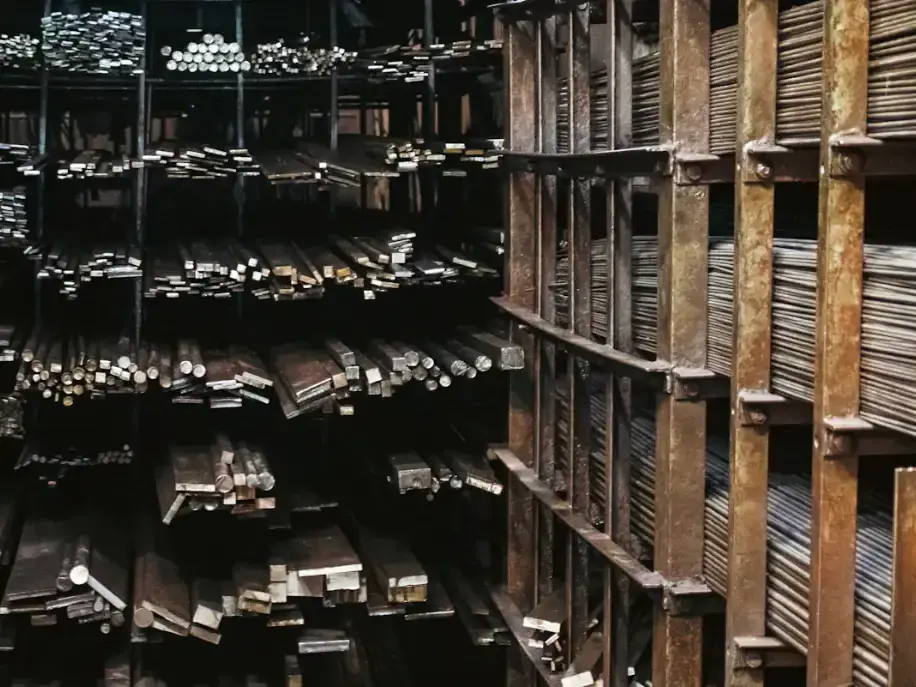
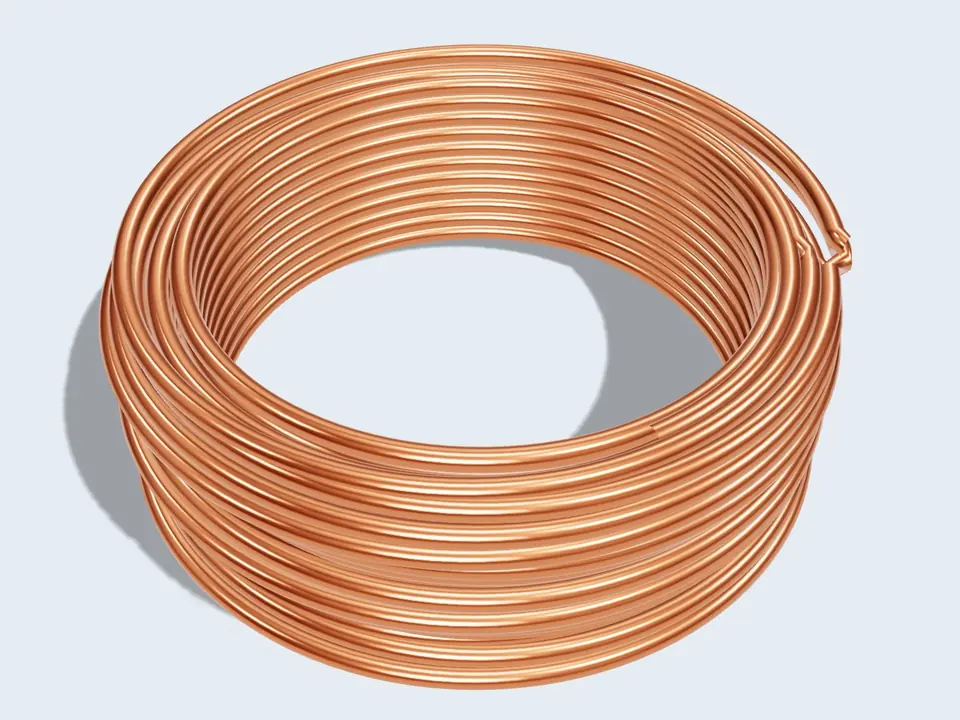
We supply it in E.C. grade as round wire in coils, round, square and hex bars, and busbar flats. Sizes are confirmed at enquiry; for bar sizes and weights see copper rods, bars and flats.
Where Hard Drawn Copper is used
Questions about Hard Drawn Copper
Still unsure? Call 080-41159995 or WhatsApp +91 98441 25506 and we will answer from the trade desk.
Is hard drawn copper less conductive than annealed copper?
Slightly. Cold work increases resistance by about 3–4 %. ASTM B1 requires hard drawn wire of 8.25–11.68 mm to reach 97.16 % IACS and finer sizes 96.16 %, while annealed wire to ASTM B3 must reach 100 %. For most earthing and overhead work the difference is negligible; for tightly rated busbars it should be accounted for.
Can hard drawn copper be bent?
Yes, but gently and only once if possible. It needs a larger bend radius than soft copper, it springs back noticeably, and repeated bending at the same spot will crack it. ASTM B187 bend tests ask H04 bar to survive a 120° bend over a radius equal to its thickness, compared with 180° for soft bar.
What does H04 temper mean for copper?
H04 is the ASTM B601 code for the 'hard' cold-worked temper, produced by drawing or rolling without a final anneal. Lower codes are softer: H01 is quarter hard, H02 half hard. Higher codes such as H06 extra hard and H08 spring are harder still. O60 is the soft annealed temper.
How do I tell hard drawn from soft copper wire?
Bend a short length by hand. Soft wire bends easily and stays bent; hard drawn wire resists, springs back and feels springy. For a firm answer, a tensile or hardness test settles it, and a test certificate will state the temper. Annealed copper also tends to have a duller, slightly oxidised surface unless it was bright annealed.
Why is hard drawn copper used for overhead lines?
An overhead conductor hangs under its own weight plus wind and sometimes ice, so it needs tensile strength to avoid stretching and excessive sag. Hard drawn copper has roughly 340–460 MPa tensile strength depending on diameter, well above annealed copper, while keeping about 97 % conductivity. Soft copper would creep and sag between poles.
Keep exploring
Copper
Jubilant Impex is a copper supplier on S.P. Road, Bangalore, dealing in electrolytic (E.C. grade) and commercial quality copper.
View details →Soft Annealed Copper
Annealed copper is copper that has been heated after cold working so its grains recrystallise, making it soft, ductile and fully…
View details →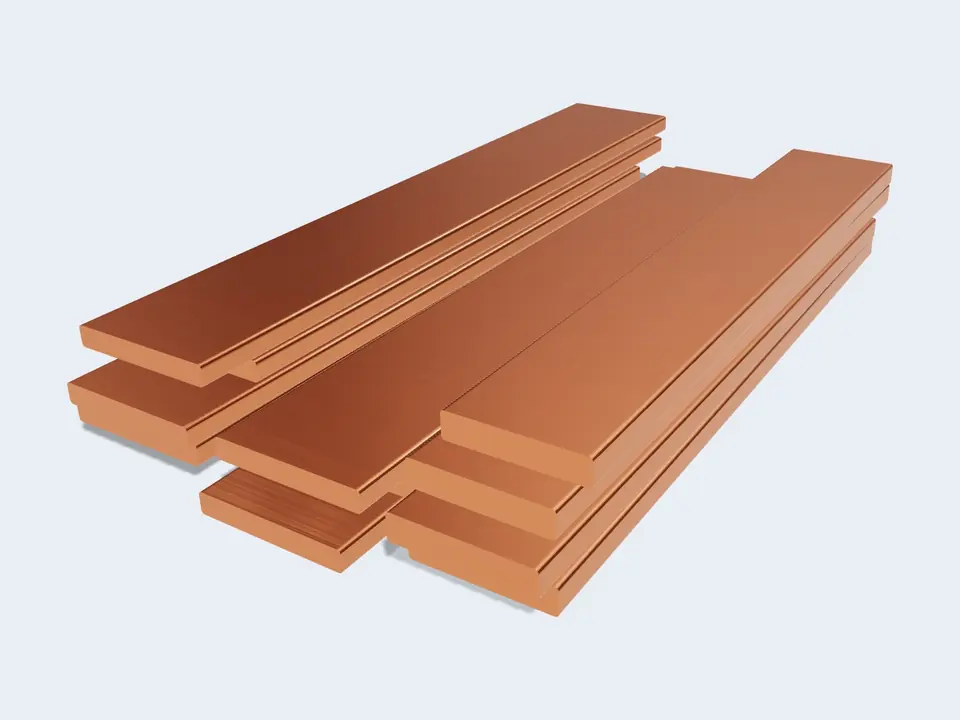
E.C. Grade Copper (Electrolytic)
EC grade copper is electrolytic tough pitch (ETP) copper, designated Cu-ETP, UNS C11000 or CW004A, with at least 99.90 % copper…
View details →
Copper Wire
Jubilant Impex supplies copper wire in Bangalore in E.C. grade, as bare round wire in hard drawn or soft annealed temper, and in…
View details →Copper Lightning Arrester & Earthing Material
A copper lightning arrester, in Indian site language, is the copper air terminal or spike fixed at the highest point of a…
View details →Electrical & Power Distribution
Electrical and power distribution equipment runs on EC grade copper, which is at least 99.9% pure with conductivity close to 100%…
View details →Need Hard Drawn Copper with a test certificate?
Send the material, grade, size and quantity. We confirm availability and price, with the test certificate details.