
- Home
- All Products
- Brass
- Brass 60/40 (Muntz Metal)
60/40 brass, better known as Muntz metal
60/40 brass, or Muntz metal (UNS C28000, EN CuZn40, BS CZ109), contains 59.0–63.0% copper with zinc as the balance. Its two-phase alpha-beta structure makes it easy to hot forge, extrude and hot roll, but it takes only limited cold work. Jubilant Impex supplies 60/40 rod, tube, plate and sheet from Bangalore.
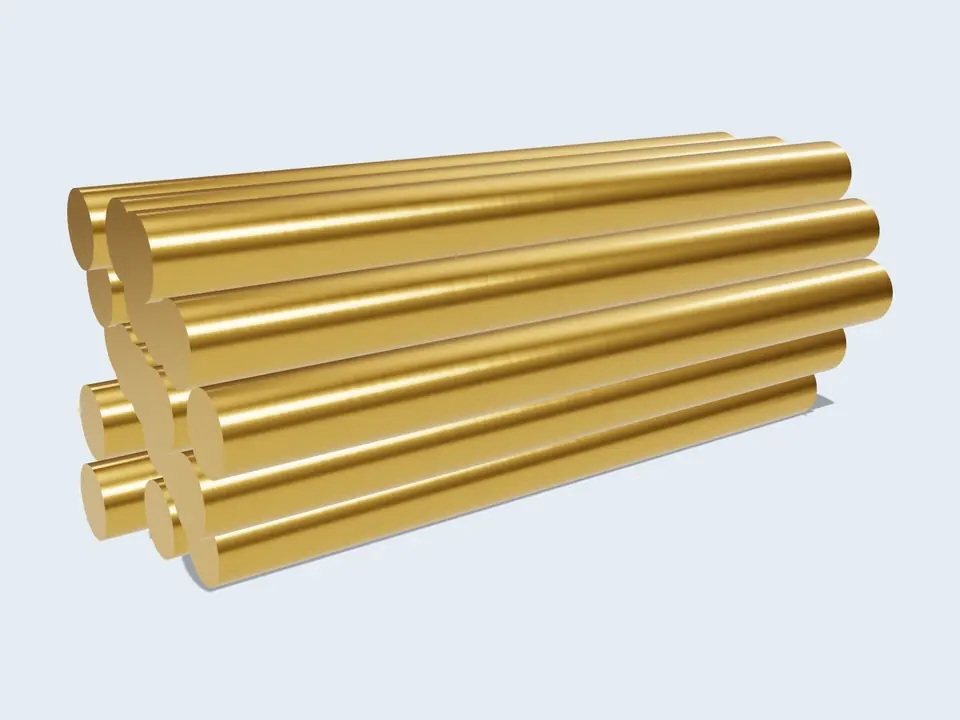
Brass 60/40 (Muntz Metal) specifications
Per UNS C28000 (CDA alloy registration), weight %
| Cu | 59.0–63.0 |
|---|---|
| Pb | 0.09 max |
| Fe | 0.07 max |
| Zn | Remainder |
| Cu + named elements | 99.7 min |
ASTM B111, C28000 condenser tube, annealed (O61)
| Tensile strength | 345 MPa (50 ksi) min |
|---|---|
| Yield strength (0.5% extension under load) | 140 MPa (20 ksi) min |
| Expansion test | 15% expansion of OD without cracking |
Typical values
| Electrical conductivity | about 28% IACS |
|---|---|
| Melting range | about 900–905 °C |
| Phase structure | Alpha + beta |
Designations in other standards
| UNS | C28000 |
|---|---|
| EN | CuZn40 / CW509L |
| BS | CZ109 |
| JIS | C2801 |
| IS | CuZn40 (IS 410) |
Enquire about Brass 60/40 (Muntz Metal)
Tell us grade, size, quantity and delivery location. Every consignment ships with a test certificate.
Request a quoteWhatsApp +91 98441 25506Or call 080-41159995
How Brass 60/40 (Muntz Metal) measures up
- Zn 39%
- Cu 61%
View as table
| Element | Nominal % |
|---|---|
| Zn | 39% |
| Cu | 61% |
View as table
| Property | Specified |
|---|---|
| Tensile strength | 345 MPa |
| Yield strength | 140 MPa |
60/40 is the brass you heat before you shape. Put a billet in the furnace and it forges, extrudes and hot rolls with very little effort, which is why so many hot-pressed valve bodies, heavy nuts and extruded sections start life as a 60/40 type alloy.
Cold, it is a different story. It is stronger and harder than the alpha brasses but it will not take deep drawing, so it rarely shows up in a press shop.
Where does the name Muntz metal come from?
From George Frederic Muntz, a Birmingham metal maker who patented the 60/40 alloy in 1832 as a cheaper replacement for the copper sheathing then nailed to the hulls of wooden sailing ships. It did the same job of keeping marine growth and shipworm off the hull, cost about two-thirds as much as copper,. Ship sheathing has long gone, but the name survived, and in Britain the alloy is still sometimes called yellow metal.
Two phases in one alloy
Brass with up to about 37 percent zinc is a single alpha phase. Past that point a second phase, beta, starts to form, and at 60/40 the structure is roughly a mix of the two. That is why metallurgists call it a duplex or alpha-beta brass.
The beta phase is harder and less ductile at room temperature, but it becomes very plastic when hot. So the alloy behaves like two materials depending on temperature: soft and forgeable in the furnace, stiff and fairly strong on the bench. This one fact explains almost every use, and every limitation, of 60/40.
| Property | 60/40 (C28000) | 63/37 (C27200) | 70/30 (C26000) |
|---|---|---|---|
| Copper % | 59.0–63.0 | 62.0–65.0 | 68.5–71.5 |
| Structure | Alpha + beta | Alpha | Alpha |
| Hot forging and extrusion | Excellent | Fair | Poor |
| Deep drawing | Poor | Good | Excellent |
| Dezincification risk | Higher | Moderate | Lower |
| Relative cost | Lowest | Middle | Highest |
Can 60/40 brass be cold worked?
Only lightly. It will take bending, light drawing and straightening, and it is supplied as cold-finished rod and tube, but deep cups or multi-stage draws will split it. Within IS 410, the cold-rolled brass sheet standard, CuZn40 is offered only in the O, HB and HD conditions, while 70/30 and 63/37 run the full range up to spring hard. That limited temper range tells you how the alloy behaves. For heavy cold forming use 70/30 cartridge brass instead.
Dezincification: where 60/40 should not go
The zinc-rich beta phase is the weak spot. In soft, acidic or chloride-bearing water, and in stagnant seawater, zinc can leach out of the beta grains and leave behind porous copper with almost no strength. The part may look intact until it weeps or snaps. This is called dezincification, and it is the main reason plain 60/40 is not chosen for potable water fittings in aggressive water areas or for long-term seawater immersion.
Where corrosion matters, the usual answers are an alpha brass with arsenic, such as the CuZn30As used in condenser tubes, a dezincification-resistant brass, or a bronze such as phosphor bronze or gun metal.
Muntz metal in heat exchangers
Despite the dezincification caution, C28000 is one of the alloys listed in ASTM B111 for condenser and heat exchanger tube, and Muntz metal plate has a long history as tube sheet material. In those services the water chemistry is controlled and the thick sections tolerate some surface attack. If your drawing calls for a Muntz tube plate or C28000 tube, send us the size and specification and we will confirm what we can supply.
60/40 rod and free-cutting rod are not the same thing
Buyers sometimes ask for 60/40 rod when they really want free-cutting brass. Free-cutting rod is close to 60/40 in copper but contains 2.5 to 3.5 percent lead, which breaks chips into small pieces and lets the bar run at high speed on an automat. Plain 60/40 has no lead added, so it machines less freely but can be cold headed and brazed without lead causing trouble. If the part is turned, look at our brass rods page for the leaded grades.
What to specify when you order 60/40
Say whether you need hot-rolled plate, cold-finished sheet, extruded or drawn rod, or tube, because the condition changes both the surface and the tolerance. Hot-rolled plate is the usual route for tube sheets and heavy flanges and will need machining to final thickness. Drawn rod and tube come closer to size with a cleaner finish.
Give us thickness or diameter, length, quantity and the specification, whether that is C28000 to an ASTM standard, CuZn40 to IS 410 or the old CZ109. Every lot we supply comes with a test certificate from a Government-recognised test house, so the copper and lead values can be checked before the metal goes into a forge or onto a lathe.
Where Brass 60/40 (Muntz Metal) is used
Questions about Brass 60/40 (Muntz Metal)
Still unsure? Call 080-41159995 or WhatsApp +91 98441 25506 and we will answer from the trade desk.
What is Muntz metal used for?
Muntz metal is used for hot forgings, condenser tube plates, large nuts and bolts, valve stems, architectural extrusions and some heat exchanger tube. It was originally made in 1832 as sheathing for wooden ship hulls. Today it is chosen where hot workability and strength matter more than cold formability.
Why is 60/40 brass called duplex brass?
Because its microstructure contains two phases, alpha and beta, rather than the single alpha phase found in 70/30 and most 63/37 brass. The beta phase appears once zinc goes above roughly 37 percent. It makes the alloy easy to hot work but less ductile at room temperature.
What is dezincification of brass?
Dezincification is a type of corrosion where zinc is selectively dissolved from brass, leaving a weak, porous copper layer that keeps the original shape. It is most common in high-zinc brasses like 60/40, in soft, acidic or chloride-rich water. Arsenic additions in alpha brass and special DZR alloys resist it.
Is Muntz metal suitable for seawater?
Only for limited duty. It was used to sheathe ships, but plain 60/40 dezincifies in stagnant or warm seawater over time. For long-term seawater service, engineers usually prefer admiralty brass, aluminium brass, copper-nickel or bronzes. Muntz metal tube plates are still used where water conditions are controlled.
Is 60/40 brass the same as free-cutting brass?
No, although the copper content is similar. Free-cutting brass contains 2.5 to 3.5 percent added lead to make it machine quickly with short chips. Plain 60/40 Muntz metal carries lead only as an impurity, a few tenths of a percent at most depending on the standard, so it machines less freely.
Can 60/40 brass be hot forged?
Yes, it is one of the easiest copper alloys to hot forge. At forging temperature the beta phase is very plastic, so the metal fills complex dies with low force. That is why hot-stamped brass valve bodies and fittings are made from 60/40-type alloys, often with some lead added.
Keep exploring
Brass
Jubilant Impex in Bangalore supplies brass in the three common copper–zinc ratios (70/30, 63/37 and 60/40) as round, hex and…
View details →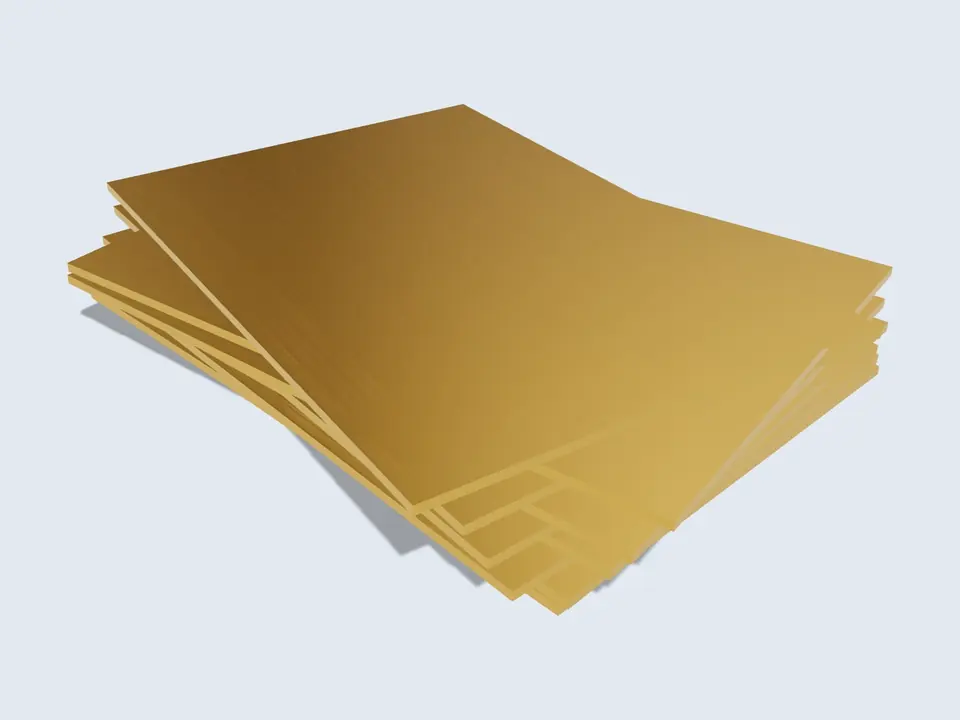
Brass 70/30 (Cartridge Brass)
70/30 brass, also called cartridge brass (UNS C26000, EN CuZn30, BS CZ106), contains 68.5–71.5% copper with zinc as the balance.
View details →Brass 63/37 (Yellow Brass)
63/37 brass is a yellow brass with about 63% copper and 37% zinc, covered by UNS C27200 and C27400, EN CuZn37 (CW508L) and BS…
View details →Brass Rods: Round, Hex & Square
Jubilant Impex supplies brass rod in Bangalore in round, hexagonal and square sections, either extruded or commercial quality.
View details →Brass Sheets, Plates, Flats & Strips
Jubilant Impex supplies brass sheet in Bangalore along with plates, flats and strips in 70/30, 63/37 and 60/40 grades.
View details →Brass 70/30 vs 63/37 vs 60/40
70/30, 63/37 and 60/40 brass are copper-zinc alloys named by their approximate copper-to-zinc ratio.
View details →
Marine & Offshore
Marine grade metals are alloys that resist seawater corrosion: 316L stainless for deck hardware and fittings, duplex for seawater…
View details →Need Brass 60/40 (Muntz Metal) with a test certificate?
Send the material, grade, size and quantity. We confirm availability and price, with the test certificate details.