
- Home
- All Products
- Copper
- Soft Annealed Copper
Soft Annealed Copper for Windings, Cables and Formed Parts
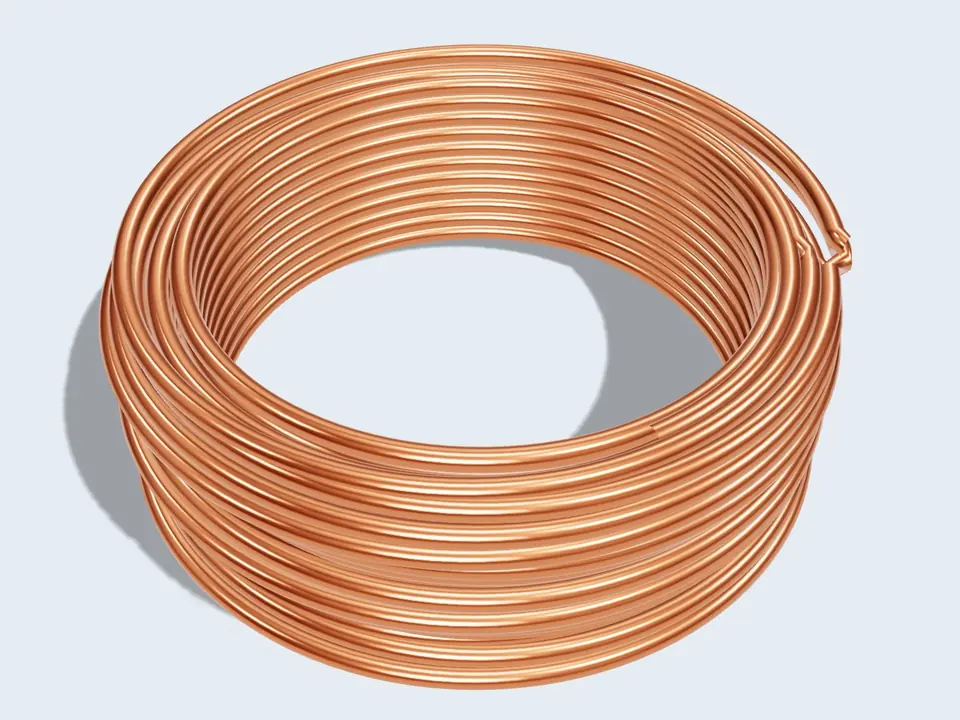
Annealed copper is copper that has been heated after cold working so its grains recrystallise, making it soft, ductile and fully conductive at 100 % IACS. It bends tightly without cracking and is used for windings, cable conductors, earth grids and formed parts. Jubilant Impex supplies soft E.C. copper wire, strip and flats from Bangalore.
Soft Annealed Copper specifications
ASTM B3 (soft or annealed bare copper wire), elongation in 254 mm
| 8.25–11.68 mm (0.3249–0.4600 in) | 35 % min |
|---|---|
| 2.91–7.35 mm (0.1144–0.2893 in) | 30 % min |
| 0.57–2.59 mm (0.0226–0.1019 in) | 25 % min |
| 0.29–0.51 mm (0.0113–0.0201 in) | 20 % min |
| 0.079–0.254 mm (0.0031–0.0100 in) | 15 % min |
| Tensile strength | Not specified |
| Resistivity at 20 °C | 0.15328 Ω·g/m² max (100 % IACS) |
Typical values
| Density | 8.89–8.94 g/cm³ |
|---|---|
| Resistivity, 20 °C | 0.017241 Ω·mm²/m (100 % IACS) |
| Temperature coefficient of resistance, 20 °C | 0.00393 per °C |
| Annealing range, ETP copper | About 250–650 °C |
Enquire about Soft Annealed Copper
Tell us grade, size, quantity and delivery location. Every consignment ships with a test certificate.
Request a quoteWhatsApp +91 98441 25506Or call 080-41159995
How Soft Annealed Copper measures up
View as table
| Material | Conductivity |
|---|---|
| Copper E.C. (Cu-ETP) | 100% IACS |
| Aluminium (EC grade 1350) | 61% IACS |
| Aluminium 6063 | 53% IACS |
| Brass 70/30 | 28% IACS |
| Phosphor bronze | 15% IACS |
| Carbon steel | 10% IACS |
| Stainless 304 | 2.5% IACS |
View as table
| Metal | Density |
|---|---|
| Aluminium | 2.70 g/cm³ |
| Antimony | 6.68 g/cm³ |
| Zinc | 7.14 g/cm³ |
| Tin | 7.29 g/cm³ |
| Duplex 2205 | 7.80 g/cm³ |
| Carbon & mild steel | 7.85 g/cm³ |
| Stainless 304 | 7.93 g/cm³ |
| Incoloy 825 | 8.14 g/cm³ |
| Inconel 625 | 8.44 g/cm³ |
| Brass 70/30 | 8.53 g/cm³ |
| Gun metal | 8.72 g/cm³ |
| Monel 400 | 8.80 g/cm³ |
| Phosphor bronze | 8.86 g/cm³ |
| Hastelloy C276 | 8.89 g/cm³ |
| Nickel | 8.90 g/cm³ |
| Copper | 8.94 g/cm³ |
| Lead | 11.34 g/cm³ |
Ask a winding shop or a cable maker what they need and the answer is almost always soft copper. Soft copper lies flat in a slot, wraps round a former, crimps cleanly into a lug and does not crack when it is bent back on itself. All of that comes from one step at the end of production: annealing.
This page explains what annealing changes, which standards define soft copper, and how to keep it soft between our godown and your shop floor.
What does annealing do to copper?
Drawing and rolling crowd the copper's crystal structure with defects called dislocations. They are what make cold-worked copper hard, and they also scatter electrons, which is why hard copper conducts a little worse. Heat the metal enough and new, defect-free grains grow in place of the distorted ones. That is recrystallisation, and it brings copper back to its natural state: low strength, high ductility and full conductivity.
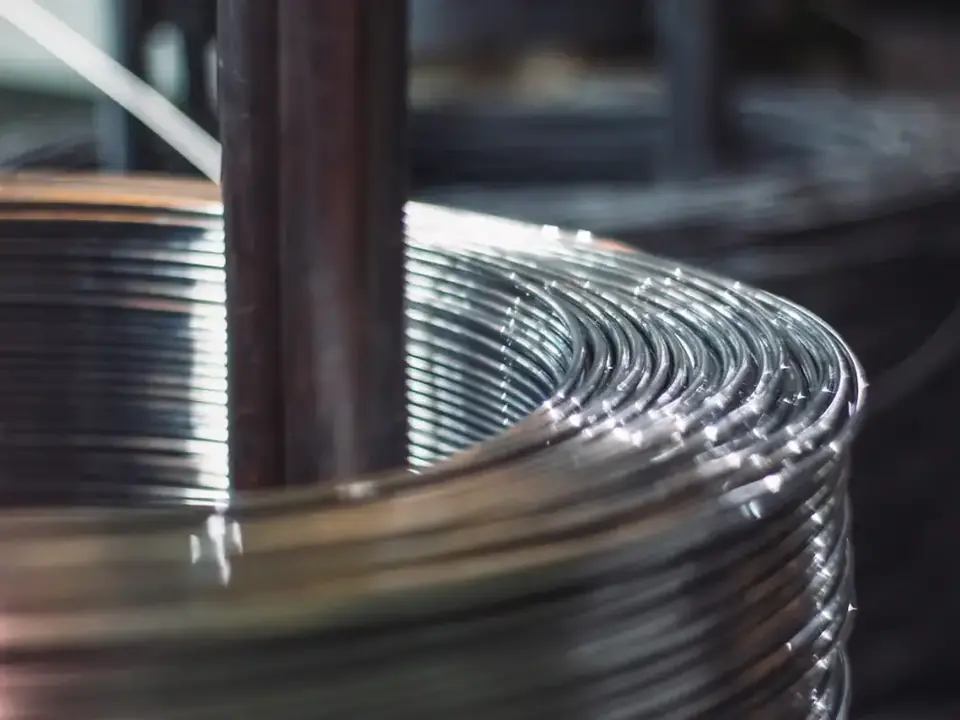
For ETP copper the annealing range runs from roughly 250 °C to 650 °C. Heavily worked wire recrystallises at the low end; lightly worked or thick sections need more heat. Wire is usually annealed continuously on the drawing line by passing current through it, or in batches in a furnace with a protective atmosphere so the surface stays bright.
Is annealed copper more conductive?
Yes, by a few percent. Soft ETP must meet 100 % IACS, the reference value written into ASTM B3 as a maximum resistivity of 0.15328 Ω·g/m² at 20 °C. Hard drawn wire is allowed to sit around 96–97 %. That small gap is one reason power cable and winding conductors are always annealed: the conductor is sized for losses and temperature rise, so every percent counts over a long run.
| Temper | Tensile strength | Elongation | Bend test (when ordered) |
|---|---|---|---|
| O60 soft anneal | 28–37 ksi | 25 % min | 180° |
| H04 hard, rod over 3/8 to 1 in | 40–55 ksi | 12 % min | 120° |
| H04 hard, rod up to 3/8 in | 45–60 ksi | 12 % min | 120° |
Elongation is the property that gets tested
Soft copper wire is not bought on tensile strength. ASTM B3 does not specify any tensile requirement at all. What it checks is elongation, measured over a 254 mm gauge length, because elongation tells you whether the wire is truly soft. The minimum rises with diameter, from 15 % for very fine wire to 35 % for wire of 8.25 mm and above. The full table is below.
For rod and bar, ASTM B187 sets soft O60 copper at 28–37 ksi tensile with 25 % minimum elongation, and asks for a 180° bend without cracking when a bend test is ordered.
Jobs that call for soft copper
- Transformer and motor windings, where strip and wire must form tightly round coils without cracking insulation
- Cable conductors: IS 8130, the Indian standard for conductors in insulated cables, calls for plain or metal-coated annealed conductors
- Buried earth grid conductor and electrode connections, laid loose in a trench and bent to follow the layout
- Flexible jumpers, braids and laminated links that absorb vibration and movement
- Gaskets and sealing washers, where soft copper flows into the sealing faces
- Spun and deep-drawn parts made from copper circles and sheet
- ACR coils for split AC installation, which are annealed so they can be bent and flared by hand
Soft, half hard, or something in between
Annealed tempers are not all identical. ASTM also orders soft copper by average grain size, such as OS025 or OS050 (0.025 mm and 0.050 mm). Finer grains give a smoother surface after deep drawing; coarser grains are softer. If your parts show an 'orange peel' surface after forming, ask for a finer-grain anneal.
When a job needs some bendability but must still hold its shape, half hard (H02) sits between O60 and H04. Busbars that are bent once at the panel and then left alone are often specified half hard. See hard drawn copper for the other end of the scale.
Keeping soft copper soft
Copper work hardens every time it is bent, straightened or hammered. A coil that has been rewound twice, or a flat straightened over a knee, is no longer truly soft. Handle coils on their sides, avoid kinks, and form parts in as few operations as possible. If a part has to be reworked, it can be re-annealed with a torch to a dull red and then cooled. Unlike steel, copper does not harden when quenched in water.
When you order, say how the copper will be used. 'Soft strip for LT coil winding' or 'soft wire for earth grid, laid in trench' tells us far more than a temper code on its own, and it lets us flag early if a hard or half hard condition would actually suit the job better. Sizes are confirmed at enquiry, and the test certificate can report elongation and conductivity together.
Where Soft Annealed Copper is used
Questions about Soft Annealed Copper
Still unsure? Call 080-41159995 or WhatsApp +91 98441 25506 and we will answer from the trade desk.
Does copper work harden?
Yes. Every bend, hammer blow or pass through a die makes copper harder and springier, and repeated bending at one point eventually cracks it. That is why soft copper should be formed in as few steps as possible. Work-hardened copper can be returned to the soft state by annealing it again.
Can I anneal copper with a blowtorch?
Yes, for small parts. Heat the copper evenly to a dull red glow, roughly 500–650 °C, then let it cool in air or quench it in water. Quenching does not harden copper as it does steel, and it helps knock off scale. Avoid prolonged heating of ETP copper in a rich, hydrogen-heavy flame, which can embrittle it.
Is annealed copper weaker than hard drawn copper?
In tensile strength, yes. Soft O60 copper bar is 28–37 ksi under ASTM B187, while hard H04 rod and bar range up to 60 ksi depending on size. In exchange, annealed copper has much higher elongation, bends without cracking and conducts at 100 % IACS. Choose by what the part has to do, not by strength alone.
Why are cable conductors made of annealed copper?
Cable conductors have to be stranded, laid up, bent during installation and crimped into lugs, all of which needs ductility. Annealed copper also gives the full 100 % IACS, so the conductor size needed for a given current and voltage drop is smallest. Indian cable conductors are specified as annealed copper under IS 8130.
What is the difference between soft drawn and annealed copper?
In trade use they mean the same thing: wire that has been drawn to size and then annealed so it is soft. ASTM B3 covers it under the title soft or annealed copper wire. The term soft drawn is used mainly in earthing and grounding, where it distinguishes this conductor from hard drawn wire.
Keep exploring
Copper
Jubilant Impex is a copper supplier on S.P. Road, Bangalore, dealing in electrolytic (E.C. grade) and commercial quality copper.
View details →Hard Drawn Copper
Hard drawn copper is copper that has been cold drawn or rolled to size and not annealed afterwards.
View details →
Copper Wire
Jubilant Impex supplies copper wire in Bangalore in E.C. grade, as bare round wire in hard drawn or soft annealed temper, and in…
View details →
Copper Sheets, Plates & Circles
Jubilant Impex supplies copper sheet in Bangalore along with plates, strips and cut circles, in E.C. grade and commercial quality…
View details →
Tinned Copper
Tinned copper is copper wire, strip or busbar coated with a thin layer of tin.
View details →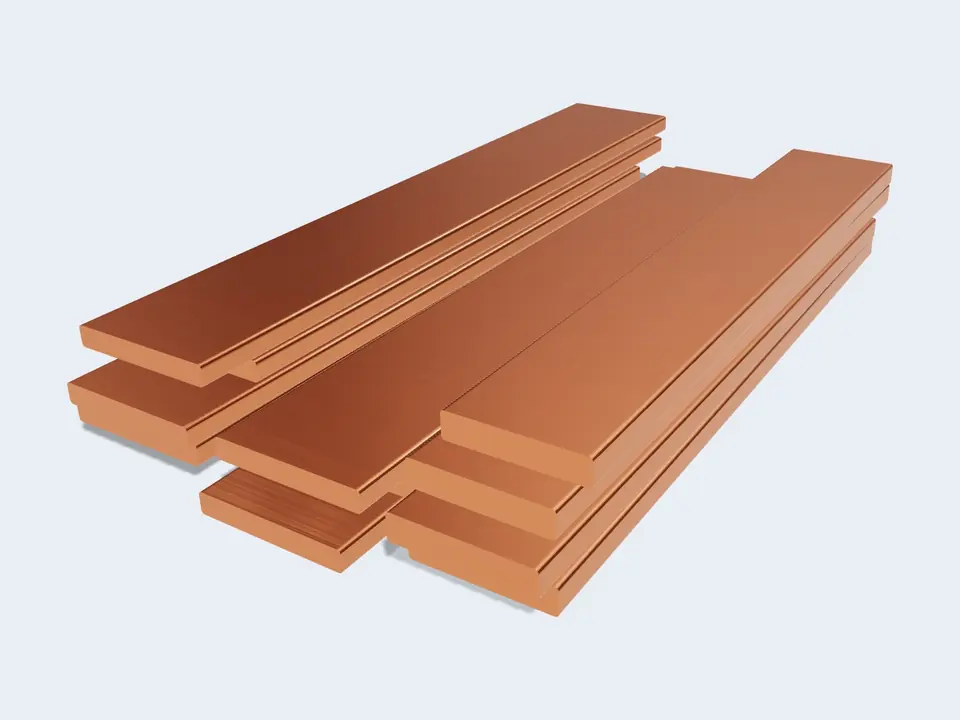
Electrical & Power Distribution
Electrical and power distribution equipment runs on EC grade copper, which is at least 99.9% pure with conductivity close to 100%…
View details →Need Soft Annealed Copper with a test certificate?
Send the material, grade, size and quantity. We confirm availability and price, with the test certificate details.