
- Home
- All Products
- Aluminium
- Aluminium Coils, Sheets & Plates
Aluminium Coils, Sheets and Plates by Alloy and Temper
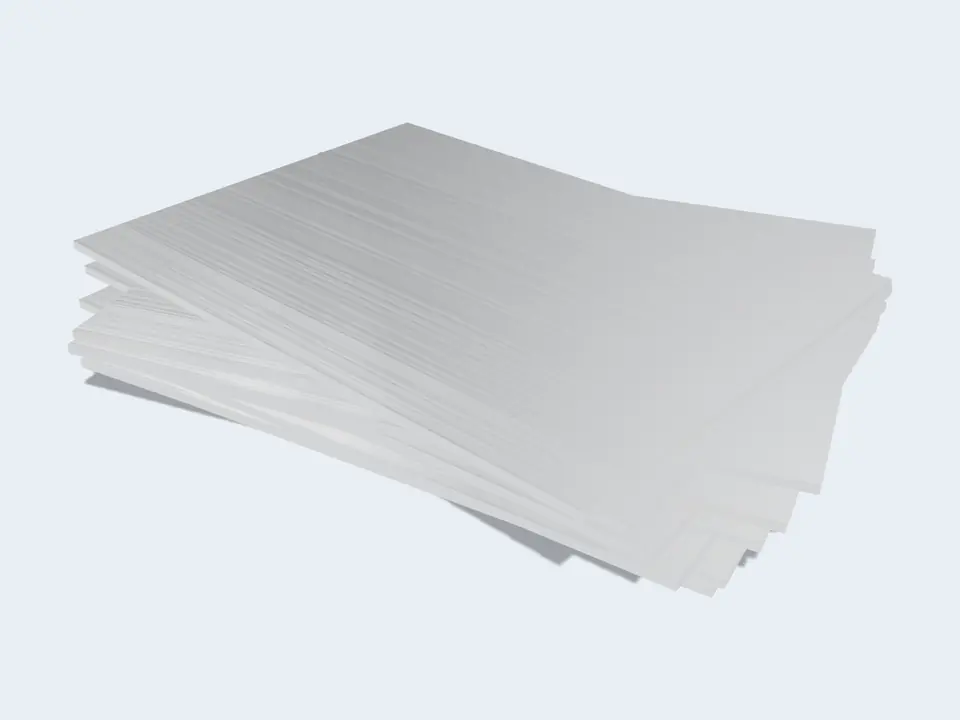
Aluminium sheet is flat-rolled aluminium generally between about 0.2 mm and 6 mm thick; above roughly 6 mm it is called plate, and long rolled lengths are supplied as coil. The usual alloys are 1050, 1100, 3003, 5052 and 6061. Jubilant Impex supplies aluminium sheet in Bangalore with alloy, temper and size confirmed at enquiry.
Ask three fabricators what aluminium sheet they use and you will hear three different answers, all of them correct for their own job. The duct maker wants something that folds flat without cracking. The trailer builder wants something that will not dent or corrode. The machine shop wants a plate that stays flat after milling. Those needs map almost exactly onto alloy and temper, which is what this page is about.
We supply aluminium sheet in Bangalore along with coil and plate, mainly from Hindalco and Balco production, in the alloys below. Sizes are confirmed at enquiry; tell us thickness, width, length and quantity, and whether you need the material sheared or as full sheets.
What is the difference between aluminium sheet, plate and coil?
It is mostly thickness and how the material is delivered. In Aluminum Association usage, rolled product thinner than 0.006 inch (0.15 mm) is foil, from there up to 0.249 inch (about 6.3 mm) it is sheet, and 0.250 inch and above is plate. Indian traders use the same rough split, calling anything up to about 6 mm sheet.
Coil is sheet that has not been cut to length. It suits buyers who run a slitting line, a roll former or a press with a decoiler, and it avoids offcuts. Sheets are cut from coil, so the alloy and temper are the same. Plate is rolled thicker and is bought for machined parts, base plates, tanks and structural work. Thin material under 0.15 mm is covered on our aluminium foils page.
Pick the alloy from the job
1050 and 1100 are nearly pure aluminium, at 99.5% and 99.0% minimum. They bend and spin easily, conduct heat and electricity well, and resist ordinary atmospheres. They are soft, so they suit reflectors, nameplates, insulation cladding, spun vessels and general panel work.
3003 adds about 1.0 to 1.5% manganese. It keeps most of the formability of the pure grades but is roughly 20% stronger, which is why it is the workhorse for HVAC ducting, tanks and cladding, and why it is common in refrigeration and HVAC work.
5052 is the Al-Mg 2.5 alloy. It is the strongest of the non-heat-treatable grades on this page, it welds well, and it resists salt spray and moisture. Truck bodies, boat parts, fuel tanks and outdoor enclosures are typical uses.
6061 is heat treatable. In the T6 temper it is much stronger than the others, which suits plate for jigs, fixtures, base plates and machined parts. It is less happy being bent tightly in T6, so sheet-metal designers usually reach for 5052 instead.

What do O, H14, H32 and T6 mean?
The letter after the alloy number is the temper, and it changes the strength more than people expect. O is fully annealed, the softest condition, for deep drawing and tight bends. H means strain hardened by cold rolling: H12, H14, H16 and H18 are quarter, half, three-quarter and full hard. H32, H34 and so on mean strain hardened then stabilised, used mainly on magnesium alloys such as 5052. T4 and T6 are heat-treated tempers for 6xxx alloys, with T6 the artificially aged, full-strength condition.
IS 737 lists O, H12, H14, H16, H18, T4 and T6, following the Aluminum Association system. If your drawing simply says 'aluminium sheet', ask the designer for the temper. A 3003-O sheet and a 3003-H18 sheet look identical on the rack.
ASTM B209M (minimum or range, for the temper shown; values vary slightly with thickness)
| 1100-H14 tensile strength | 110–145 MPa |
|---|---|
| 1100-H14 yield strength | 95 MPa min |
| 3003-H14 tensile strength | 140–180 MPa |
| 3003-H14 yield strength | 115 MPa min |
| 5052-H32 tensile strength | 215–265 MPa |
| 5052-H32 yield strength | 160 MPa min |
| 6061-T6 tensile strength | 290 MPa min |
| 6061-T6 yield strength | 240 MPa min |
Designations in other standards
| IS 19500 | ≈ AA 1050 |
|---|---|
| IS 19000 | ≈ AA 1100 / 1200 |
| IS 31000 | ≈ AA 3103 / 3003 |
| IS 52000 | ≈ AA 5052 |
How much does an aluminium sheet weigh?
Use this: weight in kg = length (m) × width (m) × thickness (mm) × 2.7. A standard 1220 × 2440 mm sheet at 1 mm therefore weighs about 8.0 kg, and the same size at 3 mm about 24 kg. Pure grades are slightly heavier at 2.71 and 5052 slightly lighter at 2.68, but 2.7 is close enough for estimating freight and quotation weight.
View as table
| Diameter | kg per metre |
|---|---|
| 10 mm dia | 0.21 kg/m |
| 16 mm dia | 0.54 kg/m |
| 20 mm dia | 0.85 kg/m |
| 25 mm dia | 1.33 kg/m |
| 32 mm dia | 2.17 kg/m |
| 40 mm dia | 3.39 kg/m |
| 50 mm dia | 5.30 kg/m |
| 63 mm dia | 8.42 kg/m |
| 80 mm dia | 13.57 kg/m |
| 100 mm dia | 21.21 kg/m |
Sizes and what to tell us
The table below shows what the trade commonly handles. It is not a stock list, so treat it as a starting point and send us your exact requirement. Material can be supplied with a test certificate from a Government-recognised test house; mention if you also need mechanical test results for the temper.
| Form | Typical range |
|---|---|
| Sheet | About 0.3 mm to 6 mm thick; common sheet sizes 1220 × 2440 mm (8 × 4 ft) and 1250 × 2500 mm |
| Coil | Thin gauges in mill or slit widths; tell us width, coil ID and weight per coil you can handle |
| Plate | From about 6 mm upward; cut pieces or full plates depending on alloy |
| Circles | Cut from sheet to diameter, for spinning and pressing |
View as table
| Metal | Density |
|---|---|
| Aluminium | 2.70 g/cm³ |
| Antimony | 6.68 g/cm³ |
| Zinc | 7.14 g/cm³ |
| Tin | 7.29 g/cm³ |
| Duplex 2205 | 7.80 g/cm³ |
| Carbon & mild steel | 7.85 g/cm³ |
| Stainless 304 | 7.93 g/cm³ |
| Incoloy 825 | 8.14 g/cm³ |
| Inconel 625 | 8.44 g/cm³ |
| Brass 70/30 | 8.53 g/cm³ |
| Gun metal | 8.72 g/cm³ |
| Monel 400 | 8.80 g/cm³ |
| Phosphor bronze | 8.86 g/cm³ |
| Hastelloy C276 | 8.89 g/cm³ |
| Nickel | 8.90 g/cm³ |
| Copper | 8.94 g/cm³ |
| Lead | 11.34 g/cm³ |
Questions about Aluminium Coils, Sheets & Plates
Still unsure? Call 080-41159995 or WhatsApp +91 98441 25506 and we will answer from the trade desk.
Which aluminium sheet is used for bending?
For tight bends, use a soft temper of a non-heat-treatable alloy: 1050 or 1100 in O or H14, 3003-H14, or 5052-H32. These bend well with a sensible inside radius. Avoid 6061-T6 for sharp bends because it can crack on the outside of the bend; if 6061 must be formed, buy it annealed and heat treat afterwards.
Is 5052 a marine grade aluminium?
5052 is widely called marine grade because its 2.2 to 2.8 percent magnesium gives very good resistance to seawater and salt spray, and it does not need heat treatment. It is used for boat parts, fuel tanks and coastal enclosures. For heavier structural marine plate, 5083 is often specified instead, as it is stronger.
What is H14 temper in aluminium?
H14 means the alloy has been strain hardened by cold rolling to about half hard, with no further thermal treatment. It sits between the soft O temper and the full-hard H18. In 1100 and 3003 sheet, H14 is the most common stock temper, because it keeps reasonable bendability while giving more stiffness and dent resistance than annealed sheet.
What thickness of aluminium sheet is used for ducting?
HVAC ducting usually uses 3003 or pure aluminium sheet in roughly 0.5 to 1.2 mm, with thicker gauges for larger duct sizes and higher pressure classes. The exact gauge comes from the duct construction standard your consultant follows, such as SMACNA-based tables, so check the project specification before ordering.
Why is aluminium sheet called 8 by 4?
8 by 4 refers to the standard sheet size of 8 feet by 4 feet, which in metric terms is 2440 × 1220 mm. It is the common size for sheet metal, plywood and board in India, and most shearing and bending machines are built to handle it. A 1250 × 2500 mm metric size is also widely available.
Keep exploring
Aluminium
Jubilant Impex supplies aluminium from Indian mills, Hindalco (including the old Indal range) and Balco, from its S.P. Road…
View details →
Aluminium Chequered Plates
Aluminium chequered plate is rolled aluminium sheet or plate with a raised pattern, usually five-bar or diamond, on one face for…
View details →Aluminium Foils
Industrial aluminium foil is rolled aluminium thinner than about 0.15 mm, sold in coils or rolls by alloy, temper, thickness in…
View details →Hindalco Aluminium
Hindalco Industries is the Aditya Birla Group's aluminium and copper company, incorporated in 1958, with its first smelter at…
View details →Balco Aluminium
BALCO, short for Bharat Aluminium Company Limited, is an aluminium producer based in Korba, Chhattisgarh.
View details →
Refrigeration & HVAC
Refrigeration and HVAC systems rely on copper tubes for refrigerant lines and coils: soft annealed coils for field runs and…
View details →
Construction & Infrastructure
Construction projects use mild steel angles, channels, beams and plates to IS 2062 for structures, chequered plate for floors and…
View details →
Request a Quote
To request a quote for stainless steel pipes or any metal from Jubilant Impex in Bangalore, send the material, grade, standard,…
View details →Need aluminium coils, sheets & plates? Get a quote today.
Send the material, grade, size and quantity. We confirm availability and price, with the test certificate details.