
- Home
- All Products
- Copper
- Nickel Plated Copper
Nickel Plated Copper for Heat, Wear and Clean Contacts
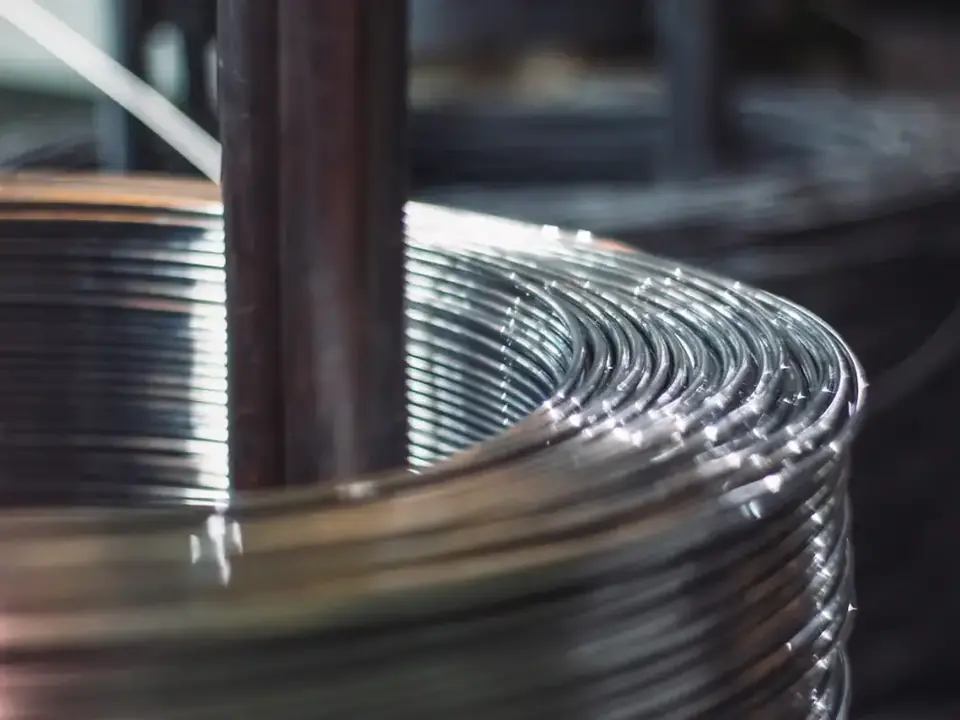
Nickel plated copper is copper wire, strip or busbar with an electroplated or clad nickel layer. Nickel resists oxidation at temperatures where tin would melt, gives a harder wear-resistant surface and keeps a bright appearance, while the copper core carries the current. Jubilant Impex supplies nickel-coated E.C. copper from Bangalore, with sizes confirmed at enquiry.
How Nickel Plated Copper measures up
View as table
| Material | Conductivity |
|---|---|
| Copper E.C. (Cu-ETP) | 100% IACS |
| Aluminium (EC grade 1350) | 61% IACS |
| Aluminium 6063 | 53% IACS |
| Brass 70/30 | 28% IACS |
| Phosphor bronze | 15% IACS |
| Carbon steel | 10% IACS |
| Stainless 304 | 2.5% IACS |
View as table
| Metal | Density |
|---|---|
| Aluminium | 2.70 g/cm³ |
| Antimony | 6.68 g/cm³ |
| Zinc | 7.14 g/cm³ |
| Tin | 7.29 g/cm³ |
| Duplex 2205 | 7.80 g/cm³ |
| Carbon & mild steel | 7.85 g/cm³ |
| Stainless 304 | 7.93 g/cm³ |
| Incoloy 825 | 8.14 g/cm³ |
| Inconel 625 | 8.44 g/cm³ |
| Brass 70/30 | 8.53 g/cm³ |
| Gun metal | 8.72 g/cm³ |
| Monel 400 | 8.80 g/cm³ |
| Phosphor bronze | 8.86 g/cm³ |
| Hastelloy C276 | 8.89 g/cm³ |
| Nickel | 8.90 g/cm³ |
| Copper | 8.94 g/cm³ |
| Lead | 11.34 g/cm³ |
Tin is the everyday coating for copper. Nickel is the one engineers reach for when tin is not good enough: when the conductor runs hot, when a contact face is bolted and unbolted many times, or when a battery pack needs connectors that stay clean and weldable.
The trade-off is that nickel is harder to solder and costs more, so it is worth being clear about why you need it before you order.
What is nickel plated copper used for?
- High-temperature hook-up and equipment wire, typically with PTFE or other fluoropolymer insulation rated around 260 °C
- Battery interconnects and busbars in UPS, inverter and EV packs, where the nickel surface resists corrosion and suits resistance or laser welding
- Cable lugs and terminals that must keep a clean, low-resistance face in warm or humid enclosures
- Heating element leads and furnace wiring near hot zones
- Decorative and instrument parts where a bright, non-tarnishing finish is wanted over a conductive core
Why nickel instead of tin?
The main reason is heat. Tin melts at 232 °C and is normally kept below about 150 °C in service. Nickel melts at 1455 °C and forms a thin, stable oxide that protects the copper underneath, so standard nickel coatings are commonly used on conductors running to around 260 °C, and heavier coatings above that.
Nickel is also much harder than tin. That matters for contacts that are plugged, bolted or slid repeatedly, and for parts that will be handled a lot during assembly. Tin is soft enough to smear and fret; nickel holds its surface. For a fuller comparison with tin, see tinned copper.
There is a corrosion angle too. In warm, humid panel rooms and battery rooms, nickel keeps its appearance and contact resistance for years. It is not a cure-all, though: in strongly acidic or ammonia-laden atmospheres nickel can itself be attacked, so very aggressive sites deserve a specific discussion with your plating source.
| Property | Nickel coating | Tin coating |
|---|---|---|
| Melting point of coating metal | 1455 °C | 232 °C |
| Typical service limit of coated conductor | About 260 °C (standard classes) | About 150 °C |
| Surface hardness | Hard, wear resistant | Soft, can fret |
| Solderability | Needs active flux | Very good |
| Magnetic | Yes (electroplated nickel) | No |
| Wire standard | ASTM B355 | ASTM B33 |
Nickel coating classes under ASTM B355
ASTM B355 covers nickel-coated soft or annealed copper wire, and it grades the coating by how much of the finished wire's weight is nickel. Class 2 is the lightest; Class 27 is a heavy coat used for the most demanding high-temperature work. The standard ties each class to a minimum coating thickness, which is why the class has to be stated on the order. The classes are tabulated below.
For strip, flats and busbars there is no single equivalent product standard; the plating thickness in microns is normally agreed on the drawing, often with an underplate and a stated test such as adhesion or salt spray.
Does nickel plating reduce conductivity?
At DC, very slightly. Nickel conducts only about a quarter as well as copper, but on a typical plated conductor it is a small fraction of the cross-section, so the copper core still carries nearly all the current. The heavier classes, especially Class 27, do raise resistance noticeably and that is allowed for in the standard.
At radio frequencies it is a different story. High-frequency current crowds into the outer skin of a conductor, which on a nickel-plated wire is nickel, and nickel is also magnetic. That raises losses, which is why RF and coaxial conductors are usually silver plated rather than nickel plated.
| Class | Minimum nickel, % of coated wire weight |
|---|---|
| Class 2 | 2 % |
| Class 4 | 4 % |
| Class 7 | 7 % |
| Class 10 | 10 % |
| Class 27 | 27 % |
Soldering, crimping and welding
Nickel forms a tough oxide that ordinary rosin flux does not shift well. Soldering needs a more active flux and clean, fresh surfaces, and many designers avoid soldering nickel-coated parts altogether in favour of crimping, resistance welding or bolting. Crimped terminations on nickel-plated wire are reliable when the barrel and tooling match the conductor size. Spot and laser welding of nickel-plated copper battery links is widely practised because the nickel surface couples better with the weld than bare copper does.
Bending is rarely a problem on wire, because the copper underneath is soft and the coating is thin. On thicker plated strip, sharp bends can crack a heavy or poorly bonded nickel layer, so form the strip before plating where you can, or allow a generous bend radius.
Ordering nickel-coated copper
Tell us the form and size, the base temper (most plated wire is on soft annealed copper), the coating class or thickness, and the service temperature. If the parts are already cut and punched, plating after fabrication gives full coverage of edges and holes. Base metal is E.C. grade copper, and test certificates can report the copper analysis along with coating checks agreed at order stage.
Where Nickel Plated Copper is used
Questions about Nickel Plated Copper
Still unsure? Call 080-41159995 or WhatsApp +91 98441 25506 and we will answer from the trade desk.
Is nickel plated copper solderable?
Yes, but not as easily as bare or tinned copper. Nickel's oxide resists mild rosin fluxes, so an activated flux, a clean surface and a little more heat are needed. For production work, many designers choose crimping, bolting or resistance welding for nickel-coated parts and keep soldering for tinned copper.
Is nickel-plated copper magnetic?
Slightly. Copper itself is non-magnetic, but electroplated nickel is ferromagnetic, so a magnet will feel a faint pull on heavily plated parts. Thin coatings are barely noticeable. High-phosphorus electroless nickel is essentially non-magnetic. If magnetic behaviour matters, as in RF or sensor parts, specify the plating type.
What is the difference between nickel plated and silver plated copper?
Silver plating gives higher surface conductivity and solderability and is the norm for RF and coaxial conductors, typically up to about 200 °C. Nickel plating handles higher temperatures, around 260 °C and above with heavier coats, and is harder, but it conducts less well at the surface. The choice depends on frequency, temperature and cost.
Does nickel plating wear off copper?
Nickel is hard and wears slowly, so in normal service a plated surface lasts for the life of the part. It can be breached by deep scratches, aggressive abrasion or repeated sliding contact under load, which exposes copper that then oxidises. Specifying an adequate thickness for the duty is the main way to avoid this.
Why are battery busbars nickel plated?
Nickel-plated copper links combine copper's conductivity with a surface that resists corrosion from electrolyte vapour and humidity and keeps contact resistance stable. The nickel layer also makes resistance and laser welding to cell terminals more consistent than on bare copper, which reflects laser energy strongly and oxidises during welding.
Keep exploring
Copper
Jubilant Impex is a copper supplier on S.P. Road, Bangalore, dealing in electrolytic (E.C. grade) and commercial quality copper.
View details →
Tinned Copper
Tinned copper is copper wire, strip or busbar coated with a thin layer of tin.
View details →
Copper Wire
Jubilant Impex supplies copper wire in Bangalore in E.C. grade, as bare round wire in hard drawn or soft annealed temper, and in…
View details →
Copper Rods, Bars & Flats
Jubilant Impex supplies copper bus bar in Bangalore as E.C. grade flats, plus round, square and hexagonal copper rods, in hard,…
View details →
Electroplating Anodes
Nickel anodes are the soluble electrodes that replace the nickel deposited on parts in a nickel plating bath.
View details →Electroplating & Surface Finishing
Electroplating materials are the metals a plating line consumes or conducts through: nickel anodes for nickel baths, lead-tin or…
View details →Need Nickel Plated Copper with a test certificate?
Send the material, grade, size and quantity. We confirm availability and price, with the test certificate details.