
- Home
- All Products
- Special Alloys & Non-Ferrous Metals
- Duplex & Super Duplex Steel
Duplex 2205 and Super Duplex 2507 Stainless Steel
Duplex 2205 is a stainless steel of roughly half ferrite and half austenite with 22 % chromium, 5–6 % nickel, about 3 % molybdenum and added nitrogen, sold as UNS S31803 or S32205 (EN 1.4462). Super duplex 2507 (S32750) has 25 % chromium and more nitrogen. Both grades are available from Jubilant Impex, Bangalore, with a test certificate.
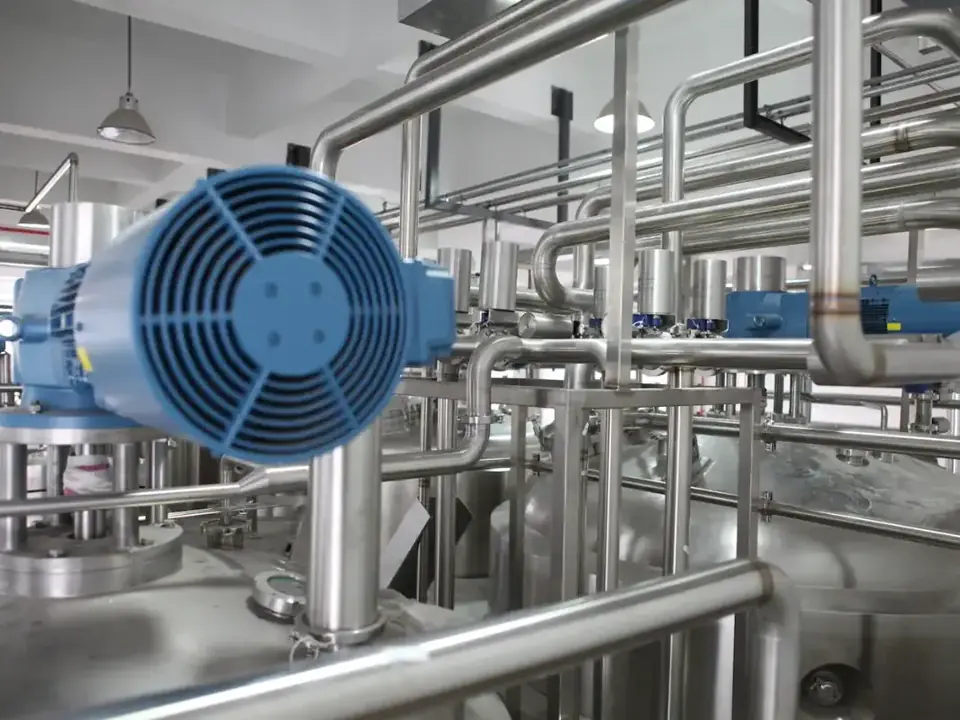
Duplex & Super Duplex Steel specifications
Per ASTM A240, UNS S32205 (%), weight %
| C | 0.030 max |
|---|---|
| Mn | 2.00 max |
| P | 0.030 max |
| S | 0.020 max |
| Si | 1.00 max |
| Cr | 22.0–23.0 |
| Ni | 4.5–6.5 |
| Mo | 3.0–3.5 |
| N | 0.14–0.20 |
| Fe | Balance |
ASTM A240, S32205 solution annealed
| Tensile strength | 655 MPa min |
|---|---|
| 0.2 % yield strength | 450 MPa min |
| Elongation | 25 % min |
| Hardness | 293 HBW max |
Designations in other standards
| UNS | S32205 / S31803 |
|---|---|
| EN / W.Nr. | 1.4462 |
| EN name | X2CrNiMoN22-5-3 |
| Forging grade | ASTM A182 F60 / F51 |
Enquire about Duplex & Super Duplex Steel
Tell us grade, size, quantity and delivery location. Every consignment ships with a test certificate.
Request a quoteWhatsApp +91 98441 25506Or call 080-41159995
How Duplex & Super Duplex Steel measures up
- Fe 69%
- Cr 22%
- Ni 5.5%
- Mo 3.2%
- N 0.2%
View as table
| Element | Nominal % |
|---|---|
| Fe | 69% |
| Cr | 22% |
| Ni | 5.5% |
| Mo | 3.2% |
| N | 0.2% |
View as table
| Property | Specified |
|---|---|
| Tensile strength | 655 MPa min |
| 0.2 % yield strength | 450 MPa min |
View as table
| Grade | PREN |
|---|---|
| Incoloy | 31.4 |
| Duplex & Super Duplex Steel | 35.9 |
| Inconel | 51.2 |
| Hastelloy | 68.3 |
Duplex is what you buy when 316L keeps cracking or pitting in chloride water but a nickel alloy is overkill. The two-phase structure gives about twice the yield strength of 316L and much better resistance to chloride stress-corrosion cracking, at a price usually closer to 316L than to the nickel alloys.
Two grades cover nearly every enquiry we see: duplex 2205 and super duplex 2507. Below is how they differ, what the two UNS numbers for 2205 mean, and how to order without getting the wrong one.
What is the difference between S31803 and S32205?
Both are duplex 2205. S31803 is the original UNS number with wider limits: chromium 21.0–23.0 %, molybdenum 2.5–3.5 % and nitrogen 0.08–0.20 %. Mills found that heats at the bottom of those ranges gave weaker pitting resistance and less stable phase balance after welding, so S32205 was added with tighter, higher minimums: chromium 22.0–23.0 %, molybdenum 3.0–3.5 % and nitrogen 0.14–0.20 %.
Almost all 2205 made today meets both, and plate and pipe are commonly certified as S31803/S32205. If your drawing says S31803, S32205 material satisfies it. If it says S32205, a heat that only meets S31803 does not. Check the certificate.
PREN: the number buyers compare
Pitting resistance equivalent number is calculated from the chemistry, most often as PREN = %Cr + 3.3 × %Mo + 16 × %N. It is a ranking tool, not a guarantee, but it tracks real seawater behaviour quite well.
316L comes out around 24, 2205 around 35, and 2507 above 40. That last figure is the usual working definition of super duplex. On a project specification you may see a minimum PREN written in, often calculated on the actual heat analysis from the certificate.
| Property | S31803 | S32205 | S32750 (2507) | 316L (S31603) |
|---|---|---|---|---|
| EN / W.Nr. | 1.4462 | 1.4462 | 1.4410 | 1.4404 |
| Cr % | 21.0–23.0 | 22.0–23.0 | 24.0–26.0 | 16.0–18.0 |
| Ni % | 4.5–6.5 | 4.5–6.5 | 6.0–8.0 | 10.0–14.0 |
| Mo % | 2.5–3.5 | 3.0–3.5 | 3.0–5.0 | 2.00–3.00 |
| N % | 0.08–0.20 | 0.14–0.20 | 0.24–0.32 | 0.10 max |
| Tensile, min | 620 MPa | 655 MPa | 795 MPa | 485 MPa |
| Yield, min | 450 MPa | 450 MPa | 550 MPa | 170 MPa |
| Typical PREN | about 34 | about 35 | above 40 | about 24 |
| Magnetic | Yes | Yes | Yes | No (annealed) |
When super duplex 2507 is worth it
2507 has 24–26 % chromium, 6–8 % nickel, 3–5 % molybdenum and 0.24–0.32 % nitrogen. Minimum yield is 550 MPa against 450 MPa for 2205, and pitting and crevice resistance in warm seawater is markedly better. It is used for seawater cooling and firewater lines, desalination high-pressure piping, offshore process piping and pump parts.
For brackish cooling water, process water with moderate chlorides, or pulp and paper service, 2205 is normally enough. Paying for 2507 makes sense when the water is warm, salty and stagnant at times, or when a failure would be expensive to fix.
Limits you need to respect
- Temperature: the ferrite phase embrittles with long exposure around 475 °C, so design codes generally restrict 2205 to roughly 300 °C maximum. Duplex is not a furnace or boiler material.
- Welding: use overalloyed filler such as ER2209 for 2205 and ER2594 for 2507, and control heat input and interpass temperature to keep the ferrite-austenite balance.
- Low temperature: toughness drops at sub-zero temperatures more than with austenitic grades; check impact requirements for cold service.
- It is magnetic. That is normal for duplex and not a sign of wrong material.
Working with duplex in the shop
Fabricators used to 304 and 316L notice the difference on the first job. Duplex is stronger, so it needs more press force to bend and springs back more; allow for that on rolled shells and bent pipe. Plasma and laser cutting work well, but grind back any heat-affected edge that will see corrosive service.
Cleanliness matters as much as with any stainless. Use dedicated stainless wire brushes and grinding discs, keep carbon steel dust away, and pickle and passivate welds so the heat tint is removed. A weld that looks fine but carries heavy oxide tint will pit early in seawater, which then gets blamed on the material.
For acceptance testing, many oil, gas and desalination projects call for ferrite measurement and an ASTM A923 test on the base metal to show no harmful intermetallic phases. Mention it at enquiry if your specification needs it.
Duplex vs SS 329
AISI 329 is an older duplex grade with higher carbon and no deliberate nitrogen addition. It is still traded for shafts and pump parts, and we list it with our magnetic stainless grades. For welded piping and plate, modern nitrogen-alloyed 2205 has replaced it because it welds without losing toughness or corrosion resistance.
Ordering duplex from Bangalore
Specifications to quote: plate, sheet and strip ASTM A240; seamless pipe and welded pipe A790; tube A789; bar A276 or A479; forged flanges and fittings A182 (F51 for S31803, F60 for S32205, F53 for S32750); butt-weld fittings A815. Each lot is backed by a test certificate issued through a Govt. recognised test house. If you are comparing against 316L stainless on cost, send us both sizes and we will quote both.
Where Duplex & Super Duplex Steel is used
Questions about Duplex & Super Duplex Steel
Still unsure? Call 080-41159995 or WhatsApp +91 98441 25506 and we will answer from the trade desk.
Is duplex stainless steel magnetic?
Yes. Duplex 2205 and super duplex 2507 contain roughly 40–60 % ferrite, and ferrite is magnetic, so a magnet will stick firmly. This is normal and does not mean the material is wrong or of poor quality. Austenitic grades like 304 and 316L are non-magnetic when annealed, which is why a magnet can at least tell duplex apart from them.
Is duplex 2205 better than 316L?
For chloride service, yes. 2205 has a PREN around 35 against about 24 for 316L, so it resists pitting and crevice corrosion better, and it is far more resistant to chloride stress-corrosion cracking. Its minimum yield strength of 450 MPa is more than double that of 316L. 316L is easier to weld and form, works at higher and cryogenic temperatures, and costs less for mild duties.
What makes a stainless steel super duplex?
Super duplex is generally defined as a duplex stainless steel with a PREN of 40 or more, achieved with around 25 % chromium, 3–5 % molybdenum and high nitrogen. The best-known grade is 2507, UNS S32750 (EN 1.4410). Others include S32760, which adds copper and tungsten. They are used mainly for seawater and offshore service.
What is the maximum temperature for duplex 2205?
Duplex 2205 is normally limited to about 300 °C for long-term service. Above that, the ferrite phase slowly embrittles, a reaction centred around 475 °C, and longer exposure at higher temperatures forms sigma phase. Pressure equipment codes such as ASME set the exact maximum for allowable stresses. For hotter duty, austenitic stainless or nickel alloys are used instead.
What filler wire is used to weld duplex 2205?
Duplex 2205 is usually welded with ER2209 wire or E2209 electrodes, which carry more nickel than the base metal so the weld forms enough austenite on cooling. Super duplex 2507 uses ER2594 or E2594. Heat input is kept within a controlled band and interpass temperature low, and procedure qualification often includes a ferrite count and corrosion test.
Keep exploring
Special Alloys & Non-Ferrous Metals
Special alloys are metals chosen when ordinary steel, stainless or brass will fail: nickel alloys such as Inconel, Incoloy, Monel…
View details →
SS 329
SS 329 (UNS S32900) is a duplex stainless steel with a mixed austenite and ferrite structure, 23–28% chromium, 2–5% nickel and…
View details →
SS 316L
SS 316L (UNS S31603) is 316 stainless steel with carbon held to 0.030% maximum.
View details →Monel
Monel 400 (UNS N04400) is a nickel-copper alloy, about 63 % nickel minimum and 28–34 % copper, used for seawater, brine,…
View details →
Marine & Offshore
Marine grade metals are alloys that resist seawater corrosion: 316L stainless for deck hardware and fittings, duplex for seawater…
View details →
Chemical & Process Plants
In chemical plants the metal is chosen by the fluid it handles.
View details →
Stainless Steel Grade Chart
A stainless steel grade chart groups grades by family, and the grades here fall into four.
View details →Need Duplex & Super Duplex Steel with a test certificate?
Send the material, grade, size and quantity. We confirm availability and price, with the test certificate details.