
SS 329: a duplex stainless steel, not a martensitic one
SS 329 (UNS S32900) is a duplex stainless steel with a mixed austenite and ferrite structure, 23–28% chromium, 2–5% nickel and 1–2% molybdenum. The ferrite makes it magnetic, but it cannot be hardened like 410. It offers about twice the yield strength of 304 and good resistance to chloride stress corrosion cracking. Jubilant Impex supplies 329 in Bangalore.
SS 329 specifications
Per ASTM A240 (plate, sheet and strip), UNS S32900, weight %
| C | 0.08 max |
|---|---|
| Mn | 1.00 max |
| P | 0.040 max |
| S | 0.030 max |
| Si | 0.75 max |
| Cr | 23.0–28.0 |
| Ni | 2.0–5.0 |
| Mo | 1.00–2.00 |
ASTM A240 (annealed)
| Tensile strength | 620 MPa min |
|---|---|
| Yield strength (0.2% offset) | 485 MPa min |
| Elongation in 50 mm | 15% min |
| Hardness | 269 HB max / 28 HRC max |
Typical values
| Density | approx. 7.7 g/cm³ |
|---|---|
| Elastic modulus | approx. 200 GPa |
| Magnetic | Yes, due to ferrite content |
Designations in other standards
| UNS | S32900 |
|---|---|
| JIS | SUS329J1 (closest, not identical) |
| EN / W.Nr. | No exact equivalent; 1.4460 / X3CrNiMoN27-5-2 is the closest |
Enquire about SS 329
Tell us grade, size, quantity and delivery location. Every consignment ships with a test certificate.
Request a quoteWhatsApp +91 98441 25506Or call 080-41159995
How SS 329 measures up
- Fe 70%
- Cr 26%
- Ni 3.5%
- Mo 1.5%
View as table
| Element | Nominal % |
|---|---|
| Fe | 70% |
| Cr | 26% |
| Ni | 3.5% |
| Mo | 1.5% |
View as table
| Property | Specified |
|---|---|
| Tensile strength | 620 MPa min |
| Yield strength | 485 MPa min |
View as table
| Grade | PREN |
|---|---|
| SS 410 | 12.5 |
| SS 420 | 13.0 |
| SS 431 | 16.0 |
| SS 430 | 17.0 |
| SS 440 | 17.0 |
| SS 446 | 25.0 |
| SS 329 | 30.4 |
On our product list, 329 sits with the magnetic grades, next to 410, 420 and 430. That grouping is how the trade has long sorted stainless steel: does a magnet stick or not? A magnet does stick to 329. But metallurgically it belongs to a different family altogether, and treating it like a martensitic or ferritic grade leads to wrong choices.
So here is the honest picture: what 329 is, why it is magnetic, what it is good for, and why many engineers now specify a newer duplex grade instead.
Why is 329 listed with the magnetic grades?
Because it is magnetic. A duplex steel is made with a balanced mix of two structures: austenite, the non-magnetic structure in 304 and 316, and ferrite, the magnetic structure in 430. In 329 a large share of the steel is ferrite, so a magnet pulls on it firmly.
That is where the similarity ends. Martensitic grades like 410 and 420 harden on quenching. 329 does not. Ferritic grades like 430 have no nickel and only modest toughness and corrosion resistance. 329 has nickel and molybdenum, and corrosion resistance in many environments closer to or better than 316. If you have been given 329 as a substitute for 410, or the other way round, stop and check the application.
What the duplex structure gives you
Mixing austenite and ferrite combines the strengths of both. ASTM A240 sets 329's minimum yield at 485 MPa, more than twice the 205 MPa minimum for 304 and 316. That allows thinner walls for the same pressure, or smaller sections for the same load.
The ferrite also gives much better resistance to chloride stress corrosion cracking than the standard austenitic grades. That is the failure where 304 or 316 vessels and tubes crack in hot chloride water. With 23–28% chromium and 1–2% molybdenum, 329's resistance to pitting is also good, though it depends on where in the composition range a particular heat falls.
| Property | 329 (S32900) | 2205 (S32205) | 316L |
|---|---|---|---|
| Structure | Duplex | Duplex | Austenitic |
| Chromium | 23.0–28.0% | 22.0–23.0% | 16.0–18.0% |
| Nickel | 2.0–5.0% | 4.5–6.5% | 10.0–14.0% |
| Molybdenum | 1.00–2.00% | 3.0–3.5% | 2.00–3.00% |
| Nitrogen | Not specified | 0.14–0.20% | 0.10% max |
| Yield strength, min | 485 MPa | 450 MPa | 170 MPa |
| Chloride stress corrosion cracking | Good resistance | Good resistance | Susceptible in hot chlorides |
| Weldability | Limited (HAZ ferrite) | Good with proper procedure | Excellent |
| Magnetic | Yes | Yes | No |
329 and 2205: the honest comparison
329 is one of the original duplex grades. Its main weakness was welding. Without a deliberate nitrogen addition, the heat-affected zone of a weld tends to end up with too much ferrite, which lowers toughness and corrosion resistance at the weld. For welded equipment that was a serious drawback.
Second-generation duplex steels fixed this by adding nitrogen, which helps austenite re-form as the weld cools. The most widely used is 2205 (UNS S31803 / S32205), with 22–23% chromium, 3.0–3.5% molybdenum and 0.14–0.20% nitrogen in the S32205 version. 2205 has better weldability, higher pitting resistance and is far more widely produced. For new welded equipment, most designers now specify 2205 rather than 329. See our duplex steel page for 2205 and related grades.
329 still has a place in bar and machined components, replacement parts built to older drawings, and heat-exchanger and process parts where it has a service history.
Applications
329 is used for heat exchanger tubing and parts in chloride-bearing cooling water, chemical process equipment where stress corrosion cracking is a risk, pump and valve parts, shafts, and components in pulp and paper and oil and gas processing. Our chemical process plants page covers where duplex grades fit among other corrosion-resistant materials.
Temperature and fabrication limits
Like all duplex steels, 329 should not be used for long periods above roughly 300 °C, because its ferrite is prone to 475 °C embrittlement and, at higher temperatures, sigma phase. It is a strength and corrosion grade for ambient to moderate temperatures, not a heat-resisting grade.
Its higher strength means more force is needed for forming and machining than with 316. Welding needs controlled heat input and suitable duplex filler; for critical welded work, discuss 2205 with your designer first.
Checking a 329 certificate
Because 329's composition range is wide, two heats can behave quite differently. A heat near the top of the chromium and molybdenum ranges resists pitting much better than one near the bottom. When comparing offers, look at the actual chromium, nickel and molybdenum values on the test certificate, not only the grade name. A ferrite content measurement is sometimes requested for duplex material, and we can discuss this at enquiry. Our guide on reading a test certificate explains the layout.
Availability
329 is not produced in the volumes it once was. We supply it in bar and other forms subject to availability, and will confirm size and certification at enquiry. Where 329 is not available in your size, we can tell you whether 2205 is a suitable alternative for your application. Every lot is supplied with a test certificate.
Where SS 329 is used
Questions about SS 329
Still unsure? Call 080-41159995 or WhatsApp +91 98441 25506 and we will answer from the trade desk.
Is 329 stainless steel duplex?
Yes. 329 is a duplex stainless steel with a mixed austenitic-ferritic structure. It is often listed with magnetic grades because the ferrite makes it magnetic, but it is not martensitic and cannot be hardened by heat treatment. It is one of the earliest commercial duplex grades.
Is 329 stainless steel magnetic?
Yes. A large share of its structure is ferrite, which is ferromagnetic, so a magnet sticks to it. This is true of all duplex stainless steels, including 2205. Magnetism here does not indicate lower corrosion resistance; 329 outperforms 304 in many chloride environments.
What is the difference between 329 and 2205?
Both are duplex steels. 2205 has more molybdenum, 3.0–3.5% against 1.00–2.00%, and a deliberate nitrogen addition, which improves weld quality and pitting resistance. 329 has a wider chromium range and no specified nitrogen. 2205 is the more widely used and more weldable grade today.
Can 329 stainless steel be hardened?
No, not by heat treatment. Duplex steels do not form martensite on quenching. 329 gets its high strength from its two-phase structure, and can be strengthened further only by cold working. Heat treatment of 329 is limited to solution annealing.
Is 329 still produced?
Yes, but in smaller volumes than in the past, because 2205 and other nitrogen-alloyed duplex grades have replaced it in most new designs. It remains in use for bar products, older equipment and replacement parts. Availability should be checked by size before an order is planned.
What is the maximum service temperature for 329?
Duplex steels like 329 are normally limited to about 300 °C for long-term service. Above that, the ferrite is prone to 475 °C embrittlement, and at higher temperatures sigma phase can form, both of which reduce toughness. For hotter service, austenitic or heat-resisting grades are used.
Keep exploring
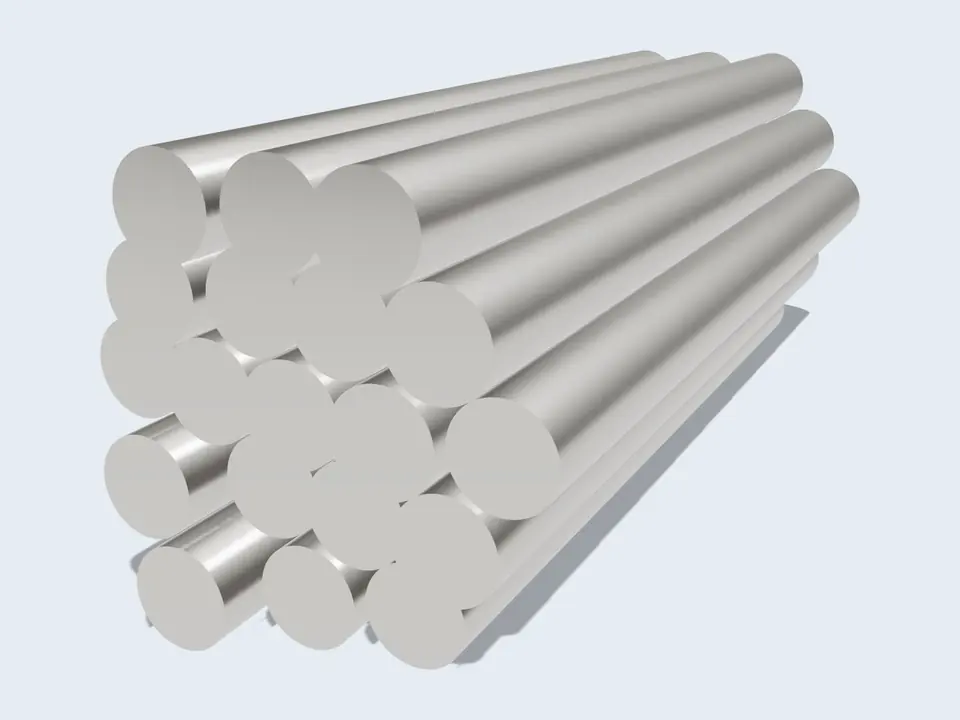
Magnetic Stainless Steel Grades (400 Series)
Magnetic stainless steel grades are the ferritic, martensitic and duplex types that a magnet attracts.
View details →
Duplex & Super Duplex Steel
Duplex 2205 is a stainless steel of roughly half ferrite and half austenite with 22 % chromium, 5–6 % nickel, about 3 %…
View details →
SS 316L
SS 316L (UNS S31603) is 316 stainless steel with carbon held to 0.030% maximum.
View details →
SS 430
SS 430 (UNS S43000) is a ferritic stainless steel with 16–18% chromium and almost no nickel.
View details →
Chemical & Process Plants
In chemical plants the metal is chosen by the fluid it handles.
View details →
Oil & Gas
Most oil and gas piping is carbon steel, usually ASTM A106 Grade B seamless for process lines and A53 Grade B for utilities.
View details →
Marine & Offshore
Marine grade metals are alloys that resist seawater corrosion: 316L stainless for deck hardware and fittings, duplex for seawater…
View details →Need SS 329 with a test certificate?
Send the material, grade, size and quantity. We confirm availability and price, with the test certificate details.