
Inconel 600, 601, 625 and 718 Nickel Alloys
Inconel is a family of nickel-chromium alloys for high heat and corrosion. Inconel 600 (UNS N06600) suits furnace parts and caustic service, 601 resists scaling better, 625 (N06625) adds molybdenum and niobium for chloride pitting and strength, and 718 is age-hardened for high-strength parts. Jubilant Impex, Bangalore, supplies Inconel with a test certificate.
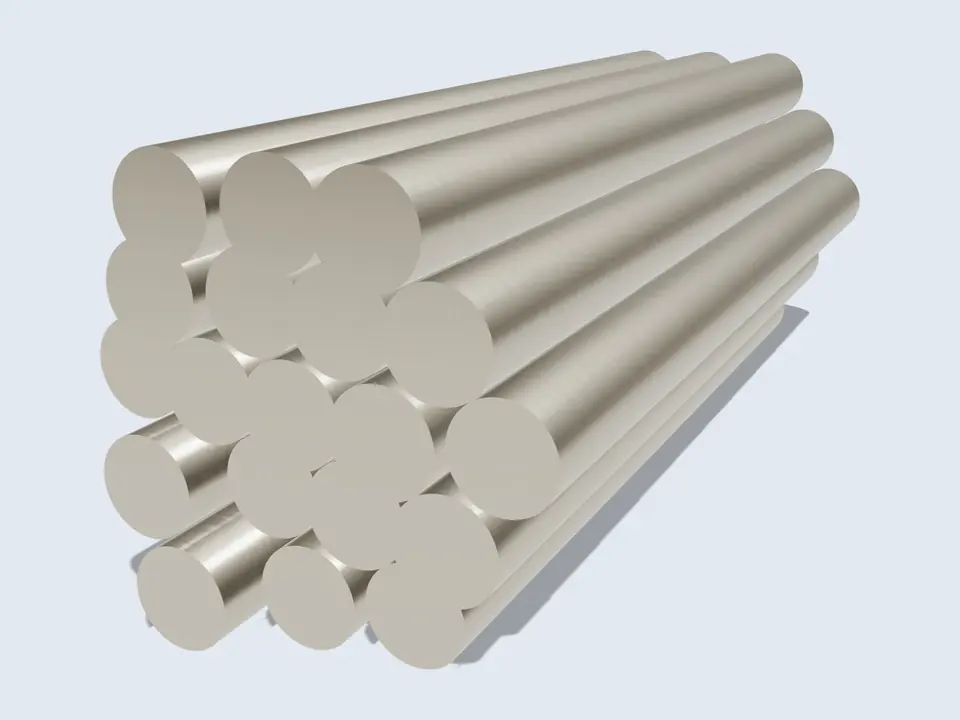
Inconel specifications
Per ASTM B443 / B446, UNS N06625 (%), weight %
| Ni | 58.0 min |
|---|---|
| Cr | 20.0–23.0 |
| Mo | 8.0–10.0 |
| Nb + Ta | 3.15–4.15 |
| Fe | 5.0 max |
| C | 0.10 max |
| Mn | 0.50 max |
| Si | 0.50 max |
| P | 0.015 max |
| S | 0.015 max |
| Al | 0.40 max |
| Ti | 0.40 max |
| Co | 1.0 max (if determined) |
ASTM B446 Grade 1, annealed bar up to 102 mm
| Tensile strength | 827 MPa (120 ksi) min |
|---|---|
| 0.2 % proof stress | 414 MPa (60 ksi) min |
| Elongation | 30 % min |
Typical values
| Density | 8.44 g/cm³ |
|---|---|
| Melting range | 1290–1350 °C |
| Magnetic | Non-magnetic at room temperature |
Designations in other standards
| UNS | N06625 |
|---|---|
| W.Nr. | 2.4856 |
| DIN | NiCr22Mo9Nb |
Enquire about Inconel
Tell us grade, size, quantity and delivery location. Every consignment ships with a test certificate.
Request a quoteWhatsApp +91 98441 25506Or call 080-41159995
How Inconel measures up
- Ni 11.5%
- Ni 11.5%
- Cr 22%
- Mo 9.0%
View as table
| Element | Nominal % |
|---|---|
| Ni | 11.5% |
| Ni | 58% |
| Cr | 22% |
| Mo | 9.0% |
View as table
| Property | Specified |
|---|---|
| Tensile strength | 827 MPa |
| 0.2 % proof stress | 414 MPa |
View as table
| Grade | PREN |
|---|---|
| Incoloy | 31.4 |
| Duplex & Super Duplex Steel | 35.9 |
| Inconel | 51.2 |
| Hastelloy | 68.3 |
People ask us for Inconel the way they ask for a Xerox. The word covers a dozen alloys that behave quite differently, and the one you need depends on whether your problem is heat, acid, chlorides or load. Four grades cover most of what South Indian plants buy: 600, 601, 625 and 718.
A note on the name: Inconel is a trademark of Special Metals Corporation. Equivalent material from other mills is sold by UNS number, and a purchase order written to the UNS number and ASTM specification gets you exactly the same chemistry.
Inconel 600: the plain workhorse
Inconel 600 is about three-quarters nickel with 14–17 % chromium and 6–10 % iron. No molybdenum, no niobium, nothing fancy. That simple chemistry gives it good oxidation resistance up to furnace temperatures, very good resistance to caustic soda and other alkalis, and almost complete immunity to chloride stress-corrosion cracking, which is the failure that ends 304 and 316 in hot chloride water.
Typical jobs: furnace muffles, retorts and heat-treatment baskets, heater sheaths, caustic evaporator tubes and nuclear steam generator parts. Rod and bar are bought to ASTM B166, seamless pipe and tube to B167, and plate, sheet and strip to B168.
Inconel 601 for scaling at red heat
601 raises chromium to 21–25 % and adds 1.0–1.7 % aluminium. At high temperature the aluminium helps form a tight oxide layer that does not spall when the part is cycled from hot to cold. If your 600 muffle or radiant tube is flaking after a few months of thermal cycling, 601 is the usual next step. It has less nickel than 600 and a balance of iron.
| Property | Inconel 600 | Inconel 601 | Inconel 625 | Inconel 718 |
|---|---|---|---|---|
| UNS | N06600 | N06601 | N06625 | N07718 |
| Ni | 72.0 min (incl. Co) | 58.0–63.0 | 58.0 min | 50.0–55.0 |
| Cr | 14.0–17.0 | 21.0–25.0 | 20.0–23.0 | 17.0–21.0 |
| Fe | 6.00–10.00 | Balance | 5.0 max | Balance |
| Mo | – | – | 8.0–10.0 | 2.80–3.30 |
| Nb + Ta | – | – | 3.15–4.15 | 4.75–5.50 |
| Al / Ti | – | Al 1.0–1.7 | Al 0.40 max, Ti 0.40 max | Al 0.20–0.80, Ti 0.65–1.15 |
| Strengthened by | Solid solution | Solid solution | Solid solution | Age hardening |
| Typical use | Furnace parts, caustic, heater sheaths | Muffles, radiant tubes, burners | Seawater, acid chlorides, weld overlay | Turbine parts, bolts, wellhead |
Why most enquiries are for Inconel 625
625 is the grade that turns up on chemical, offshore and pollution-control drawings. It combines 20–23 % chromium with 8–10 % molybdenum and 3.15–4.15 % niobium. Molybdenum gives resistance to pitting and crevice corrosion in seawater and acid chlorides. Niobium stiffens the nickel matrix, so annealed 625 bar must reach 827 MPa tensile and 414 MPa proof stress, roughly two and a half times the minimum proof stress of annealed 316L.
It is also very weldable. Matching filler (ERNiCrMo-3) is used to overlay carbon steel valves and pipe for sour gas, and to join dissimilar metals. Common uses are seawater piping, bellows and expansion joints, flue gas scrubber parts, heat-exchanger tubes and marine fasteners. Plate is bought to ASTM B443, pipe and tube to B444 and bar to B446.
Inconel 718 is a different kind of alloy
600, 601 and 625 get their strength from what is dissolved in the nickel. 718 is precipitation-hardened: after solution treatment it is aged, and niobium, titanium and aluminium come out as fine particles that lift yield strength well beyond any of the others. That is why it is used for gas turbine discs and casings, high-temperature bolts, springs and oilfield wellhead parts.
Because strength depends on heat treatment, always state the condition you want. Bar to ASTM B637, AMS 5662 (solution treated) or AMS 5663 (solution treated and aged) are the usual routes; oilfield buyers often call for API 6A718. Mixing up the condition is the most common mistake we see on 718 orders.
| Form | Usual specification |
|---|---|
| Round bar and rod | ASTM B166 (600, 601), B446 (625), B637 (718) |
| Plate, sheet and strip | ASTM B168 (600, 601), B443 (625), B670 (718) |
| Seamless pipe and tube | ASTM B167 (600, 601), B444 (625) |
| Butt-weld fittings | ASTM B366 |
Is Inconel magnetic?
In practice, no. Inconel 600 has a Curie temperature of about −124 °C, so at room temperature it is non-magnetic, and 625 and 718 behave the same way. A magnet will not pick up any of the common grades. This is also why a magnet cannot tell you which nickel alloy you have; that needs a chemical check.
Before you upgrade: is stainless enough?
Inconel costs several times what 316L or 310S does, so it is worth asking whether the job really needs it. Rough rules we use when a customer is unsure:
If the trouble is general corrosion at room temperature, a better stainless or duplex usually fixes it. If the part runs above roughly 800 °C and cycles hot and cold, or sits in hot caustic, or cracks in hot chloride water, that is Inconel territory. If you cannot yet say what is attacking the part, pin down the temperature, the chemicals and the chloride level first, then share them with us so we can suggest grades to compare.
Ordering Inconel through us
Tell us the grade, form, size and specification, and whether you need the ASME SB version for a coded pressure vessel. Material comes with a test certificate through a Govt. recognised test house; read our guide to test certificates if you want to check one yourself. For acid duties where even 625 struggles, look at Hastelloy C-276, and for furnace work on a tighter budget, compare Incoloy 800H.
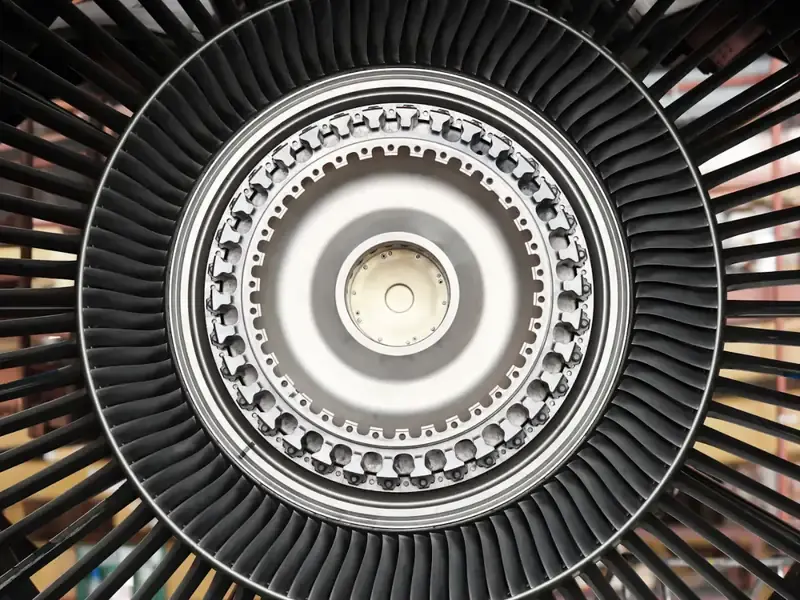
Where Inconel is used
Questions about Inconel
Still unsure? Call 080-41159995 or WhatsApp +91 98441 25506 and we will answer from the trade desk.
What is Inconel used for?
Inconel is used where parts must stay strong and resist oxidation or corrosion at high temperature: furnace muffles and heat-treatment fixtures, gas turbine and exhaust parts, chemical plant heat exchangers, seawater and offshore piping, nuclear steam generators and oilfield equipment. The exact grade depends on the duty, for example 600 for furnaces and caustic, 625 for chlorides, 718 for high strength.
What is the difference between Inconel 600 and Inconel 625?
Inconel 600 is a simple nickel-chromium-iron alloy with 72 % nickel minimum and no molybdenum. Inconel 625 adds 8–10 % molybdenum and 3.15–4.15 % niobium. That makes 625 much stronger, with annealed bar needing 827 MPa tensile against about 550 MPa for 600, and far better against pitting in seawater and acid chlorides. 600 is cheaper and fine for furnace and caustic service.
Is Inconel stronger than stainless steel?
At room temperature, annealed Inconel 625 has roughly twice the tensile strength and about three times the yield strength of annealed 316L. The bigger difference shows at high temperature, where Inconel keeps much more of its strength and resists scaling. Inconel 600 is closer to stainless in room-temperature strength but far better in hot caustic and chloride stress-corrosion conditions.
Why is Inconel difficult to machine?
Inconel work-hardens quickly at the cutting edge, keeps its strength at the high temperatures generated during cutting, and conducts heat poorly, so heat stays in the tool. Machinists use rigid setups, sharp carbide or ceramic tools, low cutting speeds, positive feeds that get under the hardened layer, and plenty of coolant. Age-hardened 718 is the hardest of the common grades to cut.
Can Inconel be welded?
Yes. Inconel 600, 601 and 625 weld well by TIG, MIG and manual metal arc using matching nickel-alloy fillers such as ERNiCrMo-3 for 625. Keep the joint clean of sulphur, oil and paint, use low heat input and do not preheat. Inconel 718 can be welded too, but it is usually welded in the solution-treated condition and aged afterwards.
Does Inconel rust?
Inconel does not rust in the way carbon steel does, because it is mostly nickel and chromium and forms a protective chromium oxide film. It can still corrode in the wrong chemical, for example hot hydrochloric acid, and grades without molybdenum such as 600 can pit in stagnant seawater. Choosing the right grade for the medium matters more than the brand name.
Keep exploring
Special Alloys & Non-Ferrous Metals
Special alloys are metals chosen when ordinary steel, stainless or brass will fail: nickel alloys such as Inconel, Incoloy, Monel…
View details →
Incoloy
Incoloy 800, 800H and 800HT are nickel-iron-chromium alloys for high-temperature furnace, reformer and heater parts; 800H and…
View details →
Hastelloy
Hastelloy C-276 (UNS N10276) is a nickel-molybdenum-chromium alloy with 15–17 % molybdenum, used for wet chlorine, hypochlorite,…
View details →Monel
Monel 400 (UNS N04400) is a nickel-copper alloy, about 63 % nickel minimum and 28–34 % copper, used for seawater, brine,…
View details →
Oil & Gas
Most oil and gas piping is carbon steel, usually ASTM A106 Grade B seamless for process lines and A53 Grade B for utilities.
View details →Chemical & Process Plants
In chemical plants the metal is chosen by the fluid it handles.
View details →
How to Read a Mill Test Certificate
To read a mill test certificate, first match the heat number on the certificate to the marking on the material.
View details →Need Inconel with a test certificate?
Send the material, grade, size and quantity. We confirm availability and price, with the test certificate details.