
- Home
- Industries We Serve
- Electroplating & Surface Finishing
Electroplating materials, from the anode to the bus bar
Electroplating materials are the metals a plating line consumes or conducts through: nickel anodes for nickel baths, lead-tin or lead-antimony for hard chrome anodes, zinc and tin for their own baths, and EC copper bus bars and flight bars to carry current. Jubilant Impex supplies all of them from Bangalore.
A plating line is an electrical circuit with a chemistry problem in the middle. Current flows from the rectifier through copper bus bars and flight bars, into the anodes, through the bath and onto the work. Every metal along that path has to do its job: carry current with little loss, or dissolve at the rate the bath needs and nothing more.
Here is the line, piece by piece, as a plating shop owner would buy it.
Nickel anodes: flat or oval?
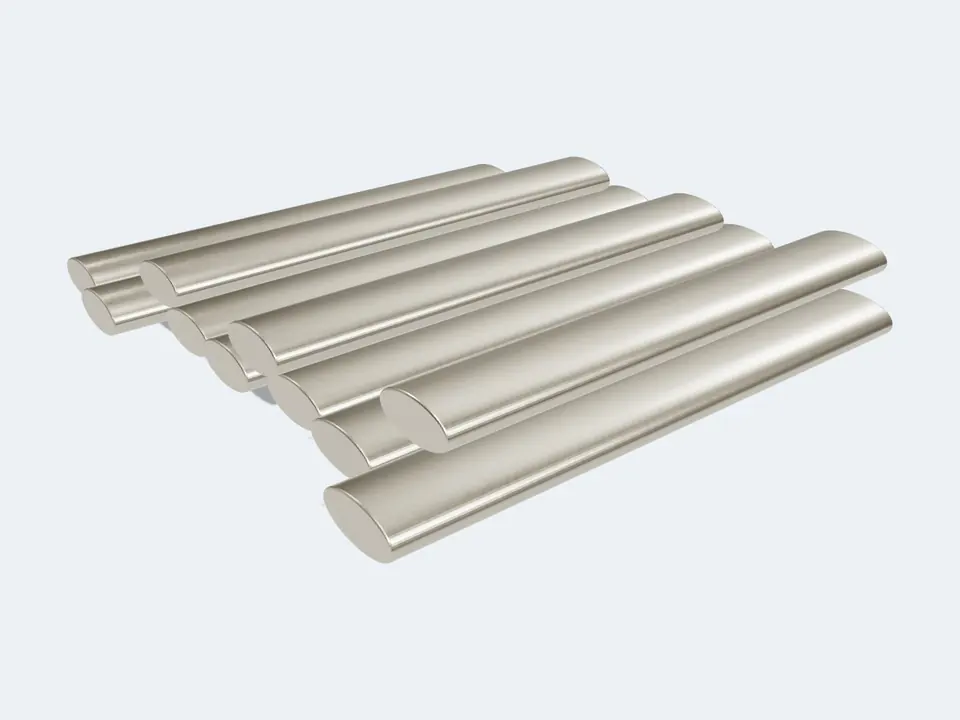
Nickel anodes dissolve to replace the nickel plated out onto the work, so the bath stays in balance. Purity matters, because impurities in the anode end up in the bath as sludge or as dark, rough deposits. We supply flat nickel anodes and oval nickel anodes; the choice usually comes down to what your hooks, anode bars and tank spacing were designed for.
Most bright and semi-bright nickel lines are run with anode area at least equal to the work area. Too little anode area pushes up current density on the anode, which can make it passivate and stop dissolving properly.
Keep a few spare anodes cut and hooked. When an anode thins out at the waterline or drops into the tank, the shop that has a replacement ready keeps the line running; the shop that has to order one loses a shift.
Copper for bus bars, flight bars and hooks
Every volt lost in the bus bar is a volt the rectifier has to make up, and the lost energy turns into heat in the plating shop. EC copper bars and flats carry current from the rectifier to the tank with the least loss. Flight bars and cathode rods are often copper too, sometimes with brass hooks for wear.
Acid copper plating baths normally use phosphorised copper anodes, which behave differently from plain EC copper in the bath. Tell us the bath type when you ask for copper so we supply the right material for the job.
Lead for hard chrome
Chrome plating uses insoluble anodes; the chromium comes from chromic acid in the bath, not from the anode. Those anodes are lead alloys, most often lead with around 7% tin or with antimony, which form a lead dioxide surface that keeps chromium in the correct state. We supply lead, tin-lead and antimony for anode makers and for shops that cast their own.
Lead sheet has also long been used to line older chrome and sulphuric acid tanks. Many shops have moved to PVC or polypropylene-lined tanks, but lead still turns up in repairs to existing ones, and in heating and cooling coils for chrome baths, where its resistance to chromic acid at temperature is useful.
What goes where
View as table
| Metal | Density |
|---|---|
| Aluminium | 2.70 g/cm³ |
| Zinc | 7.14 g/cm³ |
| Tin | 7.29 g/cm³ |
| Stainless 304 | 7.93 g/cm³ |
| Brass 70/30 | 8.53 g/cm³ |
| Nickel | 8.90 g/cm³ |
| Copper | 8.94 g/cm³ |
| Lead | 11.34 g/cm³ |
Grades and products buyers in this sector order
Electroplating Anodes
Nickel anodes are the soluble electrodes that replace the nickel deposited on parts in a nickel plating bath.
View details →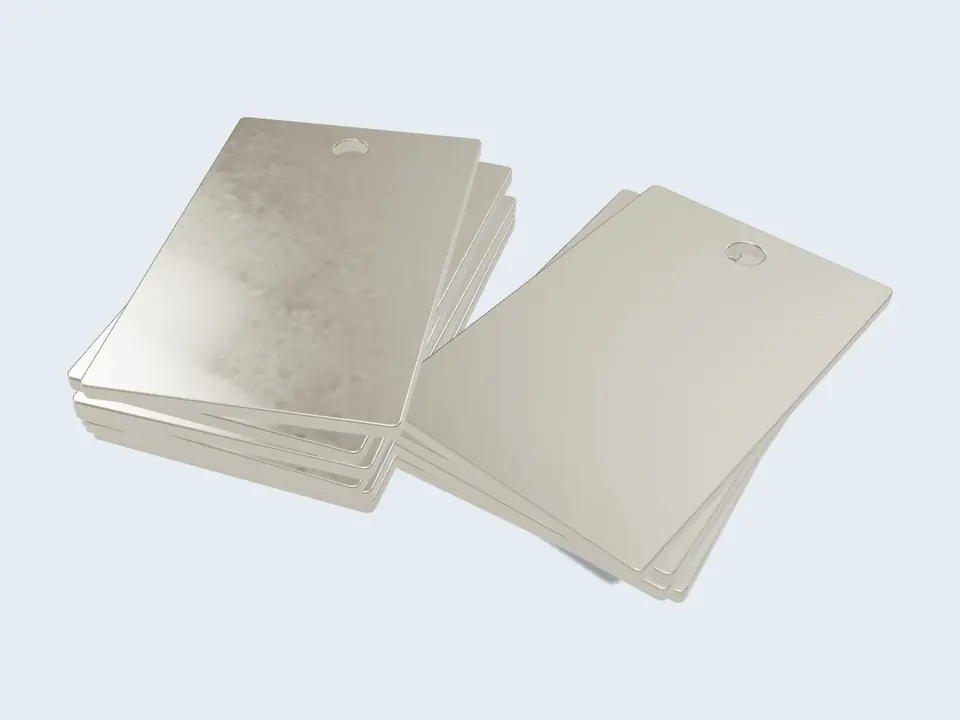
Flat Nickel Anodes
A flat nickel anode is a rectangular slab or plate of refined nickel, usually 99.9 percent nickel or higher, hung on a hook in a…
View details →Oval Nickel Anodes
An oval nickel anode is an elliptical bar of refined nickel, hung on a hook inside an anode bag, used as the soluble anode in…
View details →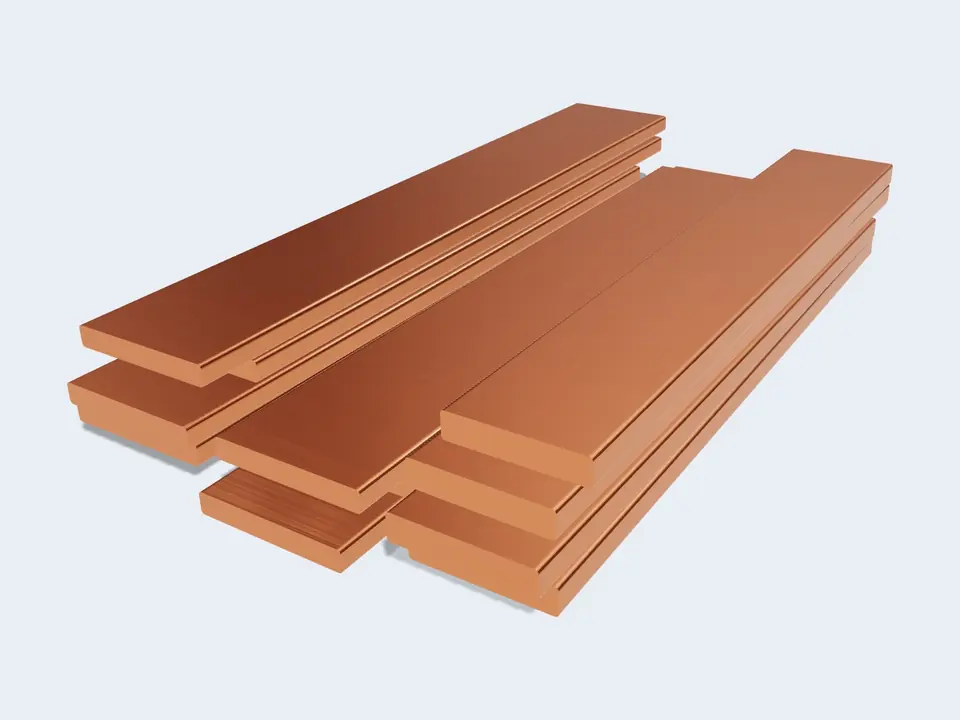
Copper Rods, Bars & Flats
Jubilant Impex supplies copper bus bar in Bangalore as E.C. grade flats, plus round, square and hexagonal copper rods, in hard,…
View details →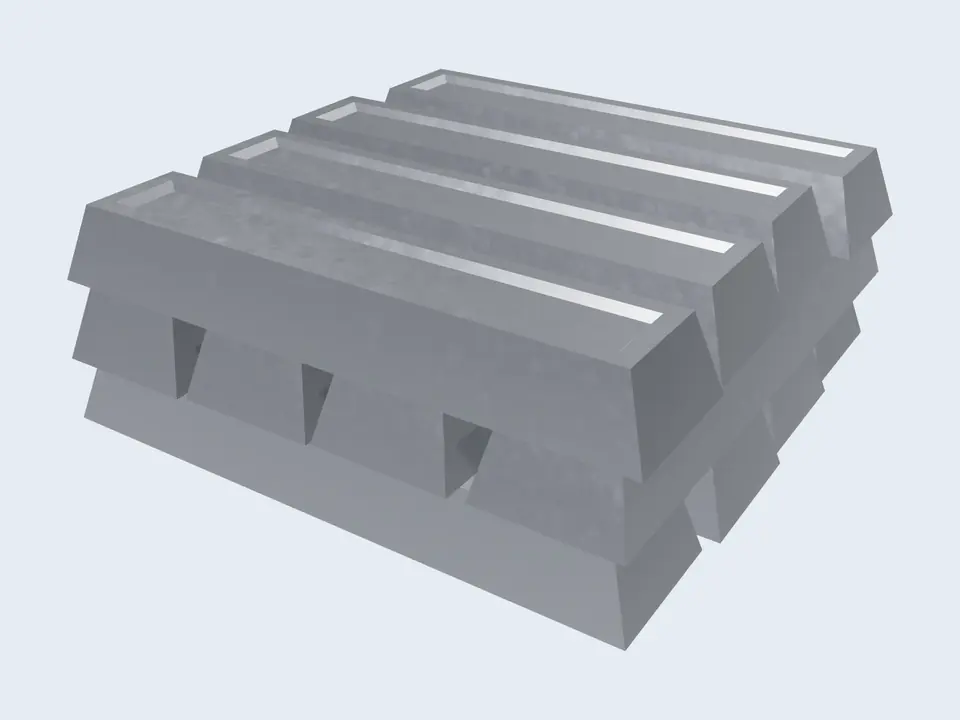
Lead Sheets & Products
Lead sheet is rolled lead, about 11.34 g/cm³ in density, soft enough to form by hand and resistant to sulphuric acid.
View details →
Tin-Lead (Solder) Alloys
Tin-lead solder is an alloy of tin and lead that melts between 183 °C and about 260 °C depending on the ratio.
View details →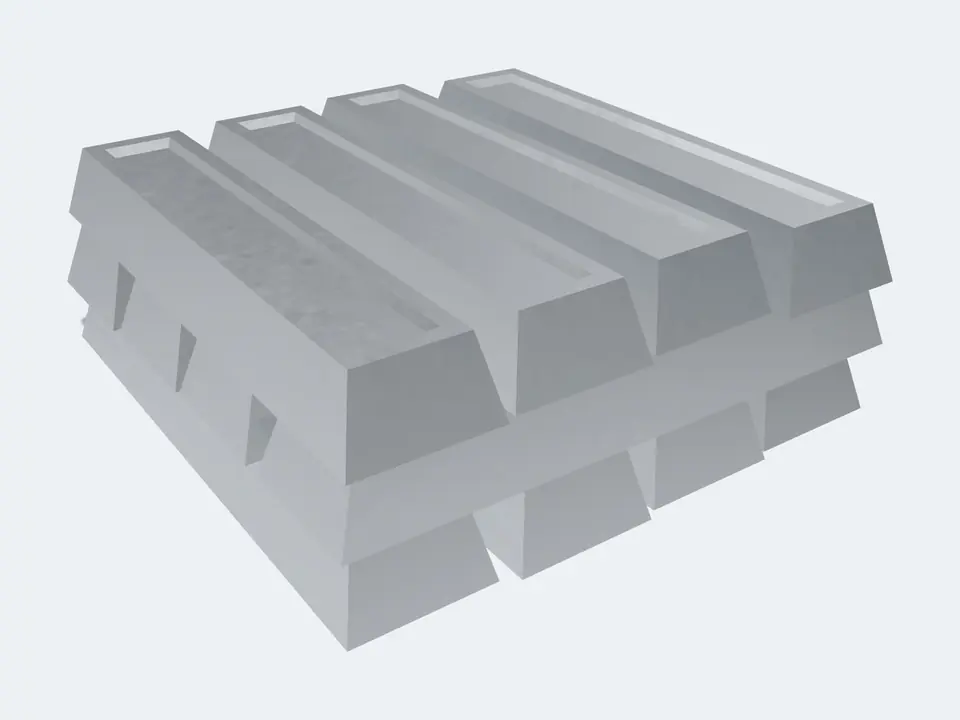
Zinc Ingots
Zinc ingots are cast slabs of refined zinc graded by purity.
View details →Tin Ingots
Tin ingots are cast bars of refined tin, graded by minimum purity.
View details →Zinc, tin and galvanising
Zinc plating lines, both acid and alkaline, consume high-purity zinc as anodes. Hot-dip galvanisers melt zinc ingot in a kettle and dip fabricated steel into it. Tin ingot serves tin plating and tinning of copper. All three are on our ingot list, supplied with chemistry on the certificate so you can check purity before it goes into the bath.
Who buys this in Bangalore
The plating job shops in Peenya and around the automotive and electrical clusters plate fasteners, auto parts, switchgear components and decorative hardware. Most run nickel-chrome, zinc and copper lines side by side, and they buy anodes in small lots more often than large ones. We sell to them, to larger in-house plating shops and to the anodising units that use aluminium flats for racks and jigs.
Questions about Electroplating & Surface Finishing
Still unsure? Call 080-41159995 or WhatsApp +91 98441 25506 and we will answer from the trade desk.
What anode is used in nickel plating?
Nickel plating uses soluble nickel anodes, as rolled or cast flats and ovals, or as chips and rounds in titanium baskets. As current flows the anode dissolves and replaces the nickel deposited on the work. Anodes are usually fitted with bags to trap sludge, and their purity directly affects deposit quality.
Why are lead anodes used in chrome plating?
In hexavalent chrome plating the chromium comes from the chromic acid bath, so the anode must not dissolve. Lead alloy anodes form a conductive lead dioxide film that resists the bath and reoxidises trivalent chromium back to hexavalent, keeping the bath chemistry stable. Lead with about 7% tin or a few percent antimony is common.
What is the ideal anode to cathode ratio in electroplating?
For most nickel baths, plating shops aim for anode area equal to or up to twice the cathode (work) area. Enough anode area keeps anode current density low, so the anode dissolves evenly instead of passivating. Chrome and other insoluble-anode processes use different ratios set by the process supplier.
What purity of zinc is used for galvanising?
Hot-dip galvanising typically uses high-grade or special high-grade zinc, with zinc content from about 99.95% to 99.995%. Small controlled additions of aluminium or nickel are made in the kettle for coating quality. Electroplating zinc anodes are also high purity, to avoid contaminating the bath with lead, iron or cadmium.
Can I use ordinary copper for an acid copper plating anode?
It is not recommended. Acid copper sulphate baths normally use phosphorised copper anodes with about 0.04–0.06% phosphorus, which form a black film that makes the anode dissolve evenly and reduces sludge. Plain electrolytic copper tends to produce copper particles that cause rough deposits. Cyanide copper baths use oxygen-free copper anodes.
Other industries and guides

Oil & Gas
Most oil and gas piping is carbon steel, usually ASTM A106 Grade B seamless for process lines and A53 Grade B for utilities.
View details →
Power Plants & IBR Boilers
IBR boiler tubes and pipes are steel products made and tested to the Indian Boiler Regulations so they can be used in boilers and…
View details →
Chemical & Process Plants
In chemical plants the metal is chosen by the fluid it handles.
View details →
Pharmaceutical
Pharmaceutical grade stainless steel is normally 316L for product-contact parts and purified water or WFI systems, and 304 for…
View details →Supplying a electroplating & surface finishing project? Send the BOQ.
Send the material, grade, size and quantity. We confirm availability and price, with the test certificate details.