
- Home
- All Products
- Special Alloys & Non-Ferrous Metals
- Tin-Lead (Solder) Alloys
Tin-Lead Solder Alloys: 63/37, 60/40, 50/50 and More
Tin-lead solder is an alloy of tin and lead that melts between 183 °C and about 260 °C depending on the ratio. 63/37 is eutectic and melts sharply at 183 °C, 60/40 melts over 183–190 °C, and higher-lead grades suit plumbing and wiping. Jubilant Impex in Bangalore supplies tin-lead alloys with a test certificate.

Tin-Lead (Solder) Alloys specifications
Typical values
| Density, 63/37 | 8.41 g/cm³ |
|---|---|
| Density, 60/40 | 8.51 g/cm³ |
| Density, 50/50 | 8.88 g/cm³ |
| Magnetic | No |
Designations in other standards
| ASTM | B32 (Sn63, Sn60, Sn50, Sn40 and others) |
|---|---|
| ISO / EN | ISO 9453, e.g. S-Sn63Pb37, S-Sn60Pb40 |
Enquire about Tin-Lead (Solder) Alloys
Tell us grade, size, quantity and delivery location. Every consignment ships with a test certificate.
Request a quoteWhatsApp +91 98441 25506Or call 080-41159995
How Tin-Lead (Solder) Alloys measures up
View as table
| Metal | Density |
|---|---|
| Aluminium | 2.70 g/cm³ |
| Antimony | 6.68 g/cm³ |
| Zinc | 7.14 g/cm³ |
| Tin | 7.29 g/cm³ |
| Duplex 2205 | 7.80 g/cm³ |
| Carbon & mild steel | 7.85 g/cm³ |
| Stainless 304 | 7.93 g/cm³ |
| Incoloy 825 | 8.14 g/cm³ |
| Inconel 625 | 8.44 g/cm³ |
| Brass 70/30 | 8.53 g/cm³ |
| Gun metal | 8.72 g/cm³ |
| Monel 400 | 8.80 g/cm³ |
| Phosphor bronze | 8.86 g/cm³ |
| Hastelloy C276 | 8.89 g/cm³ |
| Nickel | 8.90 g/cm³ |
| Copper | 8.94 g/cm³ |
| Lead | 11.34 g/cm³ |
Tin-lead solder is one of the oldest engineered alloys still in daily use. It wets copper and brass easily, flows at temperatures a hand iron can reach, and makes a joint that is easy to inspect and rework. Lead-free solders have taken over most new electronics, but tin-lead still has a long list of legitimate uses.
The numbers on a solder bar or reel are simply the tin and lead percentages, tin first. A 60/40 bar is 60 % tin and 40 % lead. That ratio decides the melting behaviour, which decides what the solder is good for.
Why 63/37 melts at one temperature and 60/40 does not
Tin melts at about 232 °C and lead at about 327 °C, yet a mix of roughly 63 % tin and 37 % lead melts at 183 °C, lower than either. That point is the eutectic. An alloy of exactly that composition goes from solid to liquid in one step, with no mushy range.
Move away from 63/37 in either direction and the alloy melts over a range. 60/40 starts melting at 183 °C and is fully liquid at about 190 °C. 50/50 runs from 183 to about 216 °C, and 40/60 from 183 to about 238 °C. During that pasty range the joint must not move, or it freezes with a rough, cracked surface known as a disturbed joint.
Which ratio for which job
- 63/37: fine electronics and PCB work, where a sharp freeze prevents disturbed joints and keeps heat on components low
- 60/40: general electrical and electronics soldering, cable lugs, tinning wires; slightly cheaper than 63/37 and nearly as easy to use
- 50/50: general sheet metal, radiator and roofing work, and non-potable plumbing
- 40/60 and 30/70: wiping joints and filling, where the long pasty range lets the solder be shaped
- High-lead solders such as 10/90 and 5/95: high-temperature joints, since they melt above 260 °C
| Alloy (Sn/Pb) | Solidus °C | Liquidus °C | Typical use |
|---|---|---|---|
| 63/37 (eutectic) | 183 | 183 | Electronics, PCB assembly and repair |
| 60/40 | 183 | 190 | General electrical, tinning, cable lugs |
| 50/50 | 183 | 216 | Sheet metal, radiators, non-potable plumbing |
| 40/60 | 183 | 238 | Wiping and filling |
| 30/70 | 183 | 258 | Wiping joints, cable sheath work |
| 5/95 | 301 | 314 | High-temperature joints |
| SAC305 (lead-free) | 217 | 220 | RoHS-compliant electronics |
RoHS, the E-Waste Rules and where leaded solder is still allowed
The EU RoHS Directive (2011/65/EU) limits lead to 0.1 % by weight in each homogeneous material of electrical and electronic equipment placed on the EU market. India's E-Waste (Management) Rules, 2022, in force from 1 April 2023, require producers of covered electrical and electronic equipment to meet the same kind of limits, including 0.1 % for lead. So tin-lead solder cannot be used in most new consumer and IT products sold in India or Europe.
Leaded solder remains legal for repair and maintenance of older equipment, for many industrial uses outside the scope of those rules, for some exempted applications, and for non-electrical work such as radiators, sheet metal and stained glass. Before switching or continuing, check which rule applies to your product, and keep leaded and lead-free solder, tips and wire clearly separated on the shop floor.
Tin-lead versus lead-free
The usual lead-free replacement for electronics is SAC305, which is 96.5 % tin, 3.0 % silver and 0.5 % copper and melts at about 217–220 °C. It needs higher iron temperatures, wets more slowly, leaves duller joints and costs more because of the silver. For plumbing, tin-copper and tin-silver alloys are used. Tin-lead remains easier to work with, which is why many repair shops still prefer it where it is permitted.
Flux matters as much as the alloy
Solder only bonds to clean metal, and flux is what removes the oxide film as the joint heats. Rosin-based fluxes are used for electronics because their residue is not corrosive. Acid fluxes based on zinc chloride work well on sheet metal, brass and galvanised steel, but their residue is corrosive and must be washed off; never use them on electronics or fine wire. Most tin-lead problems we hear about, dull grey joints that crack or do not stick, turn out to be dirty surfaces or the wrong flux rather than bad solder.
Drinking water lines
Do not use tin-lead solder on pipes that carry drinking water. Lead can leach from the joint into water standing in the pipe. Many countries ban it for potable plumbing; in the US, solder for drinking water systems must contain no more than 0.2 % lead. Use a lead-free plumbing solder there, and keep 50/50 for drains, heating systems and other non-potable lines.
Buying solder alloys from us
Tell us the ratio, the form (bar, ingot or wire), the quantity and whether you need flux-cored wire or solid. If you melt and cast your own solder, you may also want tin ingots and lead sheet or pig lead separately. For tinning copper conductors, compare with our tinned copper range. The test certificate we provide, issued through a Govt. recognised test house, states the actual tin and lead content of the lot.
Where Tin-Lead (Solder) Alloys is used
Questions about Tin-Lead (Solder) Alloys
Still unsure? Call 080-41159995 or WhatsApp +91 98441 25506 and we will answer from the trade desk.
What is the difference between 60/40 and 63/37 solder?
63/37 is the eutectic tin-lead alloy and melts at a single temperature, 183 °C, so it goes straight from liquid to solid with no pasty stage. 60/40 starts melting at 183 °C but is not fully liquid until about 190 °C. In practice 63/37 gives fewer disturbed joints in electronics, while 60/40 is slightly cheaper and fine for general electrical work.
Is leaded solder banned in India?
Not completely. India's E-Waste (Management) Rules, 2022 require covered electrical and electronic equipment to meet RoHS-type limits, including 0.1 % lead by weight in homogeneous materials, so leaded solder cannot be used in most new products under those rules. It is still sold and used for repair, industrial work outside their scope, exempted applications and non-electrical soldering.
What is the melting point of 60/40 solder?
60/40 tin-lead solder begins to melt at 183 °C (solidus) and is fully liquid at about 190 °C (liquidus). A soldering iron tip is usually set well above this, around 300–350 °C, so that the joint heats quickly. Lead-free SAC305 by comparison melts at about 217–220 °C and needs a hotter iron.
Is lead-free solder as good as leaded solder?
For most electronics, modern lead-free alloys such as SAC305 give reliable joints, and they are mandatory where RoHS applies. They melt about 35 °C higher, wet more slowly, and look duller, which makes hand soldering and inspection harder. Tin-lead is still easier to work with and is preferred for repair of older boards where it is allowed.
What is 50/50 solder used for?
50/50 tin-lead solder melts over 183–216 °C and is used for general sheet metal work, gutters and roofing seams, radiators, and plumbing that does not carry drinking water, such as drains and heating lines. Its wider pasty range makes it easier to fill gaps than 60/40, and its lower tin content makes it cheaper.
Keep exploring
Special Alloys & Non-Ferrous Metals
Special alloys are metals chosen when ordinary steel, stainless or brass will fail: nickel alloys such as Inconel, Incoloy, Monel…
View details →Tin Ingots
Tin ingots are cast bars of refined tin, graded by minimum purity.
View details →
Lead Sheets & Products
Lead sheet is rolled lead, about 11.34 g/cm³ in density, soft enough to form by hand and resistant to sulphuric acid.
View details →
Tinned Copper
Tinned copper is copper wire, strip or busbar coated with a thin layer of tin.
View details →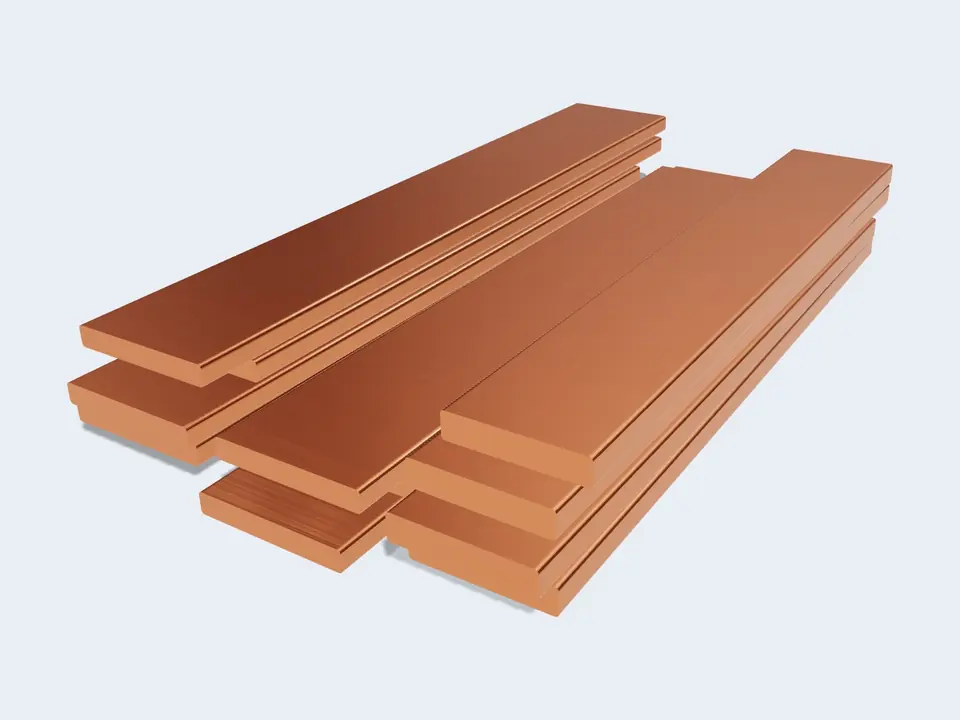
Electrical & Power Distribution
Electrical and power distribution equipment runs on EC grade copper, which is at least 99.9% pure with conductivity close to 100%…
View details →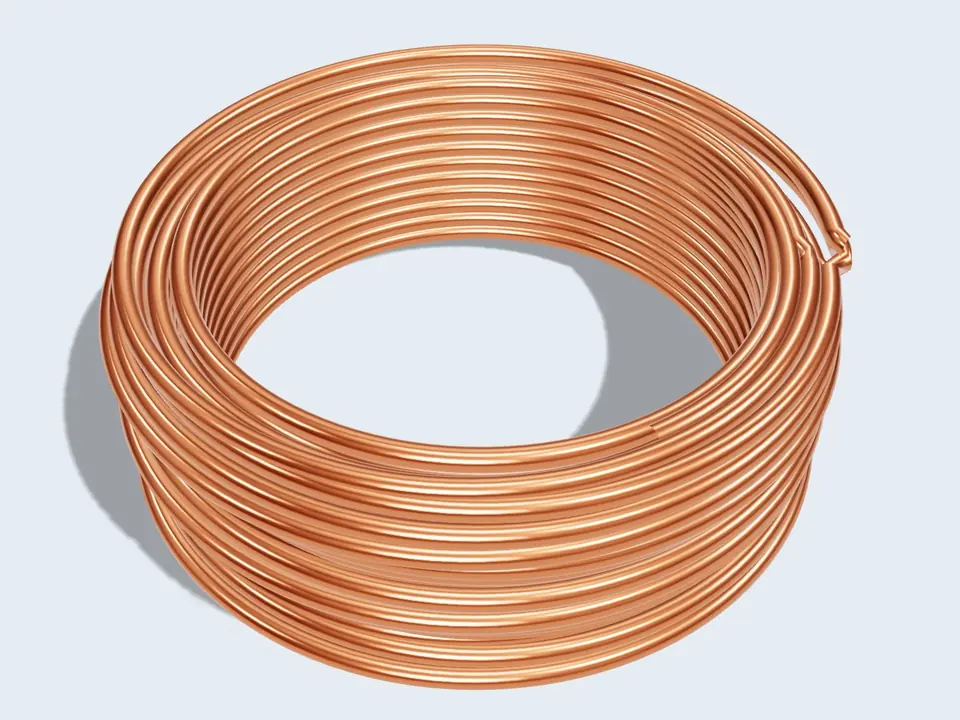
Refrigeration & HVAC
Refrigeration and HVAC systems rely on copper tubes for refrigerant lines and coils: soft annealed coils for field runs and…
View details →Need Tin-Lead (Solder) Alloys with a test certificate?
Send the material, grade, size and quantity. We confirm availability and price, with the test certificate details.