
Zinc Anodes and Zinc Sheet
A zinc anode is a block of zinc alloy fixed to steel so that the zinc corrodes instead of the steel. Zinc anodes protect ship hulls, ballast tanks, heat exchangers, jetties and buried pipes, and are specified under ASTM B418. Jubilant Impex, Bangalore, supplies zinc sheet and zinc anodes with a test certificate from a Govt. recognised test house.
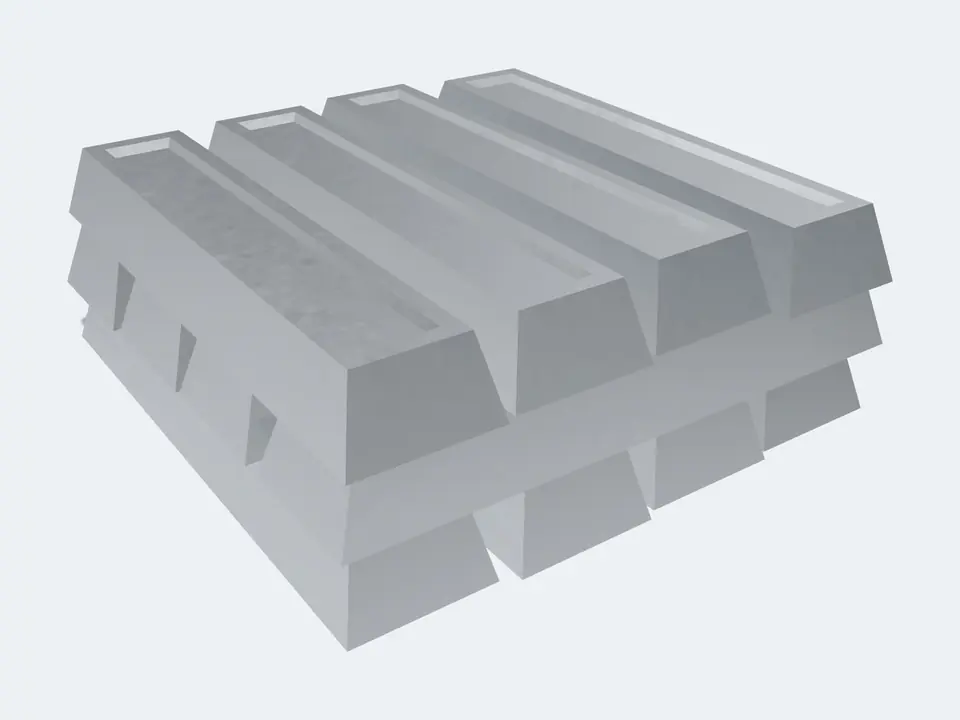
Zinc specifications
Typical values
| Density | 7.14 g/cm³ |
|---|---|
| Melting point | 419.5 °C |
| Boiling point | 907 °C |
| Magnetic | No |
Designations in other standards
| Galvanic anodes | ASTM B418 Type I (saline) / Type II (fresh water, soil) |
|---|---|
| Military spec | MIL-A-18001 (Type I chemistry) |
| Zinc ingot, India | IS 209 |

Enquire about Zinc
Tell us grade, size, quantity and delivery location. Every consignment ships with a test certificate.
Request a quoteWhatsApp +91 98441 25506Or call 080-41159995
How Zinc measures up
View as table
| Metal | Density |
|---|---|
| Aluminium | 2.70 g/cm³ |
| Antimony | 6.68 g/cm³ |
| Zinc | 7.14 g/cm³ |
| Tin | 7.29 g/cm³ |
| Duplex 2205 | 7.80 g/cm³ |
| Carbon & mild steel | 7.85 g/cm³ |
| Stainless 304 | 7.93 g/cm³ |
| Incoloy 825 | 8.14 g/cm³ |
| Inconel 625 | 8.44 g/cm³ |
| Brass 70/30 | 8.53 g/cm³ |
| Gun metal | 8.72 g/cm³ |
| Monel 400 | 8.80 g/cm³ |
| Phosphor bronze | 8.86 g/cm³ |
| Hastelloy C276 | 8.89 g/cm³ |
| Nickel | 8.90 g/cm³ |
| Copper | 8.94 g/cm³ |
| Lead | 11.34 g/cm³ |
Zinc earns its living by being eaten. Bolt a piece to a steel hull or bury it beside a pipeline, connect them electrically, and the zinc corrodes slowly while the steel stays protected. Galvanising works on the same idea, with the zinc spread as a coating instead of fixed as a block.
This page covers zinc in sheet and anode form for corrosion protection and general engineering. For zinc bought as ingot for galvanising baths or die casting, see our zinc ingots page.
How a sacrificial zinc anode works
When two metals touch in seawater or wet soil, the more active one corrodes and the more noble one is protected. Zinc is more active than steel, bronze or stainless steel, so when it is electrically connected to them in the same electrolyte, current flows from the zinc through the water to the steel. The steel becomes the cathode of a small cell and stops rusting; the zinc dissolves in its place.
Two conditions must be met. The anode needs a good metallic connection to the structure, usually by welding a steel insert or bolting to clean metal, and it must sit in the same water or soil. A zinc block in air protects nothing.
ASTM B418 Type I and Type II
ASTM B418 is the standard most anode specifications refer to. Type I anodes are for seawater, brackish water and other saline electrolytes; their chemistry meets the US military specification MIL-A-18001, with small controlled additions of aluminium and cadmium that keep the zinc active instead of building up an insulating crust. Type II anodes are high-purity zinc for fresh water, soils and backfill, where that alloy would not suit.
Using the wrong type is a classic failure. Ordinary commercial zinc in seawater can coat itself with a hard white film and stop working within weeks while still looking almost new.
| Property | Zinc | Aluminium alloy | Magnesium |
|---|---|---|---|
| Driving voltage against steel | Moderate | Moderate | Highest |
| Charge per kg | Lowest | Highest | Middle |
| Seawater and brackish water | Very good | Very good | Too fast, short life |
| Fresh water and high-resistivity soil | Poor | Poor | Good |
| Warm water | Not above about 50 °C | Depends on alloy | Used in water heaters |
| Typical use | Hulls, ballast tanks, heat exchangers | Offshore structures, large ships | Buried pipes, tanks, fresh water |
Where zinc anodes are used
- Ship and boat hulls, rudders, propeller shafts and sea chests
- Ballast tanks and cargo tanks in vessels
- Seawater-cooled heat exchanger and condenser water boxes
- Jetty piles, sheet piling and other marine steelwork
- Buried pipelines and tanks in low-resistivity soils
- Water heaters and storage tanks, though magnesium is more common there
Zinc, aluminium or magnesium anodes?
All three are used for sacrificial protection, and each fits a different environment. Magnesium has the highest driving voltage and is used in fresh water and high-resistivity soil, where zinc cannot push enough current. Aluminium-zinc-indium alloys give the most charge per kilogram and are now common on offshore structures and large ships. Zinc sits in between: dependable in seawater and brackish water, tolerant of mud and sediment, and simple to specify.
Zinc anodes lose effectiveness in warm water, roughly above 50 °C, so they are not used on hot condenser outlets or hot water tanks. Do not mix anode types on one vessel without advice from a corrosion engineer.
How much zinc a structure needs depends on the bare steel area, the coating condition, the water and the design life. Naval architects and cathodic protection engineers calculate it; as a buyer, the useful thing is to replace anodes with the same type and weight unless that calculation says otherwise, and to record the date each set was fitted.
Zinc sheet and other uses
Zinc sheet and plate are used for fabricated anodes and earthing straps, as lining and flashing in some building work, for photo-engraving and printing plates, and as anodes in electrogalvanising lines, where zinc is plated onto steel strip or small parts. Zinc dissolves in acids and in strong alkalis, so it is not a structural material for chemical service.
Galvanising works and die casters usually buy zinc as ingot rather than sheet; see zinc ingots. In India, zinc ingot is specified to IS 209, with Special High Grade at 99.995 % zinc as the top grade.
Ordering zinc from us
For anodes, tell us the environment (seawater, fresh water or soil), the anode type to ASTM B418, the shape and dimensions, the insert or strap detail and the quantity. For sheet, give thickness, sheet size and purity. Sizes are confirmed at enquiry, and every supply comes with a test certificate through a Govt. recognised test house. Marine buyers will find related materials on our marine and offshore page; zinc anodes are also the usual partner for nickel-copper alloy and bronze fittings on steel hulls.
Where Zinc is used
Questions about Zinc
Still unsure? Call 080-41159995 or WhatsApp +91 98441 25506 and we will answer from the trade desk.
What is a zinc anode used for?
A zinc anode protects steel and other metals from corrosion in seawater, brackish water or wet soil. Connected electrically to the structure, it corrodes in place of the steel. It is used on ship hulls, propeller shafts, rudders, ballast tanks, heat exchanger water boxes, jetty piles and some buried pipelines. Zinc anodes are also used as the metal source in zinc electroplating.
Why is zinc used as a sacrificial anode?
Zinc is more electrochemically active than steel, so in the same electrolyte it gives up electrons and corrodes first, holding the steel at a protected potential. It is cheap, easy to cast, corrodes at a steady predictable rate in seawater when correctly alloyed, and does not over-protect steel or damage coatings the way higher-voltage magnesium can.
When should zinc anodes be replaced?
A common rule of thumb is to replace a zinc anode when about half of it has been consumed, because protection falls off as its surface area shrinks. On boats this usually means checking at every haul-out. If an anode looks almost unused after months in seawater, check the electrical connection and the anode type, since a poor connection or wrong alloy stops it working.
Can zinc anodes be painted?
No. Paint or antifouling on a zinc anode insulates it from the water and stops it working completely. Mask anodes before painting a hull and remove any overspray. The steel insert or mounting point under the anode should be clean bare metal, so the anode keeps a low-resistance electrical connection to the structure it protects.
What is the melting point of zinc?
Zinc melts at 419.5 °C and boils at about 907 °C. The low melting point is why zinc is easy to cast into anodes and die castings and why hot-dip galvanising baths run at around 450 °C. Heating zinc or galvanised steel near its boiling point, for example in welding, produces zinc oxide fume, which needs good ventilation.
Keep exploring
Special Alloys & Non-Ferrous Metals
Special alloys are metals chosen when ordinary steel, stainless or brass will fail: nickel alloys such as Inconel, Incoloy, Monel…
View details →Zinc Ingots
Zinc ingots are cast slabs of refined zinc graded by purity.
View details →Monel
Monel 400 (UNS N04400) is a nickel-copper alloy, about 63 % nickel minimum and 28–34 % copper, used for seawater, brine,…
View details →
Electroplating Anodes
Nickel anodes are the soluble electrodes that replace the nickel deposited on parts in a nickel plating bath.
View details →Marine & Offshore
Marine grade metals are alloys that resist seawater corrosion: 316L stainless for deck hardware and fittings, duplex for seawater…
View details →Electroplating & Surface Finishing
Electroplating materials are the metals a plating line consumes or conducts through: nickel anodes for nickel baths, lead-tin or…
View details →Need Zinc with a test certificate?
Send the material, grade, size and quantity. We confirm availability and price, with the test certificate details.