
- Home
- All Products
- Electroplating Anodes
- Oval Nickel Anodes
Oval Nickel Anodes for Rack Plating Lines
An oval nickel anode is an elliptical bar of refined nickel, hung on a hook inside an anode bag, used as the soluble anode in nickel plating. The rounded section spreads current more evenly than a flat slab and gives more working surface per hook. Jubilant Impex supplies oval nickel anodes in Bangalore with a test certificate on request.
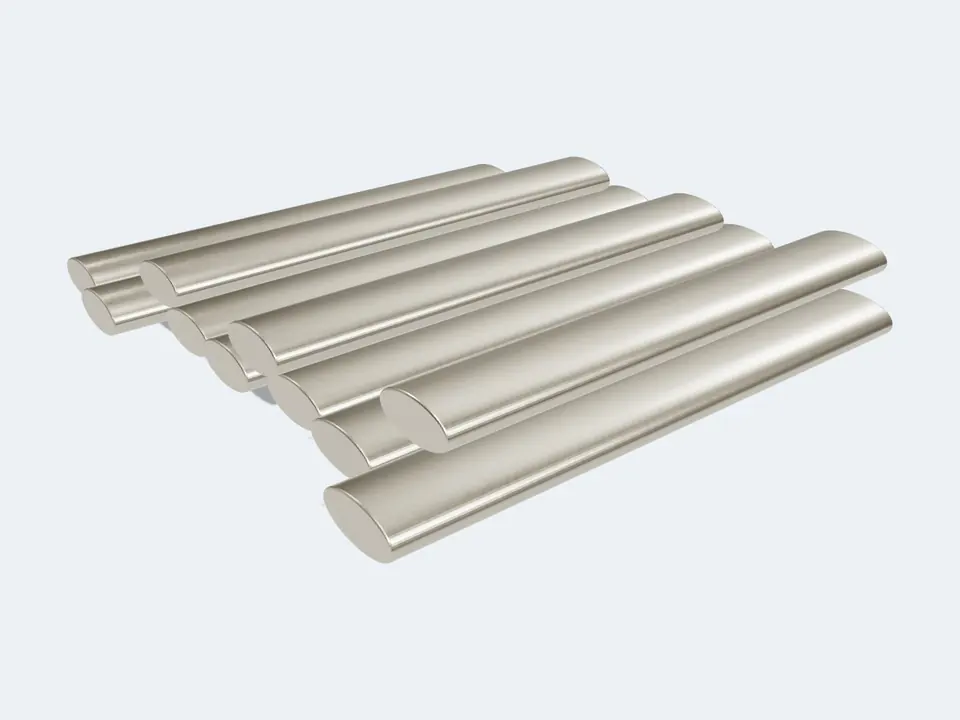
Oval Nickel Anodes specifications
Typical values
| Density (nickel) | 8.9 g/cm³ |
|---|---|
| Electrochemical equivalent (Ni²⁺) | 1.095 g per ampere-hour |
| Theoretical deposit per 1 kg anode | about 913 ampere-hours |
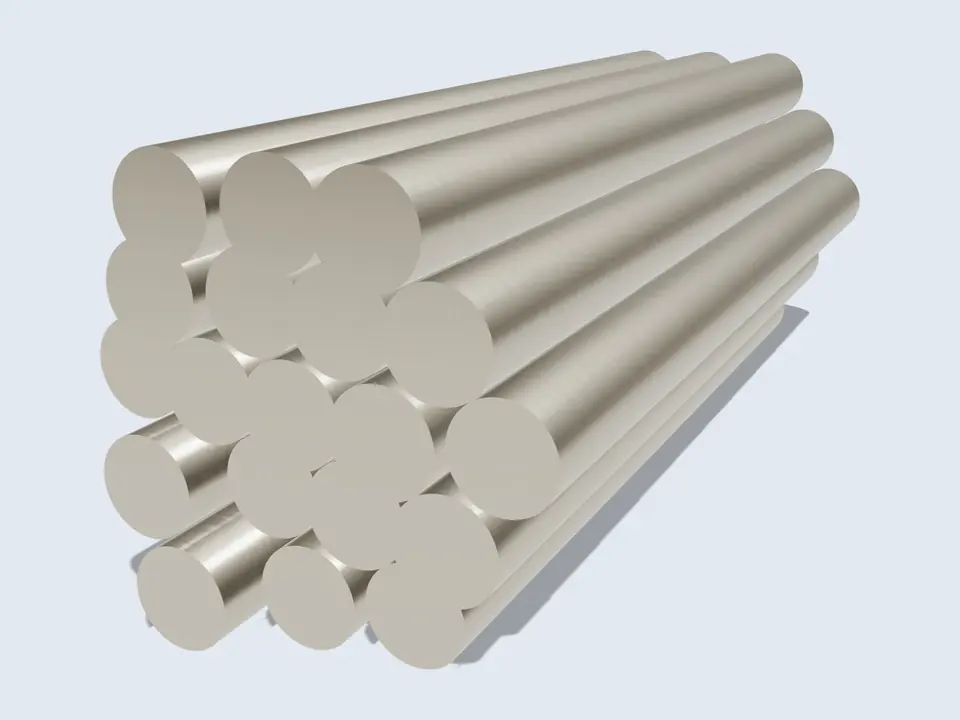
Enquire about Oval Nickel Anodes
Tell us grade, size, quantity and delivery location. Every consignment ships with a test certificate.
Request a quoteWhatsApp +91 98441 25506Or call 080-41159995
How Oval Nickel Anodes measures up
View as table
| Metal | Density |
|---|---|
| Aluminium | 2.70 g/cm³ |
| Antimony | 6.68 g/cm³ |
| Zinc | 7.14 g/cm³ |
| Tin | 7.29 g/cm³ |
| Duplex 2205 | 7.80 g/cm³ |
| Carbon & mild steel | 7.85 g/cm³ |
| Stainless 304 | 7.93 g/cm³ |
| Incoloy 825 | 8.14 g/cm³ |
| Inconel 625 | 8.44 g/cm³ |
| Brass 70/30 | 8.53 g/cm³ |
| Gun metal | 8.72 g/cm³ |
| Monel 400 | 8.80 g/cm³ |
| Phosphor bronze | 8.86 g/cm³ |
| Hastelloy C276 | 8.89 g/cm³ |
| Nickel | 8.90 g/cm³ |
| Copper | 8.94 g/cm³ |
| Lead | 11.34 g/cm³ |
Look into an older bright nickel tank in Peenya or Bommasandra and you will often see a row of bagged oval bars along the anode rail. Ovals have been the default bar anode in many shops for decades. They are easy to hang, they dissolve reasonably evenly, and a plater can see at a glance when one is getting thin.
This page is about living with oval anodes: why the shape is used, how it wears, how to estimate consumption, and when it might be time to change approach.
Why are nickel anodes made oval?
Current crowds onto sharp edges and corners. A flat slab has four long edges that dissolve faster than its faces, so it thins unevenly. An elliptical section has no sharp edges, so the current is spread more evenly around the bar and the anode keeps a useful shape for longer.
The oval also presents a broad face towards the work while staying narrow from front to back. That gives a good amount of active surface for the space it takes on the rail, and it lets anodes hang close together without touching. Rolled depolarised nickel is traditionally made in this shape, and extruded oval bars are also produced in long mill lengths that are cut to suit the tank.
How oval anodes wear, and when to replace them
Even an oval does not dissolve perfectly evenly. The lower part of the bar and the side facing the work go fastest, and over time the anode tapers towards the bottom, the 'sword' shape every plater recognises. As it tapers, the anode area falls and the current on what remains goes up.
That is the main drawback of bar anodes compared with basket systems: to keep the anode-to-cathode ratio steady, you have to replace or top up bars before they are fully consumed, and the remaining stubs are scrap. Plan for that in your costing. Most shops replace an oval once its lower end becomes too thin to carry current reliably or risks breaking off inside the bag.
- Inspect anodes and bags at every scheduled tank maintenance.
- Rotate ovals so the same face does not always face the work.
- Replace tapered bars in sets so the current shares evenly.
- Keep worn stubs separate; they can be sold as nickel scrap.
| Point | Oval anode | Flat anode |
|---|---|---|
| Section | Elliptical, no sharp edges | Rectangular, with edges |
| Current distribution | More even around the bar | Concentrates at edges and corners |
| Wear pattern | Tapers towards the bottom | Thins at edges and bottom |
| Space on rail | Narrow front to back | Very compact, packs closely |
| Typical use | General rack plating | Narrow tanks, flat work |
How do you calculate nickel anode consumption?
Start with Faraday's law. Divalent nickel deposits at 1.095 grams per ampere-hour. Multiply your average current by the hours the rectifier runs in a month, and then by 1.095, to get grams of nickel per month in theory.
A line averaging 400 amperes for 22 days of 10 hours runs 88,000 ampere-hours, which is roughly 96 kg of nickel a month at full efficiency. Add drag-out losses, which leave the tank on the work rather than as deposit, and the stub scrap from bar replacement. Compare the result with your actual purchase history; a large gap usually means drag-out or a leaking bag.
Getting the length and spacing right
Choose a bar length that ends a little above the bottom of the lowest work on the rack. Longer anodes put too much current on the bottom of the load and waste nickel at the tank floor. Space the bars evenly along the rail, keep them a sensible distance from the work, and make sure bags do not touch the parts.
Hooks should be titanium, sized to the bar and bearing firmly on a clean anode rail. Bags should be polypropylene, fitted snugly, tied off above the solution line, and washed during every major clean.
Ovals, flats or baskets?
Ovals are a sound choice for most rack lines that already use them. Flats suit narrow tanks and flat panels; the flat nickel anodes page compares the nickel types. Large automatic lines often move to titanium baskets filled with rounds or pellets because the anode area then stays constant, but Jubilant Impex lists flats and ovals only. For the wider picture, start at electroplating anodes, and for the industry side see electroplating and surface finishing.
Questions about Oval Nickel Anodes
Still unsure? Call 080-41159995 or WhatsApp +91 98441 25506 and we will answer from the trade desk.
Why are nickel anodes oval shaped?
An elliptical section has no sharp edges, so current spreads more evenly around the bar instead of concentrating on corners. The anode dissolves more uniformly and keeps a usable shape for longer. The oval also offers a broad face to the work while staying narrow, so more anode surface fits along the anode rail.
How long do nickel anodes last?
It depends on the anode weight and the current. Nickel dissolves at about 1.095 grams per ampere-hour, so one kilogram of anode supports roughly 913 ampere-hours of plating in theory. In practice bar anodes are replaced before they are fully used, to keep the anode area steady, so usable life is somewhat lower.
What is a sword-shaped anode?
It is the tapered shape a bar anode develops as it dissolves, with the lower end and the face towards the work wearing fastest. As the bar narrows, its surface area falls and the current density on the remaining metal rises. Platers replace sword-shaped anodes before they get too thin to carry current reliably.
Should nickel anodes go all the way to the bottom of the tank?
No. The anode should end a little above the bottom of the lowest parts on the rack. Anodes that hang lower put extra current on the bottom edge of the work, causing burning or heavy deposits there, and they waste nickel near the tank floor where sludge collects.
What hooks are used for nickel anodes?
Titanium hooks are the usual choice because titanium is not attacked in nickel plating solutions and does not contaminate the bath. The hook must match the anode's slot or hole and sit firmly on a clean anode rail. Poor contact causes heating, voltage loss and uneven dissolution.
Keep exploring
Electroplating Anodes
Nickel anodes are the soluble electrodes that replace the nickel deposited on parts in a nickel plating bath.
View details →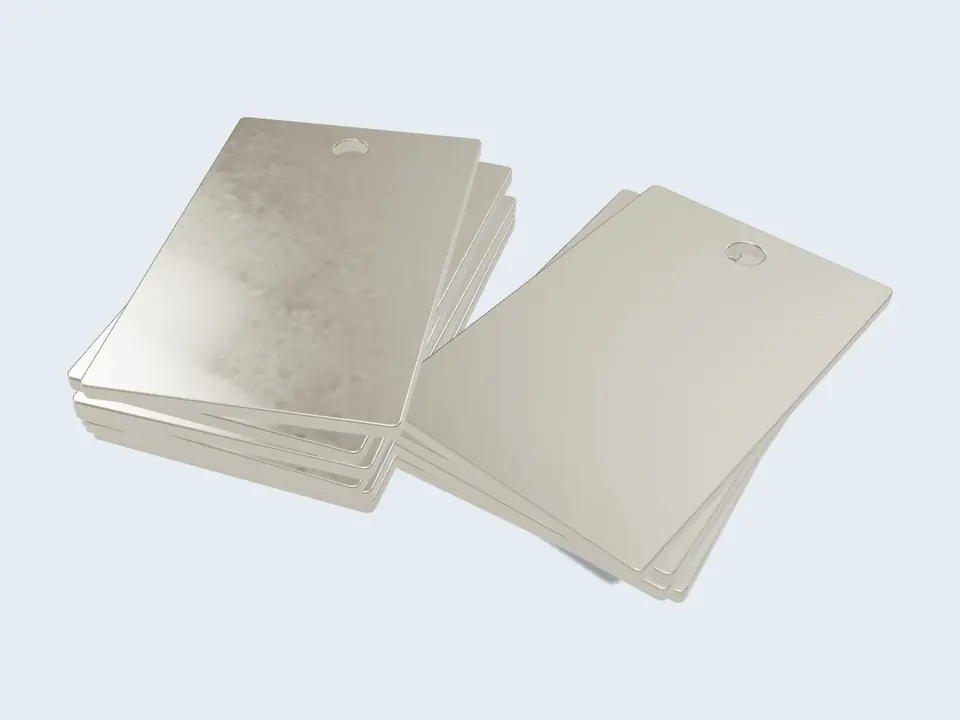
Flat Nickel Anodes
A flat nickel anode is a rectangular slab or plate of refined nickel, usually 99.9 percent nickel or higher, hung on a hook in a…
View details →Electroplating & Surface Finishing
Electroplating materials are the metals a plating line consumes or conducts through: nickel anodes for nickel baths, lead-tin or…
View details →
Engineering & Machining
Machine shops buy bar stock by how it cuts and what the part must do.
View details →
How to Read a Mill Test Certificate
To read a mill test certificate, first match the heat number on the certificate to the marking on the material.
View details →
Request a Quote
To request a quote for stainless steel pipes or any metal from Jubilant Impex in Bangalore, send the material, grade, standard,…
View details →Need Oval Nickel Anodes with a test certificate?
Send the material, grade, size and quantity. We confirm availability and price, with the test certificate details.