
- Home
- All Products
- Stainless Steel
- Stainless Steel Pipe Fittings & Flanges
SS pipe fittings and flanges for butt-weld, socket-weld, threaded and tube lines
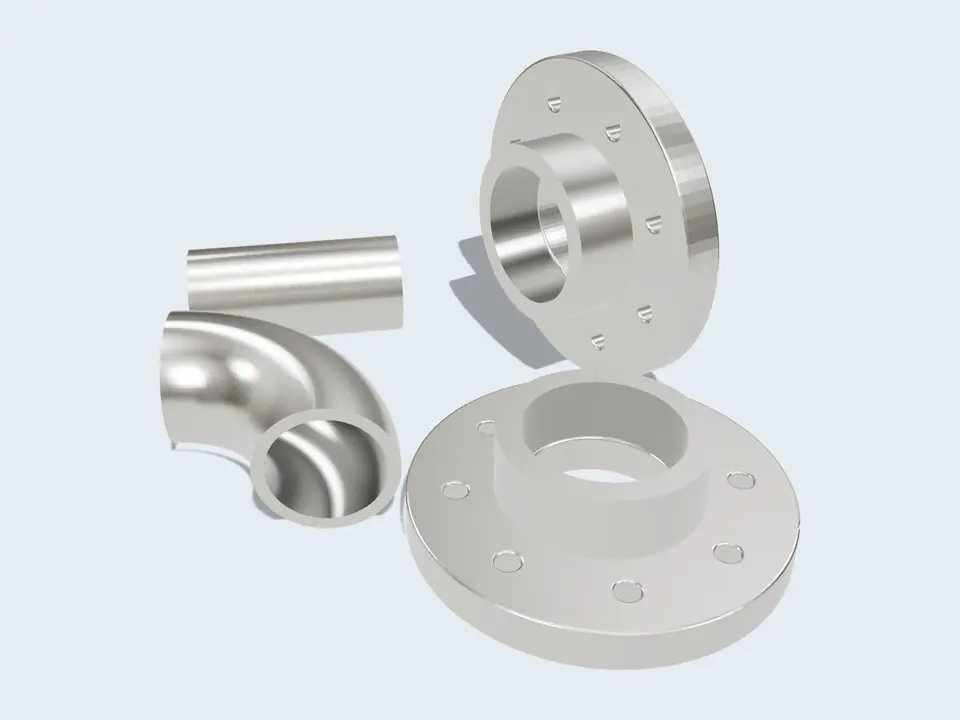
SS pipe fittings join stainless pipe and tube by butt welding (ASME B16.9, ASTM A403), socket welding or threading (ASME B16.11, ASTM A182), or compression ferrules. Jubilant Impex in Bangalore supplies elbows, tees, unions, compression fittings and ASME B16.5 flanges in grades 304, 304L, 316 and 316L, with a test certificate.
A fitting has two jobs: carry the same pressure as the pipe, and join it in a way the site can actually build. Get the grade right but the end connection or wall thickness wrong, and a whole shipment sits in the store while the fabricator waits.
We organise this page by connection type, because that decision comes first. Pick butt-weld, socket-weld, threaded or compression, and the standard, the size range and the ordering details follow from it.
Butt-weld fittings
Butt-weld fittings are the standard for process piping from about 2 in NB upward, and in smaller sizes wherever the line must be fully welded and free of crevices. Dimensions follow ASME B16.9, which runs from NPS 1/2 to 48. Material follows ASTM A403, where the grade reads WP304, WP316L and so on. Elbows come in long radius (centre-to-face 1.5 times the nominal size) and short radius (1 times).
A403 also gives each fitting a class. WP-S fittings are made from seamless pipe or bar. WP-W fittings are made from welded pipe, with radiography required only on welds the fitting maker adds. WP-WX means all welds are fully radiographed, and WP-WU means all welds are fully examined by ultrasonics. Light-wall CR fittings are made to MSS SP-43 rather than B16.9.
The fitting wall must match the pipe schedule. A Sch 10S elbow welded to Sch 40S pipe leaves a step inside the joint and a thinner component in the line.
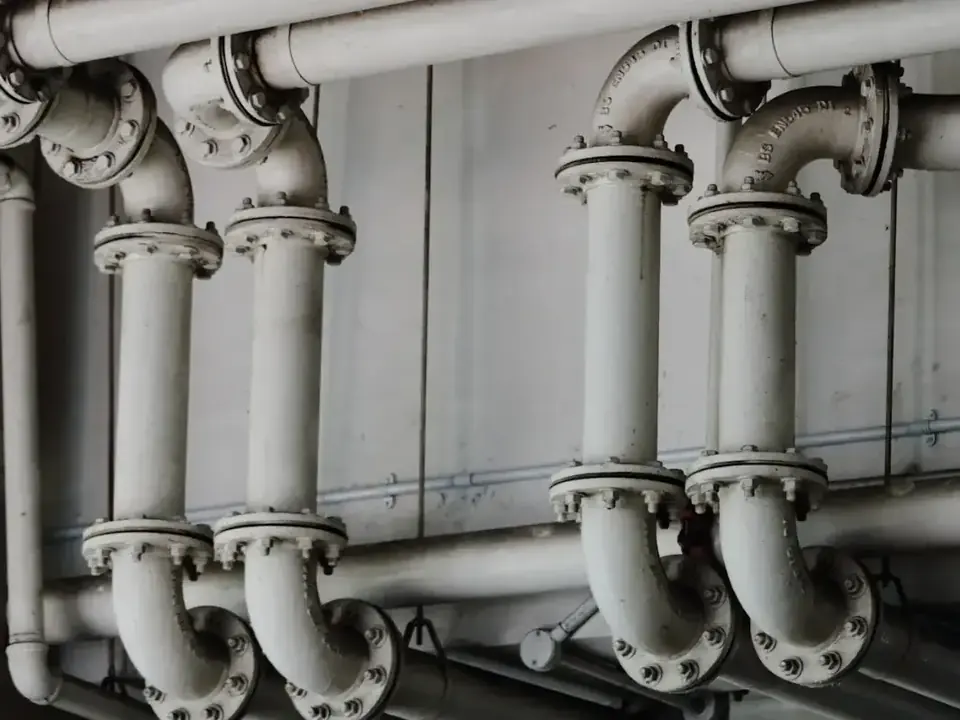
Socket-weld, threaded fittings and unions
Small-bore lines, typically NPS 2 and below, often use forged fittings to ASME B16.11 made from ASTM A182 F304, F316 or F316L forgings. Socket-weld fittings come in Classes 3000, 6000 and 9000 and threaded fittings in Classes 2000, 3000 and 6000. The pipe is pushed into the socket, pulled back about 1.5 mm to leave an expansion gap, and fillet welded. Threaded fittings suit utility, air and instrument lines where a welder is not practical.
Unions, which let a section be removed without cutting, are made to MSS SP-83. Threads deserve a line of their own on the order. B16.11 fittings default to NPT, but much equipment in India uses BSP threads, and the two do not seal together.
Compression fittings with ferrules
Compression fittings join tube rather than pipe, and they are sized by tube OD. The nut drives one or two ferrules onto the tube, which grip and seal without welding. They work only if the tube is right: annealed, within OD tolerance, round, and softer than the ferrule. Pair them with seamless or welded instrument tube from our stainless steel pipes and tubes range, and keep ferrules and bodies from the same maker. Common tube sizes are 1/4, 3/8 and 1/2 in OD, along with metric 6, 8, 10 and 12 mm. Inch and metric fittings look alike but do not interchange, since a 1/4 in tube is 6.35 mm, so check the nut marking before ordering spares.
View as table
| Grade | PREN |
|---|---|
| SS 321 | 18.0 |
| SS 304 | 18.5 |
| SS 304L | 18.5 |
| SS 316 | 25.2 |
| SS 316L | 25.2 |
Flanges
Stainless flanges to ASME B16.5 cover NPS 1/2 to 24 in pressure Classes 150, 300, 400, 600, 900, 1500 and 2500, forged to ASTM A182. The common types are weld neck, slip-on, socket-weld, threaded, lap joint and blind, with raised face, flat face or ring-type joint facings. A weld neck flange is bored to match the pipe schedule, so give the schedule with the size. Flanges for the same line in carbon or alloy steel are on our carbon and alloy steel fittings page.
View as table
| Grade | PREN |
|---|---|
| SS 321 | 18.0 |
| SS 304 | 18.5 |
| SS 304L | 18.5 |
| SS 316 | 25.2 |
| SS 316L | 25.2 |
| Duplex & Super Duplex Steel | 35.9 |
Writing the order line
- Item and type: 90° long radius elbow, equal tee, socket-weld union, weld neck flange.
- Size, and both sizes for reducing tees.
- Wall or class: schedule for butt-weld fittings and weld neck bores, class for forged fittings and flanges.
- Material standard and grade: ASTM A403 WP316L-S, or ASTM A182 F304L.
- End connection: butt-weld, socket-weld, NPT or BSP thread, tube OD for compression.
- Flange facing and finish, if not standard raised face.
- Test certificate and any third-party inspection.
| Fitting type | Governing standard | Typical trade range |
|---|---|---|
| Butt-weld elbows and tees | ASME B16.9 / ASTM A403 | 1/2 in to 12 in NB, Sch 10S, 40S, 80S |
| Socket-weld fittings | ASME B16.11 / ASTM A182 | 1/4 in to 2 in NB, Class 3000 and 6000 |
| Threaded fittings | ASME B16.11 / ASTM A182 | 1/8 in to 2 in NB, NPT or BSP |
| Unions | MSS SP-83 | 1/4 in to 2 in NB, Class 3000 |
| Compression tube fittings | Maker's standard | Tube OD about 6 mm to 25 mm (1/4 in to 1 in) |
| Flanges | ASME B16.5 / ASTM A182 | 1/2 in to 24 in NB, Class 150 to 2500 |
Mistakes that hold up a job
- Fittings in one schedule and pipe in another.
- NPT fittings arriving for BSP-threaded valves, or the reverse.
- 304 fittings installed in a 316L line, which leaves the joints as the weakest point in chloride service.
- A Class 150 flange ordered for a line designed to Class 300.
- Compression fittings fitted on hard or oversized tube, which then weeps at the ferrule.
Where Stainless Steel Pipe Fittings & Flanges is used
Questions about Stainless Steel Pipe Fittings & Flanges
Still unsure? Call 080-41159995 or WhatsApp +91 98441 25506 and we will answer from the trade desk.
What is the difference between socket weld and butt weld fittings?
A butt-weld fitting is bevelled and welded end to end with the pipe, giving a full-penetration joint with a smooth bore. A socket-weld fitting takes the pipe inside a socket and is joined by a fillet weld. Socket welds are quicker in small bore, but leave a small crevice, which some corrosive or hygienic services do not allow.
What does WP316L mean on a fitting?
WP316L is the ASTM A403 designation for a wrought butt-weld fitting in 316L stainless. WP stands for wrought pipe fitting made to ASME B16.9 dimensions. A suffix such as -S, -W, -WX or -WU adds the class: seamless construction, welded, welded with full radiography, or welded with full ultrasonic examination.
What is the difference between ASTM A403 and ASTM A182?
ASTM A403 covers wrought austenitic stainless butt-weld fittings such as elbows, tees and reducers, usually made from pipe or plate. ASTM A182 covers forged components, including flanges and socket-weld and threaded fittings machined from forgings. A403 grades read WP316L; A182 grades read F316L.
What does Class 3000 mean on a forged fitting?
It is the ASME B16.11 pressure class, not a pressure in psi. Each class is matched to a pipe wall: Class 3000 socket-weld fittings suit Sch 80 pipe and Class 6000 suit Sch 160. For threaded fittings, Class 2000 matches Sch 80 and Class 3000 matches Sch 160. Choose the class by the pipe schedule in the line.
Are NPT and BSP threads interchangeable?
No. NPT threads have a 60° flank angle and BSP threads a 55° angle, and thread pitches differ in several sizes. They may start to engage but will not seal reliably and can damage each other. State the thread type on the order and check the valves and equipment the fittings must mate with.
Can I use 304 fittings on a 316 pipe line?
It will assemble and weld, but it is poor practice. In chloride or chemical service the 304 fittings will pit or crack before the 316 pipe, so the joints become the failure point. Match fitting grade to pipe grade, and use 316L fittings on 316L pipe in welded systems.
Keep exploring
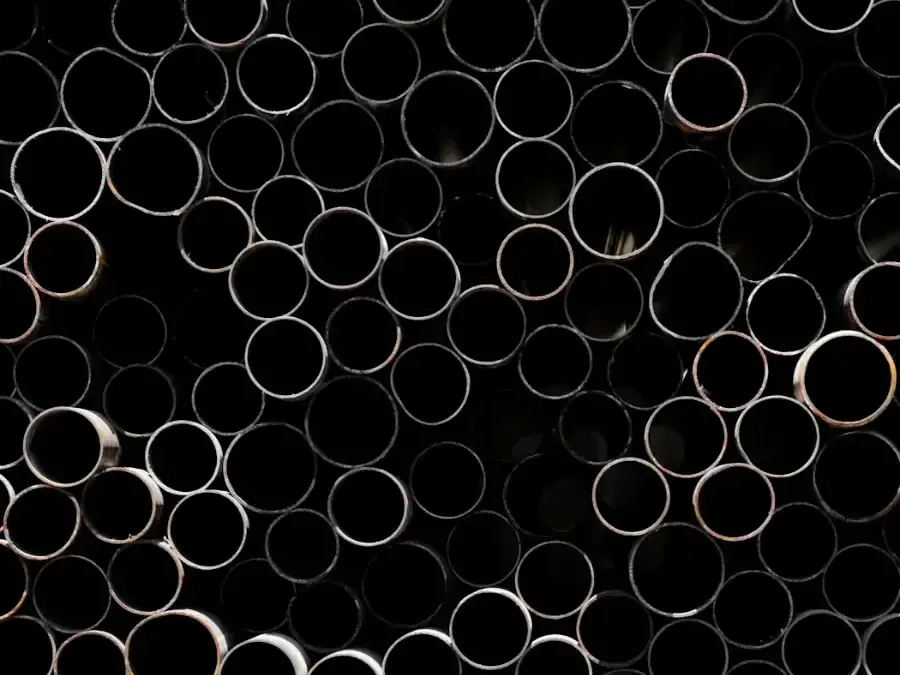
Stainless Steel Pipes & Tubes
Jubilant Impex is a stainless steel pipe supplier in Bangalore for seamless, welded (ERW) and capillary pipes and tubes in grades…
View details →Stainless Steel Seamless Pipes & Tubes
SS seamless pipe is stainless pipe made from a solid billet that is pierced or extruded into a hollow, so it has no weld seam.
View details →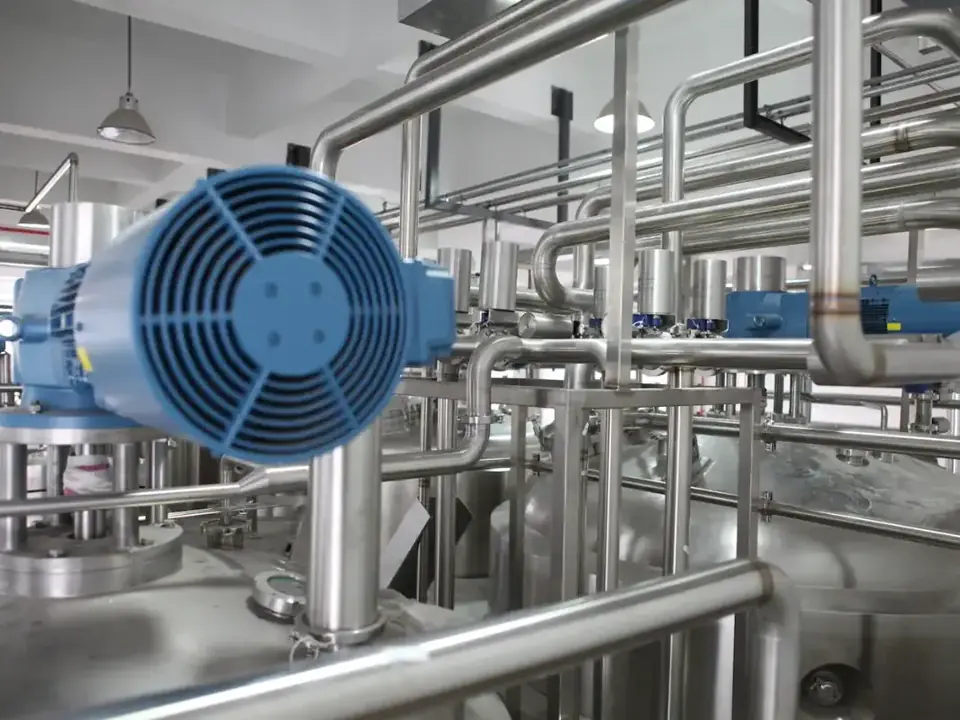
Stainless Steel ERW (Welded) Pipes & Tubes
SS ERW pipe is stainless pipe roll-formed from strip and welded along one straight seam, usually by TIG, plasma or laser fusion…
View details →Carbon & Alloy Steel Pipe Fittings
Jubilant Impex supplies carbon steel, alloy steel and stainless steel pipe fittings in Bangalore: butt-weld fittings, forged…
View details →
Chemical & Process Plants
In chemical plants the metal is chosen by the fluid it handles.
View details →
Oil & Gas
Most oil and gas piping is carbon steel, usually ASTM A106 Grade B seamless for process lines and A53 Grade B for utilities.
View details →Pipe Schedule Chart
A pipe schedule chart lists the wall thickness for each nominal pipe size (NPS) and schedule.
View details →Need stainless steel pipe fittings & flanges? Get a quote today.
Send the material, grade, size and quantity. We confirm availability and price, with the test certificate details.