
SS 304L stainless steel for welded pipework and vessels
SS 304L (UNS S30403) is the low-carbon version of 304, with carbon limited to 0.030% maximum. The lower carbon stops chromium carbides forming at grain boundaries during welding, so welds resist intergranular corrosion without post-weld annealing. Jubilant Impex supplies 304L pipe, sheet and bar in Bangalore with a test certificate.
SS 304L specifications
Per ASTM A240 (plate, sheet and strip), UNS S30403, weight %
| C | 0.030 max |
|---|---|
| Mn | 2.00 max |
| P | 0.045 max |
| S | 0.030 max |
| Si | 0.75 max |
| Cr | 17.5–19.5 |
| Ni | 8.0–12.0 |
| N | 0.10 max |
ASTM A240 (annealed)
| Tensile strength | 485 MPa min |
|---|---|
| Yield strength (0.2% offset) | 170 MPa min |
| Elongation in 50 mm | 40% min |
| Hardness | 201 HB max / 92 HRBW max |
Typical values
| Density | 8.0 g/cm³ |
|---|---|
| Elastic modulus | 193 GPa |
| Mean thermal expansion, 0–100 °C | 17.2 µm/m·°C |
| Thermal conductivity at 100 °C | 16.2 W/m·K |
| Electrical resistivity | 0.72 µΩ·m |
Designations in other standards
| UNS | S30403 |
|---|---|
| EN / W.Nr. (DIN) | 1.4307 / X2CrNi18-9 (also 1.4306 / X2CrNi19-11) |
| JIS | SUS304L |
| BS | 304S11 |
Available forms
Enquire about SS 304L
Tell us grade, size, quantity and delivery location. Every consignment ships with a test certificate.
Request a quoteWhatsApp +91 98441 25506Or call 080-41159995
How SS 304L measures up
- Fe 72%
- Cr 18.5%
- Ni 10.0%
View as table
| Element | Nominal % |
|---|---|
| Fe | 72% |
| Cr | 18.5% |
| Ni | 10.0% |
View as table
| Property | Specified |
|---|---|
| Tensile strength | 485 MPa min |
| Yield strength | 170 MPa min |
View as table
| Grade | PREN |
|---|---|
| SS 303 | 18.0 |
| SS 321 | 18.0 |
| SS 304 | 18.5 |
| SS 304L | 18.5 |
| SS 316 | 25.2 |
| SS 316L | 25.2 |
The L in 304L stands for low carbon, and for a fabricator it is the most useful letter in the stainless catalogue. Weld a heavy section of ordinary 304, put it into acid service, and the zone beside the weld can corrode while the rest of the plate looks perfect. 304L is the fix.
Most of what you know about 304 still applies. Same corrosion behaviour in general service, same forming and polishing. The differences are narrow but they matter, and they are covered below.
What happens to ordinary 304 near a weld
When austenitic stainless steel is held between about 425 °C and 860 °C, carbon moves to the grain boundaries and combines with chromium to form chromium carbides. The strip of metal next to each grain boundary loses chromium, and with it some of its corrosion resistance. This is called sensitisation.
Welding heats a band on each side of the joint through exactly that range. In thin sheet the time is short and the effect is usually small. In thicker plate, multi-pass welds or slow-cooled sections, the heat-affected zone can become sensitised. Put that joint into an acidic or chloride-bearing process and it can suffer intergranular corrosion, sometimes called weld decay.
How the low carbon solves it
By capping carbon at 0.030%, 304L leaves too little carbon to form harmful amounts of carbide in the time a normal weld takes. The heat-affected zone keeps its chromium where it belongs. No solution anneal is needed after welding, which is a big saving on large vessels and long pipe runs that cannot go into a furnace.
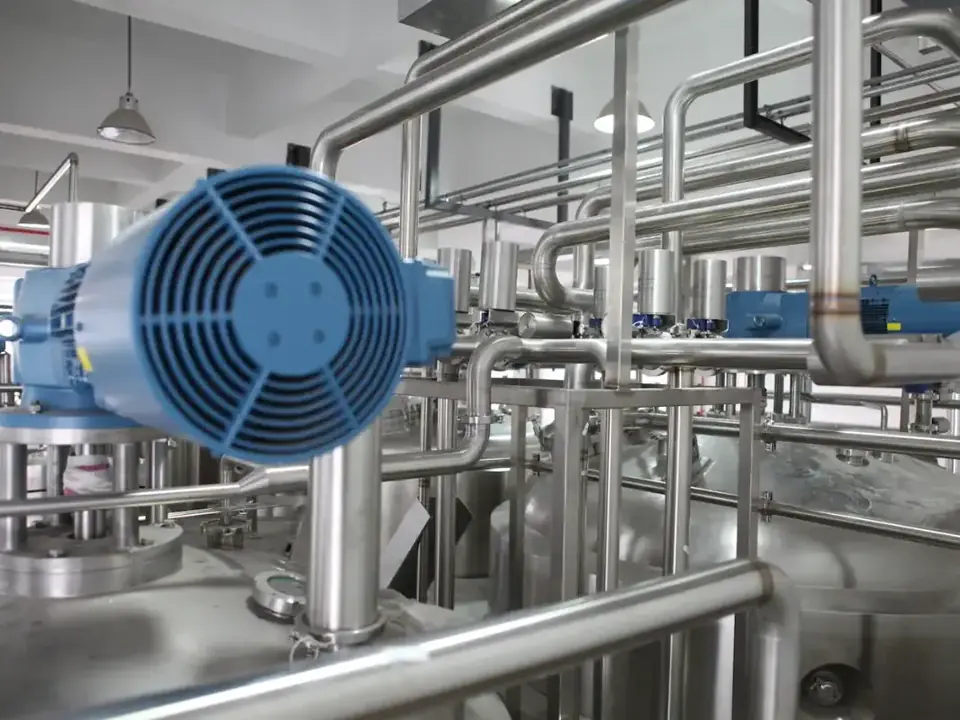
That is why 304L is the usual choice for welded tanks, process pipework, dairy silos and pharmaceutical utility lines. In nitric acid service it is also preferred over standard 304.
| Property | 304L | 304 |
|---|---|---|
| Carbon, max | 0.030% | 0.07% |
| Nickel | 8.0–12.0% | 8.0–10.5% |
| Tensile strength, min | 485 MPa | 515 MPa |
| Yield strength, min | 170 MPa | 205 MPa |
| Resistance to weld decay | Good without post-weld anneal | Risk in thick or multi-pass welds |
| Usual filler metal | 308L | 308 or 308L |
| Typical use | Welded tanks, pipework, vessels | General fabrication, thin-gauge work |
The price of lower carbon: a little strength
Carbon adds strength to austenitic steel, so taking it out costs you some. ASTM A240 sets 304L minimum yield at 170 MPa and tensile at 485 MPa, against 205 MPa and 515 MPa for 304. For most fabricated equipment this makes no practical difference. For pressure design it does, because the code allowable stresses for 304L are lower.
At high temperatures the gap matters even more. For sustained service above roughly 500 °C, designers usually move to 304H or a stabilised grade such as SS 321, because low-carbon grades lose creep strength.
Dual-certified 304/304L: what it means
Much of the stainless pipe, sheet and plate made today is dual-certified as 304/304L. The steel is melted with carbon at or below 0.030%, so it meets the 304L chemistry, and it also reaches the higher 304 strength minimums. One heat, both grades on the certificate.
If your drawing calls for 304L, dual-certified material is fully acceptable. If it calls for 304, dual-certified material also meets it. We will tell you at quotation whether the lot on offer is single or dual certified, and the test certificate will show both the carbon value and the tensile results.
304L or 316L for your welded system?
Both are low-carbon grades, so both handle welding well. The deciding factor is chloride. If the process fluid, cleaning chemicals or surrounding air carry chlorides, 316L's molybdenum gives a real margin against pitting and crevice corrosion. That includes brines, salted foods, coastal sites, chlorinated water and many disinfectants. If the service is clean water, air, mild chemicals, nitric acid or dry products, 304L does the job at lower cost.
A practical approach many plants take is 316L for product-contact lines and 304L for utilities, structural frames and non-contact parts. If you are not sure which side of the line your application falls on, send us the fluid and temperature details and we will tell you what customers typically use for that service.
Forms and fabrication notes
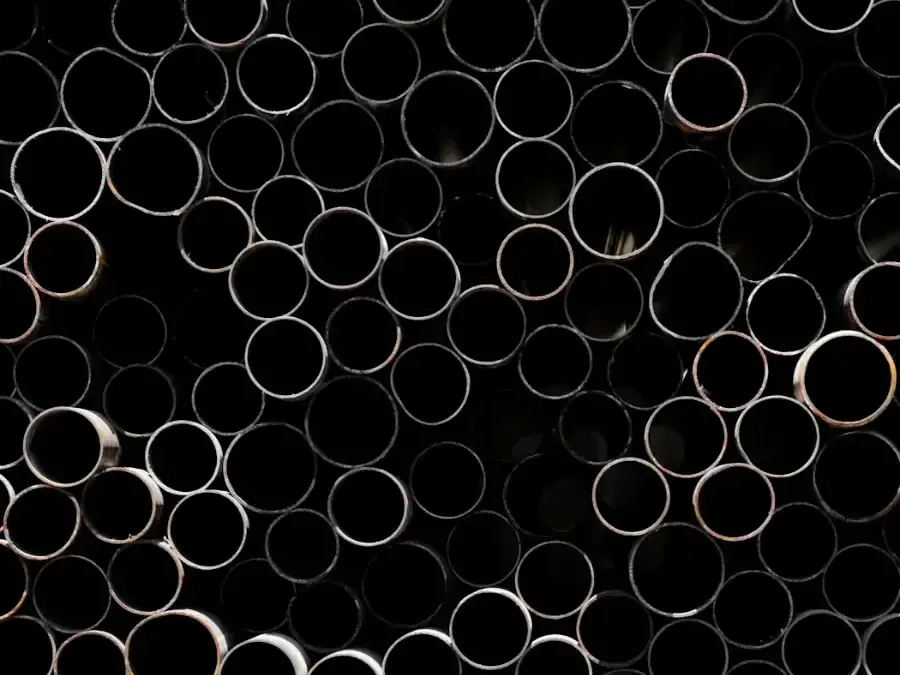
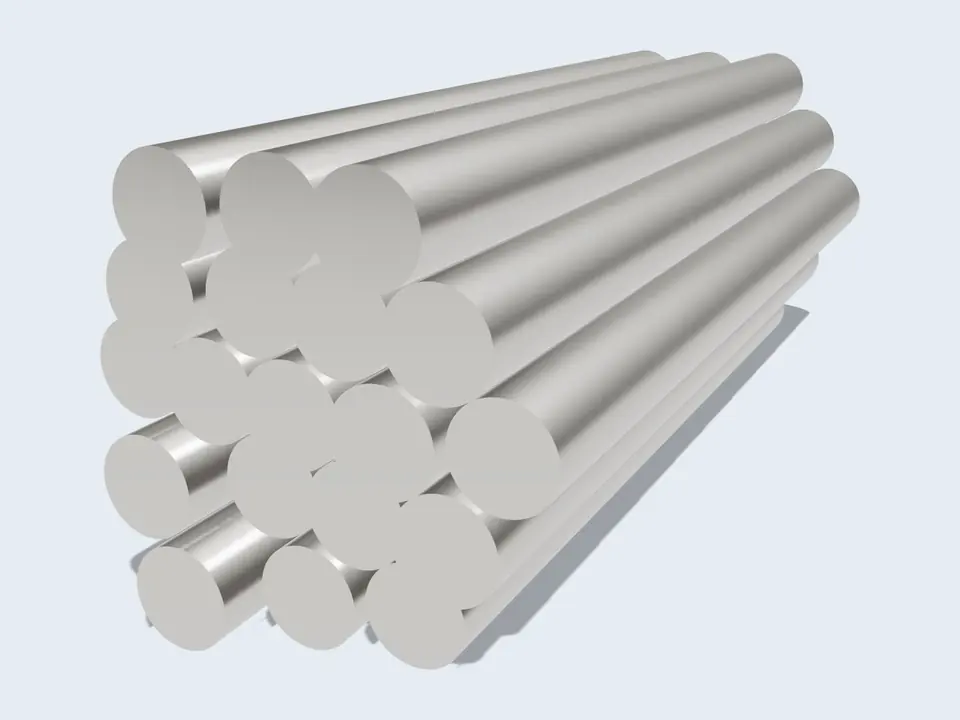
304L is a fabrication grade, so pipe and flat products are where you will see it most. We supply seamless and ERW pipe and tube, sheet, strip and plate, along with bar, wire, flanges and fittings for completing welded assemblies. Sizes are confirmed at enquiry.
For welding, matching 308L filler is the normal choice. Keep interpass temperatures reasonable, clean off heat tint after welding and pickle or passivate if the joint will see corrosive service. The low carbon helps, but it does not excuse sloppy cleaning.
For hygienic or pharmaceutical lines in 304L, mention the internal finish you need when you enquire.
Where SS 304L is used
Questions about SS 304L
Still unsure? Call 080-41159995 or WhatsApp +91 98441 25506 and we will answer from the trade desk.
What does the L in 304L mean?
L means low carbon. 304L is limited to 0.030% carbon maximum compared with 0.07% for 304 under ASTM A240. The lower carbon reduces chromium carbide formation during welding, which protects the heat-affected zone from intergranular corrosion.
Is 304L better than 304?
It is better for welded parts that will see corrosive service, especially thick sections. It is slightly weaker, with a lower minimum yield and tensile strength. For thin, unwelded or lightly welded parts in mild service, plain 304 performs the same. Many mills now dual-certify material so it meets both grades.
Can 304 and 304L be welded together?
Yes. They are fully compatible and are commonly joined using 308L filler wire or electrodes. The finished joint behaves like the weaker of the two in strength terms. If corrosion in the weld zone matters, keep heat input low and clean the weld afterwards.
Is 304L magnetic?
Annealed 304L is non-magnetic because it is fully austenitic. Like 304, it can become slightly magnetic after cold working, such as bending pipe or cold drawing wire, and weld metal often contains a little ferrite that a magnet can detect. This is normal and not a sign of the wrong grade.
Is 304L suitable for high-temperature service?
For moderate temperatures, yes. For sustained load-bearing service above roughly 500 °C its creep strength is limited because of the low carbon, so designers usually choose 304H, 321 or 347 instead. 304L oxidation resistance in air is similar to 304.
Keep exploring
Non-Magnetic (Austenitic) Stainless Steel Grades
Austenitic stainless steel grades are the nickel-bearing 300 series: non-magnetic when annealed and hardenable only by cold work.
View details →
SS 304
SS 304 (UNS S30400) is an austenitic stainless steel with about 18% chromium and 8% nickel, which is why it is called 18/8.
View details →
SS 316L
SS 316L (UNS S31603) is 316 stainless steel with carbon held to 0.030% maximum.
View details →Stainless Steel Seamless Pipes & Tubes
SS seamless pipe is stainless pipe made from a solid billet that is pierced or extruded into a hollow, so it has no weld seam.
View details →Stainless Steel ERW (Welded) Pipes & Tubes
SS ERW pipe is stainless pipe roll-formed from strip and welded along one straight seam, usually by TIG, plasma or laser fusion…
View details →Pharmaceutical
Pharmaceutical grade stainless steel is normally 316L for product-contact parts and purified water or WFI systems, and 304 for…
View details →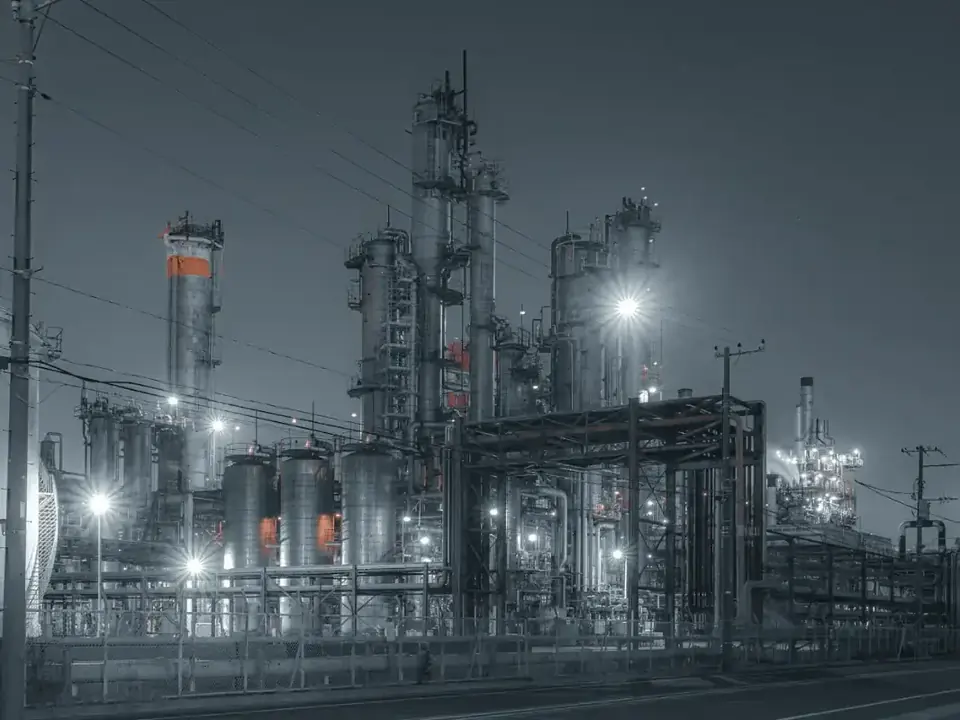
Chemical & Process Plants
In chemical plants the metal is chosen by the fluid it handles.
View details →Need SS 304L with a test certificate?
Send the material, grade, size and quantity. We confirm availability and price, with the test certificate details.