
SS 321 stainless steel for heat and welded hot service
SS 321 (UNS S32100) is an 18/8 austenitic stainless steel stabilised with titanium. The titanium ties up carbon so chromium carbides cannot form when the steel sits between about 425 °C and 900 °C, keeping it resistant to intergranular corrosion in hot service. Jubilant Impex supplies 321 pipe, sheet and bar in Bangalore.
SS 321 specifications
Per ASTM A240 (plate, sheet and strip), UNS S32100, weight %
| C | 0.08 max |
|---|---|
| Mn | 2.00 max |
| P | 0.045 max |
| S | 0.030 max |
| Si | 0.75 max |
| Cr | 17.0–19.0 |
| Ni | 9.0–12.0 |
| N | 0.10 max |
| Ti | 5 × (C + N) min, 0.70 max |
ASTM A240 (annealed)
| Tensile strength | 515 MPa min |
|---|---|
| Yield strength (0.2% offset) | 205 MPa min |
| Elongation in 50 mm | 40% min |
| Hardness | 217 HB max / 95 HRBW max |
Typical values
| Density | approx. 8.0 g/cm³ |
|---|---|
| Elastic modulus | 193 GPa |
| Mean thermal expansion, 0–100 °C | 16.6 µm/m·°C |
| Thermal conductivity at 100 °C | 16.1 W/m·K |
| Electrical resistivity | 0.72 µΩ·m |
Designations in other standards
| UNS | S32100 |
|---|---|
| EN / W.Nr. (DIN) | 1.4541 / X6CrNiTi18-10 |
| JIS | SUS321 |
| BS | 321S31 |
Available forms
Enquire about SS 321
Tell us grade, size, quantity and delivery location. Every consignment ships with a test certificate.
Request a quoteWhatsApp +91 98441 25506Or call 080-41159995
How SS 321 measures up
- Fe 66%
- Cr 18.0%
- Ni 10.5%
- Ti 5.0%
View as table
| Element | Nominal % |
|---|---|
| Fe | 66% |
| Cr | 18.0% |
| Ni | 10.5% |
| Ti | 5.0% |
View as table
| Property | Specified |
|---|---|
| Tensile strength | 515 MPa min |
| Yield strength | 205 MPa min |
View as table
| Grade | PREN |
|---|---|
| SS 303 | 18.0 |
| SS 321 | 18.0 |
| SS 304 | 18.5 |
| SS 304L | 18.5 |
| SS 316 | 25.2 |
| SS 316L | 25.2 |
304L protects a weld by having very little carbon. 321 takes a different route. It keeps normal carbon but adds titanium, which grabs that carbon first and locks it away as titanium carbide. Chromium stays in solution, at the grain boundaries where it is needed.
The difference shows up when a component does not just get welded once, but lives for years in the temperature band where ordinary stainless steel sensitises. Exhaust systems, expansion bellows, furnace parts and hot process lines are where 321 is usually found.
How titanium stabilisation works
Carbon in austenitic stainless steel wants to combine with something when the steel is heated between roughly 425 °C and 850 °C. Given only chromium, it forms chromium carbides at grain boundaries and robs the surrounding metal of corrosion resistance. Titanium has a much stronger pull on carbon than chromium does. With enough titanium present, carbon forms titanium carbides instead, scattered through the grains, and chromium is left alone.
ASTM A240 sets the titanium at no less than five times the carbon plus nitrogen content, with an upper limit of 0.70%. That ratio is what you should check on a 321 test certificate. Titanium that is too low relative to carbon leaves the steel only partly stabilised.
Why choose 321 over 304L for hot service?
Low carbon alone prevents sensitisation during the short heating of a weld. It does not reliably prevent it over months or years at 500 °C to 800 °C. Stabilised 321 does. It also keeps better strength at temperature than the low-carbon grades, with useful creep and stress-rupture properties.
In air, 321 resists scaling to around 900 °C in intermittent service and about 925 °C continuously, similar to 304. Its advantage is that the material stays sound and resistant to intergranular attack after long periods hot, especially if it later sees moist or acidic conditions during shutdowns.
| Property | 321 | 304 | 304L |
|---|---|---|---|
| Carbon, max | 0.08% | 0.07% | 0.030% |
| Stabilising element | Titanium | None | None (low carbon) |
| Resists sensitisation in long hot service | Yes | No | Only short exposures |
| Strength at temperature | Good | Good | Lower |
| Polished finish | Poor | Good | Good |
| Usual weld filler | 347 | 308 | 308L |
Things that surprise people about 321
321 is an excellent grade, but it is a specialist one. A few practical points come up again and again.
- It does not polish well. Titanium carbonitride particles drag out during polishing and leave a streaky finish, so 321 is not used for decorative or mirror-finish work.
- Titanium does not cross the welding arc well. 321 is often welded with 347 filler, which is stabilised with niobium (columbium) instead.
- Its general corrosion resistance at room temperature is about the same as 304, not better. Stabilisation is about grain boundaries, not overall rust resistance.
- It is non-magnetic when annealed, like other 300-series grades.
321 versus 347 and 304H
347 does the same job with niobium in place of titanium and is often preferred for welding consumables and some heavy sections. 304H relies on controlled higher carbon for creep strength and accepts some sensitisation. Pressure equipment designers in power and petrochemical plants choose between them case by case. For sustained high-temperature pressure parts, a 321H variant with controlled carbon is also made. Our power and IBR boiler page discusses the wider material choices for steam service.
Where 321 shows up in practice
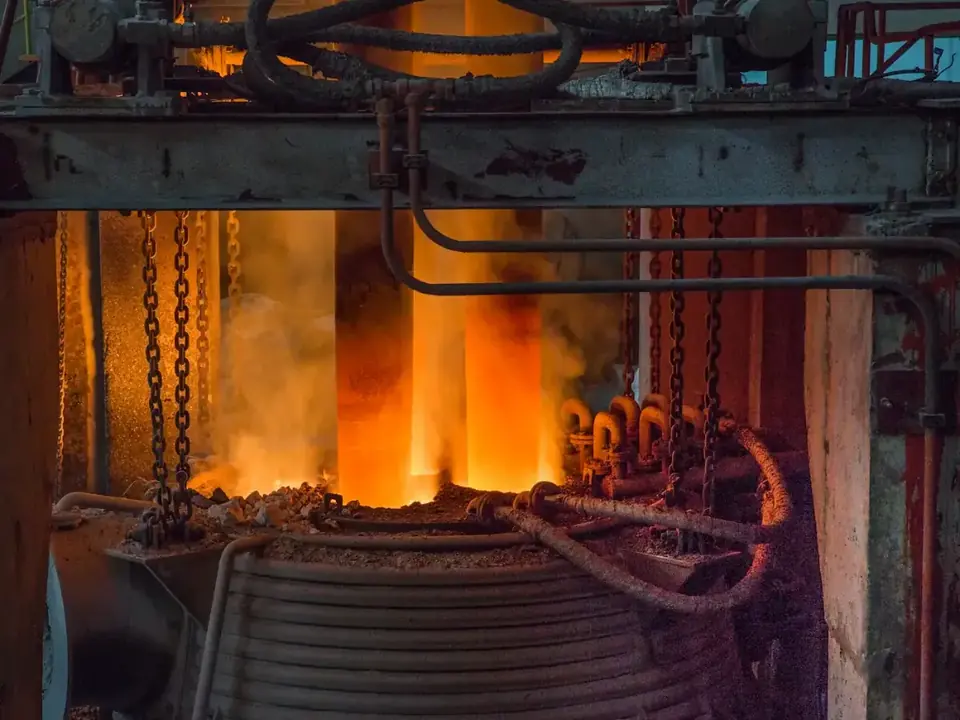
The most common 321 parts we see enquiries for are thin-walled. Metallic expansion bellows for hot process and exhaust lines are a classic example: they are made from thin 321 sheet, welded, and then run hot for years while flexing. Exhaust pipes and silencers for diesel generator sets and engines are another. Both see repeated heating and cooling through the sensitising range, plus condensate that can turn acidic when the system cools.
Larger users include refineries and petrochemical plants for hot process lines and heater parts, power plants for auxiliary hot piping, and furnace builders for muffles, baskets and fixtures that run below the range where heat-resisting ferritic grades like SS 446 become necessary. Aircraft exhaust systems were one of the original uses of the grade.
Welding and heat treating 321
321 welds easily with standard TIG, MIG and stick processes. As mentioned above, 347 filler is common because niobium transfers across the arc better than titanium. After welding, normal cleaning and pickling apply. For components that will run in the sensitising range under corrosive conditions, some specifications call for a stabilising heat treatment, which encourages the titanium to tie up any remaining carbon. Your fabricator or the design code will say whether this is needed.
Forms and sizes
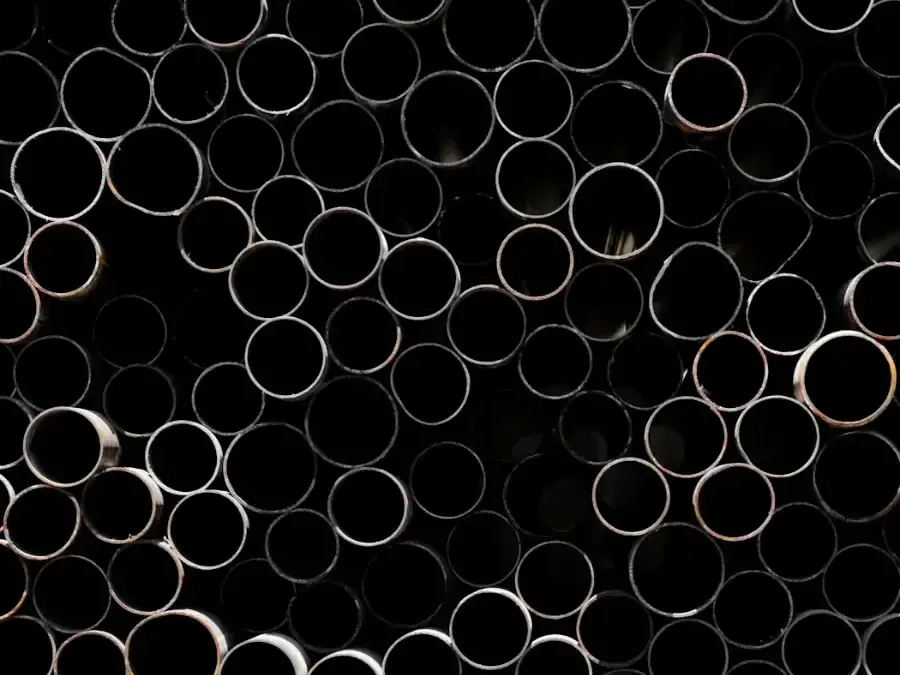
We supply 321 as seamless pipe and ERW tube, sheet and strip for bellows and exhaust work, round bar, wire, flanges and fittings. Sizes and product standards (for example ASTM A312 TP321 for pipe, A240 for sheet) are confirmed at enquiry, with a test certificate for every lot.
Where SS 321 is used
Questions about SS 321
Still unsure? Call 080-41159995 or WhatsApp +91 98441 25506 and we will answer from the trade desk.
Why is titanium added to 321 stainless steel?
Titanium combines with carbon to form titanium carbides, which stops chromium carbides forming at grain boundaries when the steel is heated between roughly 425 °C and 850 °C. This keeps the chromium available for corrosion resistance and prevents intergranular corrosion after welding or long hot service.
What is the maximum temperature for 321 stainless steel?
In air, 321 resists scaling up to about 900 °C intermittently and around 925 °C in continuous service. Its useful load-bearing range depends on the design code and stress. For pressure parts at high temperature, check allowable stresses in the code you are working to, and consider 321H.
What is the difference between 321 and 347 stainless steel?
Both are stabilised 18/8 grades. 321 uses titanium and 347 uses niobium. 347 has slightly better high-temperature strength in some conditions and its stabiliser survives the welding arc better, which is why 347 filler is often used to weld 321. For most uses the two are interchangeable.
Is SS 321 better than SS 316?
They solve different problems. 321 is chosen for welded parts in the 425–900 °C range where intergranular corrosion is the risk. 316 is chosen for chloride and acid resistance at ordinary temperatures because of its molybdenum. At room temperature, 316 has clearly better pitting resistance than 321.
Can 321 stainless steel be polished to a mirror finish?
Not well. The titanium carbonitride particles in 321 tend to pull out during polishing and leave streaks or comet tails. If a bright decorative finish is required, choose 304 or 316 instead.
Keep exploring
Non-Magnetic (Austenitic) Stainless Steel Grades
Austenitic stainless steel grades are the nickel-bearing 300 series: non-magnetic when annealed and hardenable only by cold work.
View details →
SS 304
SS 304 (UNS S30400) is an austenitic stainless steel with about 18% chromium and 8% nickel, which is why it is called 18/8.
View details →
SS 304L
SS 304L (UNS S30403) is the low-carbon version of 304, with carbon limited to 0.030% maximum.
View details →Stainless Steel Seamless Pipes & Tubes
SS seamless pipe is stainless pipe made from a solid billet that is pierced or extruded into a hollow, so it has no weld seam.
View details →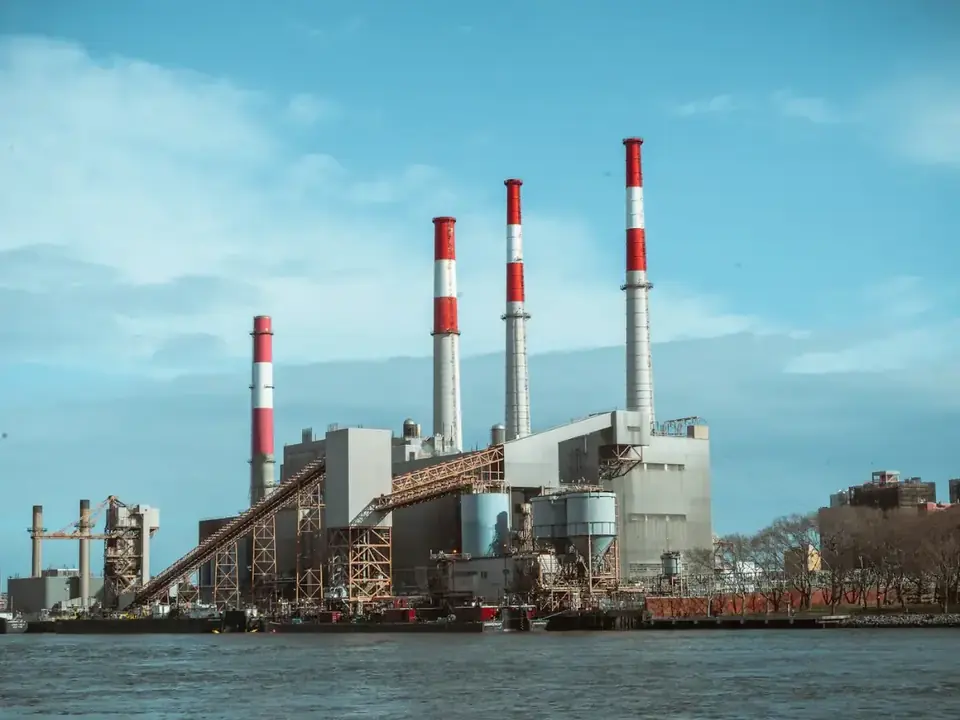
Power Plants & IBR Boilers
IBR boiler tubes and pipes are steel products made and tested to the Indian Boiler Regulations so they can be used in boilers and…
View details →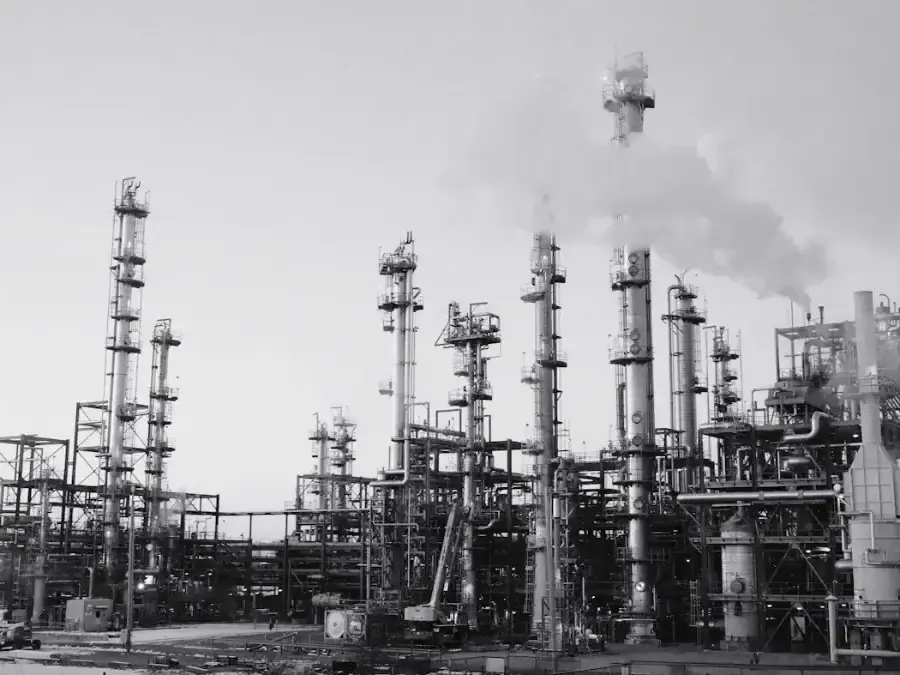
Oil & Gas
Most oil and gas piping is carbon steel, usually ASTM A106 Grade B seamless for process lines and A53 Grade B for utilities.
View details →SS 446
SS 446 (UNS S44600) is a ferritic stainless steel with 23–27% chromium, the highest of the standard ferritic grades.
View details →Need SS 321 with a test certificate?
Send the material, grade, size and quantity. We confirm availability and price, with the test certificate details.