
SS 316L for welded hygienic and chemical systems
SS 316L (UNS S31603) is 316 stainless steel with carbon held to 0.030% maximum. It keeps the 2–3% molybdenum that resists chloride pitting and adds protection against weld-zone corrosion, so it is the standard choice for welded pharmaceutical, dairy and chemical piping. Jubilant Impex supplies 316L in Bangalore with a test certificate.

SS 316L specifications
Per ASTM A240 (plate, sheet and strip), UNS S31603, weight %
| C | 0.030 max |
|---|---|
| Mn | 2.00 max |
| P | 0.045 max |
| S | 0.030 max |
| Si | 0.75 max |
| Cr | 16.0–18.0 |
| Ni | 10.0–14.0 |
| Mo | 2.00–3.00 |
| N | 0.10 max |
ASTM A240 (annealed)
| Tensile strength | 485 MPa min |
|---|---|
| Yield strength (0.2% offset) | 170 MPa min |
| Elongation in 50 mm | 40% min |
| Hardness | 217 HB max / 95 HRBW max |
Typical values
| Density | 8.0 g/cm³ |
|---|---|
| Elastic modulus | 193 GPa |
| Mean thermal expansion, 0–100 °C | 15.9 µm/m·°C |
| Thermal conductivity at 100 °C | 16.3 W/m·K |
| Electrical resistivity | 0.74 µΩ·m |
Designations in other standards
| UNS | S31603 |
|---|---|
| EN / W.Nr. (DIN) | 1.4404 / X2CrNiMo17-12-2 |
| JIS | SUS316L |
| BS | 316S11 |

Available forms
Enquire about SS 316L
Tell us grade, size, quantity and delivery location. Every consignment ships with a test certificate.
Request a quoteWhatsApp +91 98441 25506Or call 080-41159995
How SS 316L measures up
- Fe 68%
- Cr 17.0%
- Ni 12.0%
- Mo 2.5%
View as table
| Element | Nominal % |
|---|---|
| Fe | 68% |
| Cr | 17.0% |
| Ni | 12.0% |
| Mo | 2.5% |
View as table
| Property | Specified |
|---|---|
| Tensile strength | 485 MPa min |
| Yield strength | 170 MPa min |
View as table
| Grade | PREN |
|---|---|
| SS 303 | 18.0 |
| SS 321 | 18.0 |
| SS 304 | 18.5 |
| SS 304L | 18.5 |
| SS 316 | 25.2 |
| SS 316L | 25.2 |
Walk through any pharmaceutical plant in Bangalore or Hyderabad and most of the product-contact pipework, vessels and skids will be 316L. The reason is simple. These systems are welded end to end, cleaned with hot caustic and acid, and sanitised with chlorinated or peroxide agents. 316L handles all of that, including at the welds.
The grade combines two upgrades over 304: molybdenum for chloride resistance and low carbon for weld integrity.
What is the difference between 316 and 316L?
Only carbon. ASTM A240 allows 316 up to 0.08% carbon and limits 316L to 0.030%. Chromium, nickel and molybdenum ranges are the same.
That carbon difference controls what happens beside a weld. With more carbon, chromium carbides form at grain boundaries in the heat-affected zone and leave chromium-depleted paths that corrode first. With 316L there is not enough carbon to do real damage during normal welding. You give up a little strength for it: 170 MPa minimum yield instead of 205 MPa.
Why hygienic and pharma systems specify 316L
Process lines in pharma, biotech, dairy and beverage plants are orbital-welded, so there may be hundreds of welds in one skid. Every one of them has a heat-affected zone, and every one will see the same cleaning chemicals as the parent tube. 316L means the weld zones keep corrosion resistance close to the rest of the line.
Low carbon also helps electropolishing, which these systems often use for very smooth internal surfaces. Our pharmaceutical industry page goes into tube finish and documentation in more detail.
- WFI, purified water and clean steam lines
- Product transfer piping and CIP return lines
- Mixing, holding and fermentation vessels
- Dairy pasteurisers and cheese brine handling
- Instrument impulse lines and capillary tubing
| Property | 316L | 316 | 304L |
|---|---|---|---|
| Carbon, max | 0.030% | 0.08% | 0.030% |
| Molybdenum | 2.00–3.00% | 2.00–3.00% | None specified |
| Nickel | 10.0–14.0% | 10.0–14.0% | 8.0–12.0% |
| Yield strength, min | 170 MPa | 205 MPa | 170 MPa |
| Weld-zone corrosion resistance | Good | Fair in thick welds | Good |
| Chloride pitting resistance | Good | Good | Limited |
| Typical role | Welded hygienic and chemical lines | Bar, fasteners, hotter service | Welded general fabrication |
Is 316L surgical steel?
In everyday language, yes. Watches, jewellery and some instruments marketed as surgical steel are usually 316L. In medical engineering, though, implant-grade 316L is covered by its own standard, ASTM F138, with tighter limits on inclusions and chemistry, and it is usually vacuum remelted. Industrial 316L to ASTM A240, A312 or A276 is not implant-grade material, and we do not supply it for implants.
Surface finish matters as much as the grade
In hygienic service, the internal surface of the tube decides how easily product residues and bacteria can be cleaned away. Pharma and biotech specifications usually call for a maximum surface roughness, expressed as Ra in micrometres, and often for electropolishing on top of mechanical polishing. Dairy and beverage lines commonly accept a less demanding finish.
The same 316L chemistry can be supplied as mill-finish pipe for chemical service, bright annealed tube for instrumentation and polished tube for hygienic lines. Price and availability differ a lot between them. When you enquire, give the finish and Ra requirement along with size and wall thickness, so we quote the right material the first time.
Beyond pharma: effluent, sugar and coastal work
316L is not only a clean-room material. Effluent treatment plants, distillery spent-wash lines and sugar mill juice handling all involve acidic, chloride-bearing liquids where welded 304L can pit within a few years. 316L welded fabrication holds up noticeably better there. On coastal sites, welded 316L railings, frames and enclosures keep their appearance longer than 304L. Our sugar and distillery page covers where 316L sits against brass and other materials in that industry.
Temperature limits worth knowing
316L resists oxidation in air to roughly the same temperatures as 316. Its weak spot is strength under sustained load at high temperature, where the low carbon reduces creep strength. For pressure parts running hot for long periods, 316 or 316H is normally specified. 316L is a corrosion grade first.
For moderate temperatures such as hot water, steam condensate and CIP solutions, 316L is entirely suitable.
Buying 316L: dual certification and the right paperwork
Most 316L sold today is dual-certified 316/316L, meeting the low-carbon limit and the higher 316 strength minimums in a single heat. When you order, state the product standard you need. That could be ASTM A312 for pipe, A269 or A213 for tube, A240 for sheet and plate, or A276/A479 for bar. Also state the finish, such as mill finish, bright annealed or polished.
We supply 316L as seamless pipe, ERW pipe and tube, capillary tube, sheet, strip, bar, wire, flanges and fittings. Sizes are confirmed at enquiry, with a test certificate for each heat.
Where SS 316L is used
Questions about SS 316L
Still unsure? Call 080-41159995 or WhatsApp +91 98441 25506 and we will answer from the trade desk.
Can 316L replace 316 in every application?
Usually, but not always. 316L has a lower minimum yield strength, 170 MPa against 205 MPa, and lower creep strength at high temperature. Where design stresses are based on 316, or the part runs hot under load, check with the designer first. Dual-certified 316/316L material avoids the issue entirely.
What does dual certified 316/316L mean?
It means a single heat of steel meets both specifications. Carbon is at or below 0.030% to satisfy 316L, and the tested strength meets the higher 316 minimums. The test certificate lists both grades and can be used where either is specified.
Does 316L tarnish or discolour?
316L keeps its colour in normal use and does not tarnish like silver or brass. It can show brown tea staining in coastal or polluted air if not cleaned, and heat tint near welds if not pickled. Both are surface effects that cleaning or passivation removes.
Which filler metal is used for welding 316L?
Matching 316L filler wire or electrodes are the normal choice, keeping molybdenum and low carbon in the weld metal. For joining 316L to carbon steel, a higher-alloy filler such as 309L or 309LMo is commonly used to handle dilution.
Is 316L stainless steel safe for drinking water?
Yes. 316L is widely used for potable water, purified water and water-for-injection systems because it does not leach harmful amounts of metal and resists corrosion in treated water. In heavily chlorinated or brackish water, 316L is preferred over 304L.
Is 316L magnetic after welding?
The parent metal stays essentially non-magnetic, but 316L weld metal is deliberately made with a small amount of ferrite to prevent hot cracking. A magnet may pull slightly on the weld bead. That is normal and expected.
Keep exploring
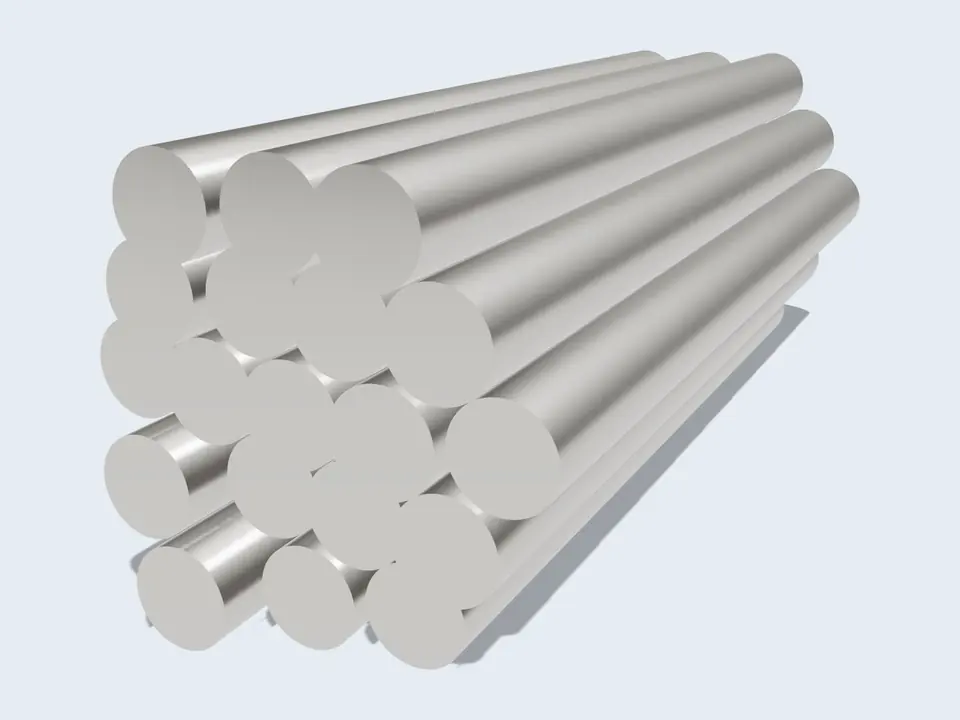
Non-Magnetic (Austenitic) Stainless Steel Grades
Austenitic stainless steel grades are the nickel-bearing 300 series: non-magnetic when annealed and hardenable only by cold work.
View details →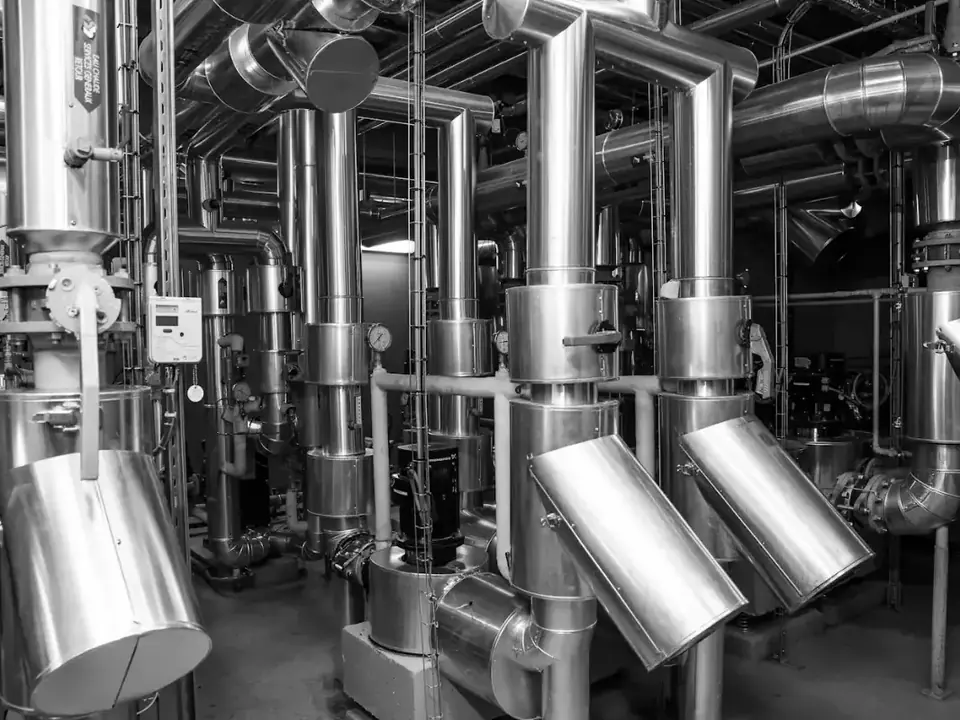
SS 316
SS 316 (UNS S31600) is an austenitic stainless steel containing 2–3% molybdenum, which gives it much better resistance to pitting…
View details →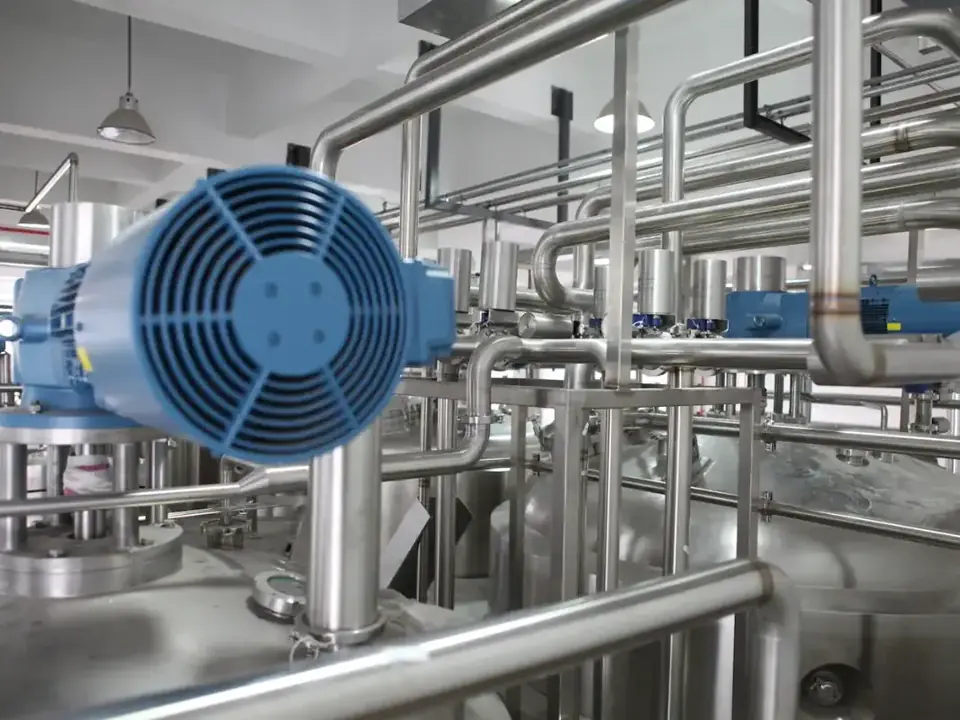
SS 304L
SS 304L (UNS S30403) is the low-carbon version of 304, with carbon limited to 0.030% maximum.
View details →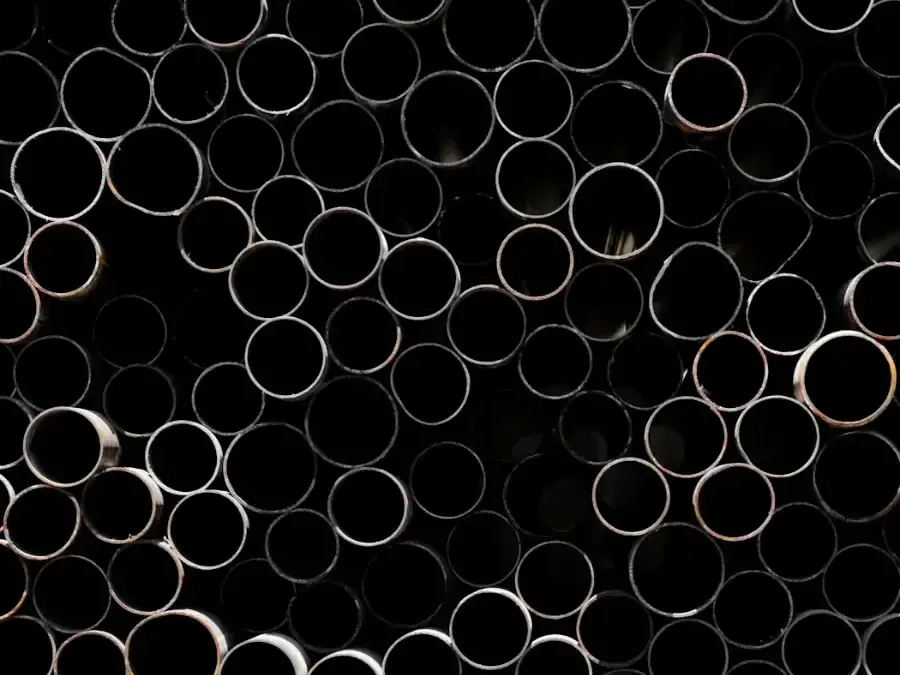
Stainless Steel Seamless Pipes & Tubes
SS seamless pipe is stainless pipe made from a solid billet that is pierced or extruded into a hollow, so it has no weld seam.
View details →
Stainless Steel Capillary Tubes
SS capillary tube is very small-bore stainless tubing, usually a few millimetres OD or less, cold drawn to a precise outside and…
View details →Pharmaceutical
Pharmaceutical grade stainless steel is normally 316L for product-contact parts and purified water or WFI systems, and 304 for…
View details →Food, Dairy & Beverage
Food grade stainless steel usually means 304 for most dairy, brewery and food equipment, and 316 or 316L where salt, brine,…
View details →304 vs 316 Stainless Steel
The main difference between 304 and 316 stainless steel is molybdenum.
View details →Need SS 316L with a test certificate?
Send the material, grade, size and quantity. We confirm availability and price, with the test certificate details.