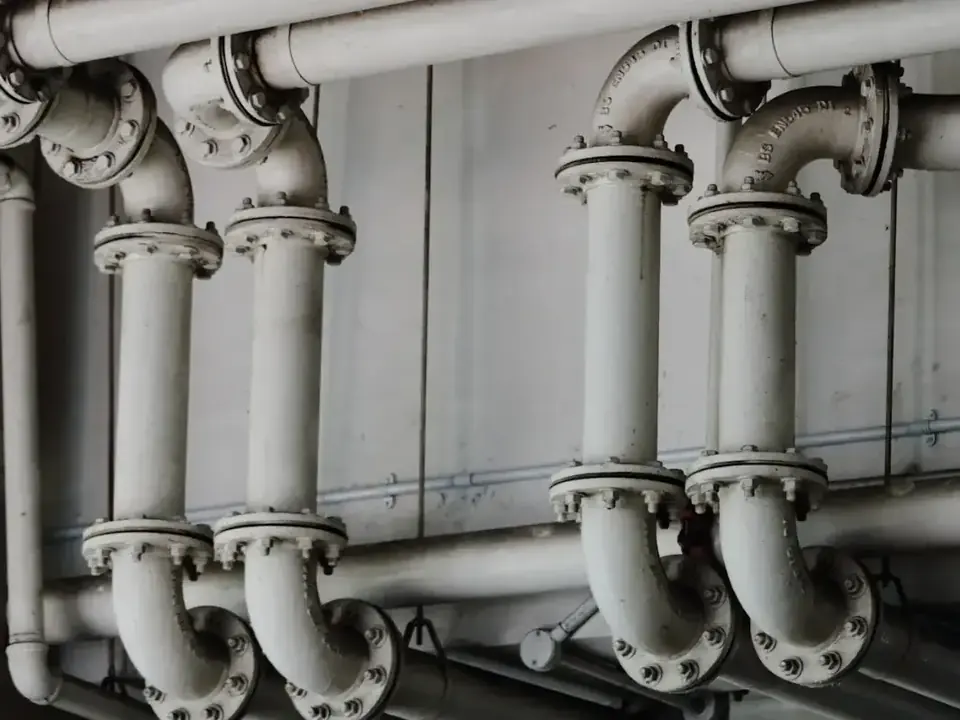
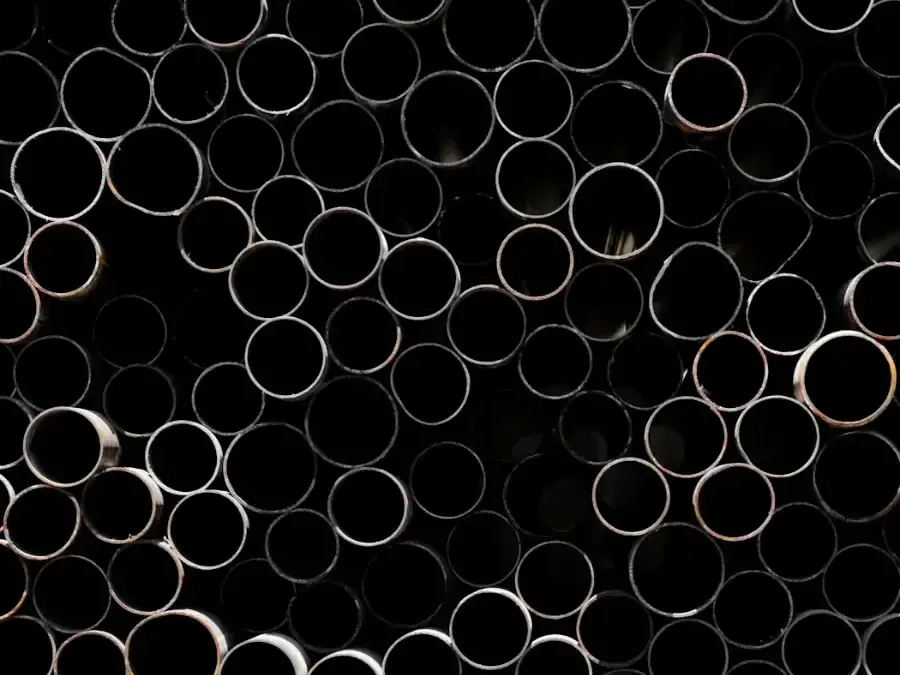
A pipe schedule chart lists the wall thickness for each nominal pipe size (NPS) and schedule. Under ASME B36.10M and B36.19M the outside diameter stays fixed for a given NPS while the wall changes with schedule. For example, 2 inch pipe is 60.3 mm OD, with a 3.91 mm wall in Sch 40 and 5.54 mm in Sch 80.
Pipe sizes confuse new buyers because the name is not a measurement. A "2 inch" pipe is not 2 inches across anything: its outside diameter is 2.375 inches, 60.3 mm, and the bore depends on the schedule. This chart gives the wall thicknesses you will actually use, with the notes that stop costly mix-ups between carbon steel and stainless schedules.
How to read the chart
Find the nominal pipe size in the left column. Indian drawings often call it NB, nominal bore, or DN in metric; the DN column gives the match. The OD column is the actual outside diameter, which is the same for every schedule of that size, so fittings and flanges line up. Read across to the schedule your drawing calls for and you have the wall thickness in millimetres. The bore is OD minus twice the wall.
All values are from ASME B36.10M (welded and seamless wrought steel pipe) and ASME B36.19M (stainless steel pipe). The Sch 10 column applies to both: in the sizes listed, Sch 10 and Sch 10S have the same wall.
What does the S in 10S, 40S and 80S mean?
The S marks the stainless steel schedules of ASME B36.19M. For most sizes they equal the carbon steel schedules of the same number. They part ways in larger sizes, and that catches people out. At NPS 12, Sch 40 is 10.31 mm but Sch 40S is 9.53 mm. At NPS 10 and 12, Sch 80S is 12.70 mm while Sch 80 is 15.09 and 17.48 mm. Stainless pipe is expensive per kilogram, so B36.19M keeps the walls thinner where it can. If a stainless line item says Sch 40 at 12 inch, check whether the designer meant 40S.
| NPS | Sch 40 (mm) | Sch 40S (mm) | Sch 80 (mm) | Sch 80S (mm) |
|---|---|---|---|---|
| 8 | 8.18 | 8.18 | 12.70 | 12.70 |
| 10 | 9.27 | 9.27 | 15.09 | 12.70 |
| 12 | 10.31 | 9.53 | 17.48 | 12.70 |
View as table
| Schedule | Wall (mm) |
|---|---|
| Sch 10 | 2.77 mm |
| Sch 40 / STD | 3.91 mm |
| Sch 80 / XS | 5.54 mm |
| Sch 160 | 8.74 mm |
| XXS | 11.07 mm |
Working out the bore
Inside diameter is OD minus twice the wall. For 2 inch pipe: Sch 40 gives 60.3 − 2 × 3.91 = 52.48 mm, Sch 80 gives 60.3 − 2 × 5.54 = 49.22 mm, and Sch 160 only 42.82 mm. That bore change matters for flow calculations and for anything that has to slide inside the pipe, such as heater elements, thermowells or a smaller pipe in a jacketed line.
For a quick check on site, measure the OD with a vernier to confirm the size, then measure the wall at the pipe end at three or four points around the circumference and compare the lowest reading with the chart, allowing for the mill tolerance.
View as table
| Size | kg per metre |
|---|---|
| 1/2" NB Sch 40 | 1.27 kg/m |
| 3/4" NB Sch 40 | 1.69 kg/m |
| 1" NB Sch 40 | 2.50 kg/m |
| 1 1/2" NB Sch 40 | 4.05 kg/m |
| 2" NB Sch 40 | 5.44 kg/m |
| 3" NB Sch 40 | 11.29 kg/m |
| 4" NB Sch 40 | 16.08 kg/m |
| 6" NB Sch 40 | 28.26 kg/m |
Sch 40 vs STD, Sch 80 vs XS
Older weight classes STD (standard), XS (extra strong) and XXS (double extra strong) still appear on drawings and in the trade. STD equals Sch 40 up to NPS 10; at NPS 12 STD is 9.53 mm against 10.31 mm for Sch 40. XS equals Sch 80 up to NPS 8; at NPS 10 and 12 XS is 12.70 mm. XXS has no schedule number and does not follow the pattern: at NPS 8, XXS (22.23 mm) is actually thinner than Sch 160 (23.01 mm).
| NPS | DN | OD mm (in) | Sch 10 / 10S | Sch 40 | Sch 80 | Sch 160 | XXS |
|---|---|---|---|---|---|---|---|
| ½ | 15 | 21.3 (0.840) | 2.11 | 2.77 | 3.73 | 4.78 | 7.47 |
| ¾ | 20 | 26.7 (1.050) | 2.11 | 2.87 | 3.91 | 5.56 | 7.82 |
| 1 | 25 | 33.4 (1.315) | 2.77 | 3.38 | 4.55 | 6.35 | 9.09 |
| 1¼ | 32 | 42.2 (1.660) | 2.77 | 3.56 | 4.85 | 6.35 | 9.70 |
| 1½ | 40 | 48.3 (1.900) | 2.77 | 3.68 | 5.08 | 7.14 | 10.15 |
| 2 | 50 | 60.3 (2.375) | 2.77 | 3.91 | 5.54 | 8.74 | 11.07 |
| 2½ | 65 | 73.0 (2.875) | 3.05 | 5.16 | 7.01 | 9.53 | 14.02 |
| 3 | 80 | 88.9 (3.500) | 3.05 | 5.49 | 7.62 | 11.13 | 15.24 |
| 4 | 100 | 114.3 (4.500) | 3.05 | 6.02 | 8.56 | 13.49 | 17.12 |
| 6 | 150 | 168.3 (6.625) | 3.40 | 7.11 | 10.97 | 18.26 | 21.95 |
| 8 | 200 | 219.1 (8.625) | 3.76 | 8.18 | 12.70 | 23.01 | 22.23 |
| 10 | 250 | 273.1 (10.750) | 4.19 | 9.27 | 15.09 | 28.58 | 25.40 |
| 12 | 300 | 323.9 (12.750) | 4.57 | 10.31 | 17.48 | 33.32 | 25.40 |
Weight per metre
For carbon steel pipe, mass in kg/m = (OD − wall) × wall × 0.02466, with OD and wall in mm. A 2 inch Sch 40 pipe works out at (60.3 − 3.91) × 3.91 × 0.02466 = 5.44 kg/m. Austenitic stainless steel is slightly denser, so its pipe weighs roughly 1–2% more for the same size. Pipe is often priced by weight, so this formula is handy for checking a quote.

Choosing a schedule
The chart tells you dimensions, not suitability. The required wall comes from a pressure design calculation under the applicable code, such as ASME B31.1 for power piping, B31.3 for process piping, or the Indian Boiler Regulations for steam lines. That calculation uses the material's allowable stress at the design temperature, the weld joint factor (1.00 for seamless, 0.85 for ERW under B31.3), and allowances for corrosion and threading. Our ERW vs seamless guide covers the joint factor.
Rough patterns in Indian plants: Sch 10S is common in stainless utility, dairy and low-pressure process lines; Sch 40 and 40S are the general-purpose default; Sch 80 and heavier appear in steam, high-pressure hydraulic and threaded small-bore lines, where threading removes wall.
Pipe size vs tube size
Pipe and tube use different size systems. Pipe is called by nominal size and schedule, and its OD comes from the table. Tube is called by actual OD and wall, in millimetres or inches and gauge: a 25.4 mm OD × 1.6 mm tube is not the same as 1 inch pipe, which is 33.4 mm OD. Heat-exchanger tubes, instrument tubing, hydraulic tubes and hygienic dairy tube all follow tube sizing. Mixing the two on a drawing is a common cause of fittings that will not fit.
Common ordering mistakes
- Ordering stainless pipe as Sch 40 at 10 or 12 inch when the line was designed for 40S, or the other way round
- Writing 1 inch when the drawing means 25 mm OD tube
- Assuming NB is the inside diameter
- Quoting Sch 80 without checking that threaded fittings and flanges are rated to match
- Specifying XXS at 8 inch expecting it to be heavier than Sch 160
Light, medium and heavy: IS 1239 classes
Many Indian drawings for water and general service use IS 1239 class names instead of schedules: light (A), medium (B) and heavy (C) tube. These are a separate dimensional system with their own outside diameters and walls, and they do not map neatly onto ASME schedules. If an indent mixes IS 1239 classes and ASME schedules, clarify which one the designer used before ordering.
Pipe sizes above 12 inch
From NPS 14 upward, the outside diameter in inches equals the nominal size: NPS 14 is 14.000 inches (355.6 mm). Below that, OD and nominal size differ, which is why the OD column matters. For stainless seamless pipe or hydraulic and boiler pipe, send us the NPS and schedule and we will confirm what can be supplied.
Frequently asked questions
What is the difference between Schedule 40 and Schedule 80 pipe?
Both have the same outside diameter for a given size, but Schedule 80 has a thicker wall and therefore a smaller bore, higher pressure rating and more weight. For 1 inch pipe, Sch 40 is 3.38 mm thick and Sch 80 is 4.55 mm, per ASME B36.10M.
Is the outside diameter the same for all pipe schedules?
Yes. For a given nominal pipe size the outside diameter is fixed, and the schedule changes only the wall thickness and so the inside diameter. This keeps fittings, flanges and supports interchangeable across schedules of the same size.
What does NB mean in pipe size?
NB means nominal bore, the size name used in India and the UK for pipe, such as 25 NB for 1 inch pipe. It is a designation rather than a measurement. It corresponds to NPS in ASME usage and DN in metric standards, and the real outside diameter comes from the size table.
Is Schedule 40 the same as STD?
Schedule 40 and STD have the same wall thickness for sizes up to NPS 10. From NPS 12 they differ: at 12 inch STD is 9.53 mm while Sch 40 is 10.31 mm. Above 12 inch, STD stays at 9.53 mm while Sch 40 keeps increasing.
How do you calculate steel pipe weight per metre?
Use kg/m = (OD − wall thickness) × wall thickness × 0.02466, with dimensions in millimetres. This gives plain-end carbon steel pipe weight; add about 1–2% for austenitic stainless steel because of its slightly higher density.
What does Sch 10S mean?
Sch 10S is a light-wall stainless steel pipe schedule from ASME B36.19M. It is widely used for low-pressure stainless lines where corrosion resistance matters more than wall thickness, such as dairy, water and utility piping. For 2 inch pipe, Sch 10S is 2.77 mm thick.