
- Home
- All Products
- Alloy Steel & Carbon Steel Pipes
- Carbon & Alloy Steel Pipe Fittings
Carbon Steel and Alloy Steel Pipe Fittings
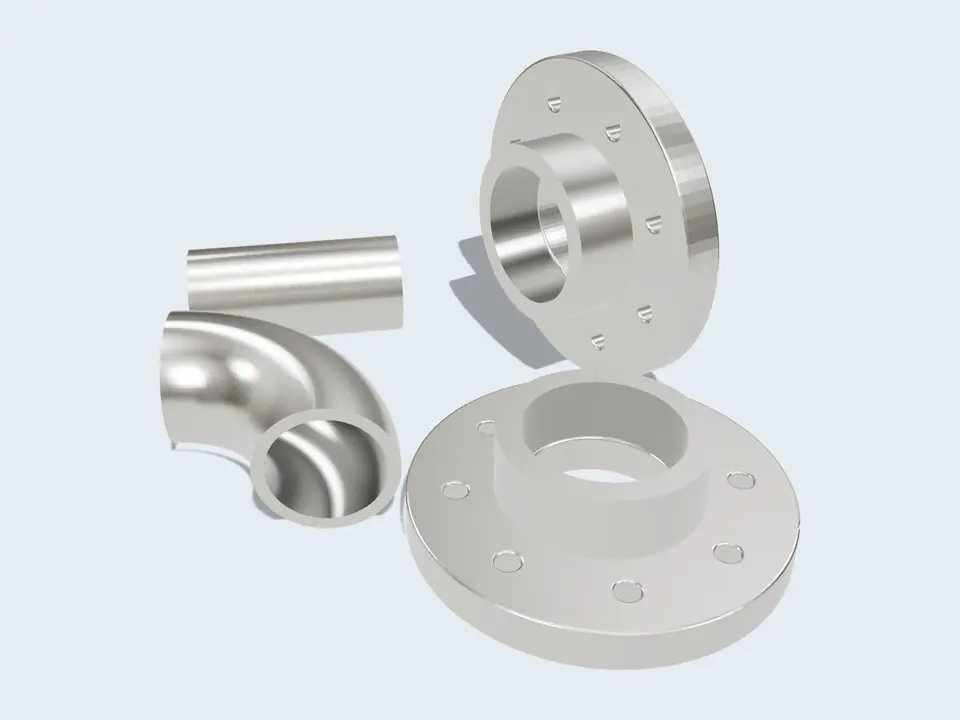
Jubilant Impex supplies carbon steel, alloy steel and stainless steel pipe fittings in Bangalore: butt-weld fittings, forged socket-weld and screwed fittings, and compression fittings with ferrules. Elbows, tees, reducers, couplings, unions and caps are matched to the pipe specification, such as A234 WPB with A106 Grade B pipe, and supplied with test certificates.
A piping job goes wrong at the fittings more often than at the pipe. The pipe is one specification; the fittings can be three or four different ones depending on how the joint is made. Get one wrong and you find out at hydrotest, or worse, at the Inspector's visit.
We handle fittings in carbon steel (C.S.), alloy steel (A.S.) and stainless steel (S.S.), in butt-weld (BW), socket-weld (SW), screwed (SCRD), forged and compression types. This page is about matching them correctly.
Butt-weld, socket-weld or screwed: which joint?
Butt-weld fittings are made from pipe or plate to the same wall thickness as the pipe and welded end to end with a full-penetration weld. They are the standard for larger sizes and severe service, and can be fully radiographed. The dimensional standard is ASME B16.9.
Socket-weld fittings are forged. The pipe slips into a socket and is fillet welded. They are quick to fit up on small-bore lines, typically NPS 2 and below, and suit drains, vents, instrument take-offs and utility lines. Screwed (threaded) fittings are also forged and join to threaded pipe with no welding at all, which is useful where hot work is restricted. Both socket-weld and threaded forged fittings follow ASME B16.11.
Socket-weld joints leave a small gap and crevice at the root, so they are avoided in services prone to crevice corrosion or in some cyclic duties. Threaded joints are generally limited by the design code to lower-risk services.
How do you match fitting material to pipe?
Every pipe specification has a companion specification for fittings with similar chemistry. Wrought butt-weld fittings for carbon and alloy steel are bought to ASTM A234, forged fittings to A105 for carbon steel or A182 for alloy and stainless, and wrought stainless butt-weld fittings to A403. The table below gives the usual pairings for the pipe we supply.
Mixing a carbon steel fitting into a P11 line is a classic shutdown mistake because the two look identical. Ask for the grade to be stamped on every fitting, and check the stamp against the certificate on receipt.
Pressure classes for forged fittings
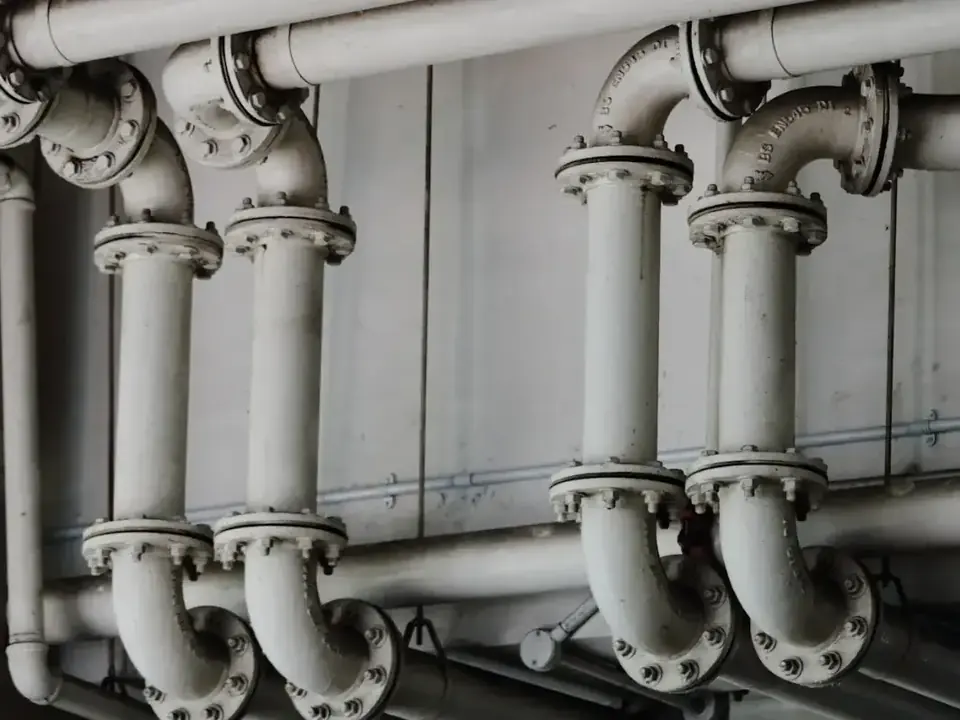
Forged fittings are not ordered by schedule alone. ASME B16.11 rates socket-weld fittings in Class 3000, 6000 and 9000, and threaded fittings in Class 2000, 3000 and 6000. Each class is matched to a pipe wall: Class 3000 socket-weld fittings, for example, are normally paired with Sch 80 pipe. Tell us the pipe schedule and we will suggest the class that matches it.
| Pipe | Butt-weld fittings (ASME B16.9) | Forged SW / threaded (ASME B16.11) |
|---|---|---|
| Carbon steel, A106 Gr B / A53 Gr B | ASTM A234 WPB | ASTM A105 |
| Alloy steel, A335 P11 | ASTM A234 WP11 | ASTM A182 F11 |
| Alloy steel, A335 P22 | ASTM A234 WP22 | ASTM A182 F22 |
| Stainless steel 304 / 316 | ASTM A403 WP304 / WP316 | ASTM A182 F304 / F316 |
Compression fittings with ferrules
Compression fittings join tube rather than pipe. A nut drives one or two ferrules onto the tube's outer surface, sealing without welding or threading the tube. They are used on hydraulic lines, instrumentation, sampling systems and lubrication circuits where joints are opened for maintenance. Ferrules grip only on the outside diameter, so the tube must be to the right OD and tolerance; our hydraulic tubes are made for this.
Never mix ferrules, nuts and bodies from different manufacturers. Each brand's components are designed as a set.
View as table
| Grade | Tensile, min |
|---|---|
| ASTM A335 P11 Pipe | 415 MPa min |
| ASTM A335 P22 Pipe | 415 MPa min |
| ASTM A106 Grade B Pipe | 415 MPa min |
| ASTM A53 Grade B Pipe | 415 MPa min |
| ASME SA-179 Heat Exchanger Tubes | 325 MPa min |
| BS 3059 Boiler Tubes (Part I & II) | 480 MPa min |
Checking fittings on receipt
Every fitting should be marked with the manufacturer's identification, material specification and grade, size and schedule or class, and a heat code that ties it to the test certificate. Check that the wall of butt-weld fittings matches the pipe schedule, because a Sch 40 elbow welded into a Sch 80 line leaves a thin spot exactly where flow turns. For screwed fittings, check the thread type, usually NPT, matches the pipe threads.
View as table
| Metal | Density |
|---|---|
| Aluminium | 2.70 g/cm³ |
| Antimony | 6.68 g/cm³ |
| Zinc | 7.14 g/cm³ |
| Tin | 7.29 g/cm³ |
| Duplex 2205 | 7.80 g/cm³ |
| Carbon & mild steel | 7.85 g/cm³ |
| Stainless 304 | 7.93 g/cm³ |
| Incoloy 825 | 8.14 g/cm³ |
| Inconel 625 | 8.44 g/cm³ |
| Brass 70/30 | 8.53 g/cm³ |
| Gun metal | 8.72 g/cm³ |
| Monel 400 | 8.80 g/cm³ |
| Phosphor bronze | 8.86 g/cm³ |
| Hastelloy C276 | 8.89 g/cm³ |
| Nickel | 8.90 g/cm³ |
| Copper | 8.94 g/cm³ |
| Lead | 11.34 g/cm³ |
Fittings for IBR lines
On a steam line covered by the boiler law, fittings need IBR documentation just as the pipe does. Raise this at enquiry, along with the pipe specification, sizes, schedule or class, and quantity. For stainless-only systems, see our stainless steel pipe fittings page; for the pipes that go with these fittings, start from A106 Grade B or ASTM A335.
Where Carbon & Alloy Steel Pipe Fittings is used
Questions about Carbon & Alloy Steel Pipe Fittings
Still unsure? Call 080-41159995 or WhatsApp +91 98441 25506 and we will answer from the trade desk.
What is the difference between socket weld and butt weld fittings?
A butt-weld fitting is welded end to end with the pipe using a full-penetration weld, and suits all sizes and severe service. A socket-weld fitting is forged, the pipe slips into a socket and is fillet welded. Socket-weld is quicker on small bores, usually NPS 2 and under, but leaves a crevice at the root.
What is A105 material?
ASTM A105 is the specification for carbon steel forgings for piping components, used for forged socket-weld and threaded fittings, flanges and valve bodies in ambient and higher-temperature service. It is the forged counterpart to A106 Grade B pipe and A234 WPB butt-weld fittings.
Which fittings are used with A106 Grade B pipe?
A106 Grade B pipe is normally paired with ASTM A234 WPB butt-weld fittings to ASME B16.9 and with ASTM A105 forged socket-weld or threaded fittings to ASME B16.11. The fitting wall or class must match the pipe schedule.
What pressure class are socket weld fittings?
ASME B16.11 rates socket-weld fittings in Class 3000, 6000 and 9000. Class 3000 is normally used with Schedule 80 pipe, Class 6000 with Schedule 160 and Class 9000 with double extra strong pipe. Threaded fittings come in Class 2000, 3000 and 6000.
What is a compression fitting with ferrule?
It is a tube fitting in which a nut presses one or two ferrules onto the outside of the tube, creating a seal and mechanical grip without welding or threading. It is widely used for hydraulic, instrument and lubrication tubing because joints can be taken apart and remade.
Keep exploring
Alloy Steel & Carbon Steel Pipes
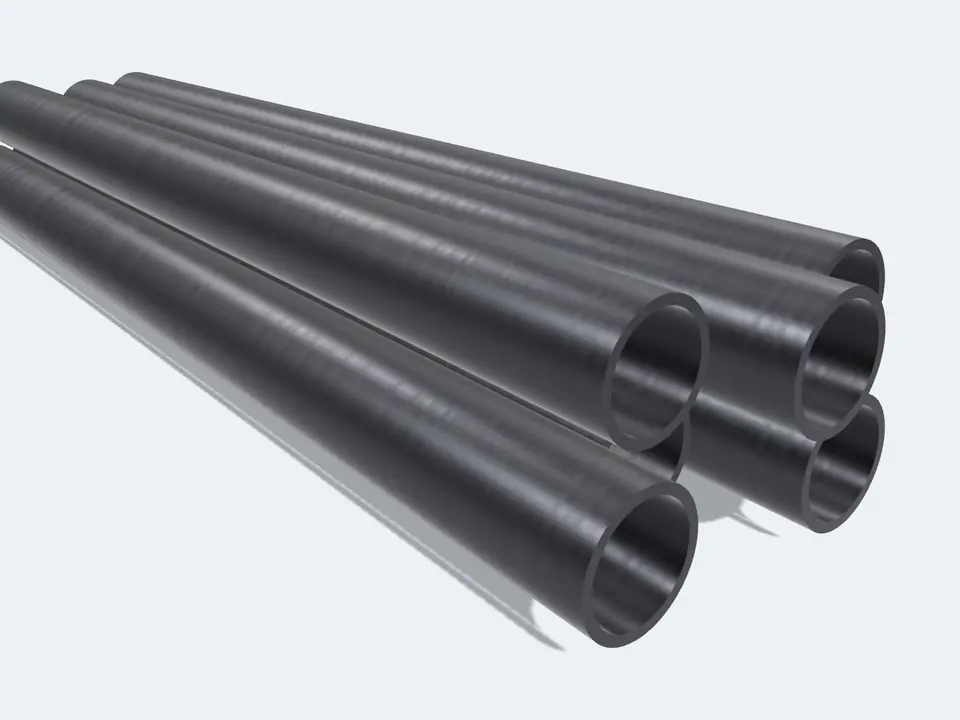
Jubilant Impex in Bangalore supplies alloy and carbon steel pipes and tubes to ASTM A335 P11 and P22, A106 Grade B, A53 Grade B,…
View details →ASTM A106 Grade B Pipe
ASTM A106 Grade B is a seamless carbon steel pipe for high-temperature service, with 0.30% maximum carbon, 0.10% minimum silicon,…
View details →ASTM A335 Alloy Steel Pipes
ASTM A335 covers seamless ferritic alloy steel pipe for high-temperature service.
View details →Hydraulic, Boiler (IBR) & Square Pipes
Jubilant Impex in Bangalore supplies seamless and ERW boiler pipes and tubes with IBR certification, cold-drawn hydraulic tubes…
View details →Stainless Steel Pipe Fittings & Flanges
SS pipe fittings join stainless pipe and tube by butt welding (ASME B16.9, ASTM A403), socket welding or threading (ASME B16.11,…
View details →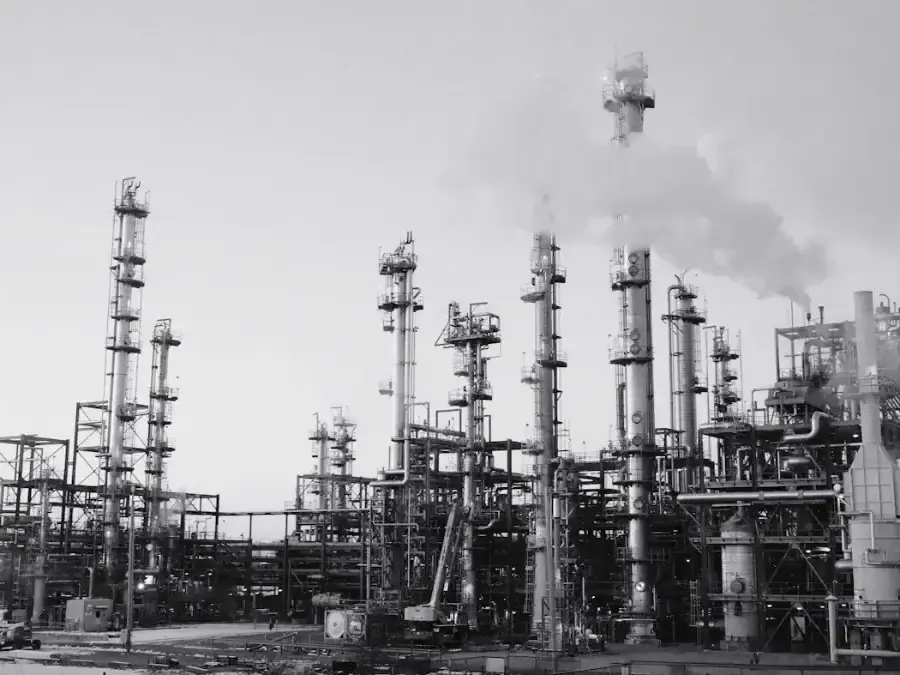
Oil & Gas
Most oil and gas piping is carbon steel, usually ASTM A106 Grade B seamless for process lines and A53 Grade B for utilities.
View details →
Chemical & Process Plants
In chemical plants the metal is chosen by the fluid it handles.
View details →Need carbon & alloy steel pipe fittings? Get a quote today.
Send the material, grade, size and quantity. We confirm availability and price, with the test certificate details.