
A335 P22 Alloy Steel Pipe for Higher-Temperature Lines
A335 P22 is a seamless alloy steel pipe with 1.90–2.60% chromium and 0.87–1.13% molybdenum, used for steam and process piping hotter than P11 can comfortably handle. Minimum tensile strength is 415 MPa and yield 205 MPa. Jubilant Impex supplies P22 pipe in Bangalore with mill certificates and IBR documentation on request.
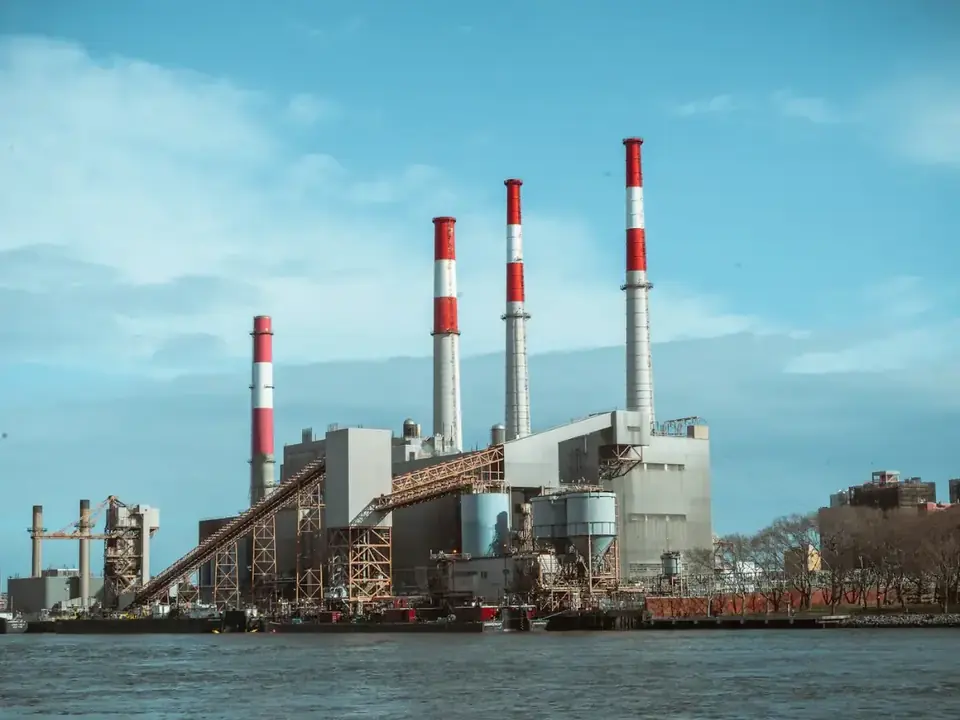
ASTM A335 P22 Pipe specifications
Per ASTM A335 (Grade P22), weight %
| C | 0.05–0.15 |
|---|---|
| Mn | 0.30–0.60 |
| P | 0.025 max |
| S | 0.025 max |
| Si | 0.50 max |
| Cr | 1.90–2.60 |
| Mo | 0.87–1.13 |
ASTM A335 (P22, room temperature)
| Tensile strength | 415 MPa (60 ksi) min |
|---|---|
| Yield strength | 205 MPa (30 ksi) min |
| Elongation, longitudinal (basic, strip test) | 30% min |
| Elongation, transverse (basic, strip test) | 20% min |
Designations in other standards
| UNS | K21590 |
|---|---|
| ASME | SA-335 P22 |
| Tube (ASTM A213) | T22 |
| BW fittings (ASTM A234) | WP22 |
| Forgings (ASTM A182) | F22 |
| Nearest EN (not identical) | 10CrMo9-10 / 1.7380 |
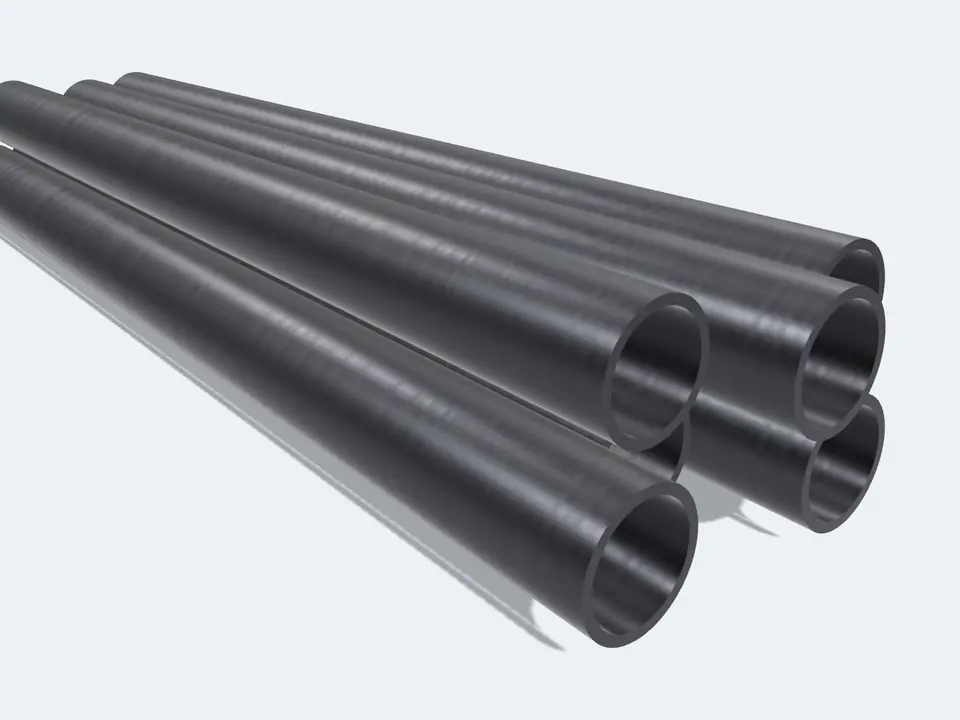
Enquire about ASTM A335 P22 Pipe
Tell us grade, size, quantity and delivery location. Every consignment ships with a test certificate.
Request a quoteWhatsApp +91 98441 25506Or call 080-41159995
How ASTM A335 P22 Pipe measures up
- Fe 96%
- Cr 2.2%
- Mo 1.0%
- Mn 0.4%
- C 0.1%
View as table
| Element | Nominal % |
|---|---|
| Fe | 96% |
| C | 0.1% |
| Mn | 0.4% |
| Cr | 2.2% |
| Mo | 1.0% |
View as table
| Property | Specified |
|---|---|
| Tensile strength | 415 MPa |
| Yield strength | 205 MPa |
P22 picks up where P11 stops. It roughly doubles the chromium and molybdenum, and that extra alloy buys creep strength at temperatures where the 1¼Cr grade starts to run out of allowable stress. You will find it on main steam and hot reheat lines, superheater headers, and in refinery and petrochemical heater circuits.
On a site, P22 and P11 look identical and are welded with similar care, so most of the risk is in mix-ups. The notes below focus on what is different and what to check.
P11 or P22: what actually changes?
At room temperature, very little. Both grades share the same minimum tensile and yield values in ASTM A335. The difference is how the steel behaves after years at high temperature. With about 2¼% chromium and 1% molybdenum, P22 has higher creep-rupture strength and better oxidation resistance, so design codes give it more allowable stress in the hot range.
There is a small chemistry trap too. P11 requires silicon of 0.50–1.00%, while P22 simply caps silicon at 0.50%. So a certificate with low silicon is normal for P22 but would be wrong for P11.
Heat treatment rules for P22
Like P11, P22 pipe is supplied full annealed, isothermal annealed, or normalised and tempered. The normalise-and-temper route needs a minimum tempering temperature of 675 °C (1250 °F), 25 °C higher than for P11. Your certificate should state the heat treatment condition and temperatures; if it does not, ask for them before the pipe is fabricated. Pipe that has been re-heat-treated after supply, for example after hot bending, needs its own record of the new cycle.
| Requirement | P11 | P22 |
|---|---|---|
| Chromium, % | 1.00–1.50 | 1.90–2.60 |
| Molybdenum, % | 0.44–0.65 | 0.87–1.13 |
| Silicon, % | 0.50–1.00 | 0.50 max |
| Min. tempering temperature (N+T) | 650 °C (1200 °F) | 675 °C (1250 °F) |
| Matching filler family | B2 (e.g. E8018-B2) | B3 (e.g. E9018-B3) |
| Relative cost | Lower | Higher |
Steps to order P22 correctly
Most problems with alloy pipe orders come from missing details, not bad steel. Work through this list before sending your enquiry to us:
- Confirm the grade on the isometric and in the line list match; P22 lines often sit next to P11 lines
- Give NPS and schedule, or OD and wall, following ASME B36.10 sizes
- State IBR if the line is a steam pipe under the boiler law; the certificate route must be fixed before manufacture
- Ask for matching WP22 butt-weld or F22 forged fittings from the same order
- Specify any extra tests your client needs, such as positive material identification or third-party witness
Is P22 harder to source than P11?
P22 is produced in smaller volumes than P11 and carbon steel pipe, so less common sizes and heavy schedules can take longer to locate. Plan the alloy pipe early in a shutdown schedule, and order a small allowance for cut-outs and weld coupons, because a short length cannot always be borrowed from another job.
When the line is IBR, the certificate route adds time too: the maker or Inspecting Authority has to be involved from the start, not at dispatch. We confirm sizes, schedules and documentation at the time of enquiry, and say clearly if a size has to be sourced specially rather than drawn from stock.
Welding and fabrication notes
P22 welds harden more readily than P11, so preheat, interpass control and post-weld heat treatment are standard practice and usually mandatory under ASME B31.1 and B31.3 above small thicknesses. The matching filler family is B3, for example E9018-B3 electrodes or ER90S-B3 wire.
Hardness checks after PWHT are a common client requirement on P22 joints. Plan for them in the inspection test plan rather than discovering them at handover. Our fittings range includes alloy steel butt-weld and forged fittings to go with P22 pipe.
Where P22 is used
Power stations are the classic home for P22, especially main steam and hot reheat lines and the headers that collect steam from superheater tubes. Refineries and petrochemical plants use it for heater outlet piping and hot hydrocarbon service. In South India, P22 is also found in the high-pressure steam systems of larger sugar mill cogeneration plants and in captive power and IBR boiler installations.
Questions about ASTM A335 P22 Pipe
Still unsure? Call 080-41159995 or WhatsApp +91 98441 25506 and we will answer from the trade desk.
What is the chromium content of A335 P22?
ASTM A335 requires 1.90–2.60% chromium in P22, with 0.87–1.13% molybdenum. That is why the grade is described as 2¼Cr-1Mo. The carbon range is 0.05–0.15%, the same as P11, and both phosphorus and sulphur are limited to 0.025% maximum.
Can P22 pipe be used in place of P11?
P22 is the higher alloy, so it is sometimes accepted as an upgrade, but it is not automatic. The welding procedure, filler metal, PWHT temperatures and dissimilar joints to existing P11 all change. Any substitution needs written approval from the designer and, for IBR lines, acceptance by the Boiler Inspectorate.
Which filler wire is used for welding P22?
P22 is normally welded with 2¼Cr-1Mo fillers of the B3 family, such as E9018-B3 stick electrodes, ER90S-B3 TIG and MIG wire, or matching flux-cored wire. The welding procedure specification decides the exact consumable, preheat and post-weld heat treatment for the joint thickness.
Is A335 P22 the same as 10CrMo9-10?
They are close but not identical. 10CrMo9-10 (1.7380) is the European 2¼Cr-1Mo grade in EN 10216-2 and is the usual cross-reference for P22. Chemistry limits, tensile ranges and testing differ between the two standards, so check with the designer before accepting one against an order for the other.
Why does P22 need a higher tempering temperature than P11?
P22 contains more alloy, so it is more hardenable and its carbides need a higher temperature to temper the structure properly. ASTM A335 therefore sets 675 °C as the minimum tempering temperature for normalised and tempered P22, against 650 °C for P11.
Keep exploring
ASTM A335 Alloy Steel Pipes
ASTM A335 covers seamless ferritic alloy steel pipe for high-temperature service.
View details →ASTM A335 P11 Pipe
ASTM A335 P11 is a seamless 1¼% chromium, ½% molybdenum alloy steel pipe for high-temperature service, with 415 MPa minimum…
View details →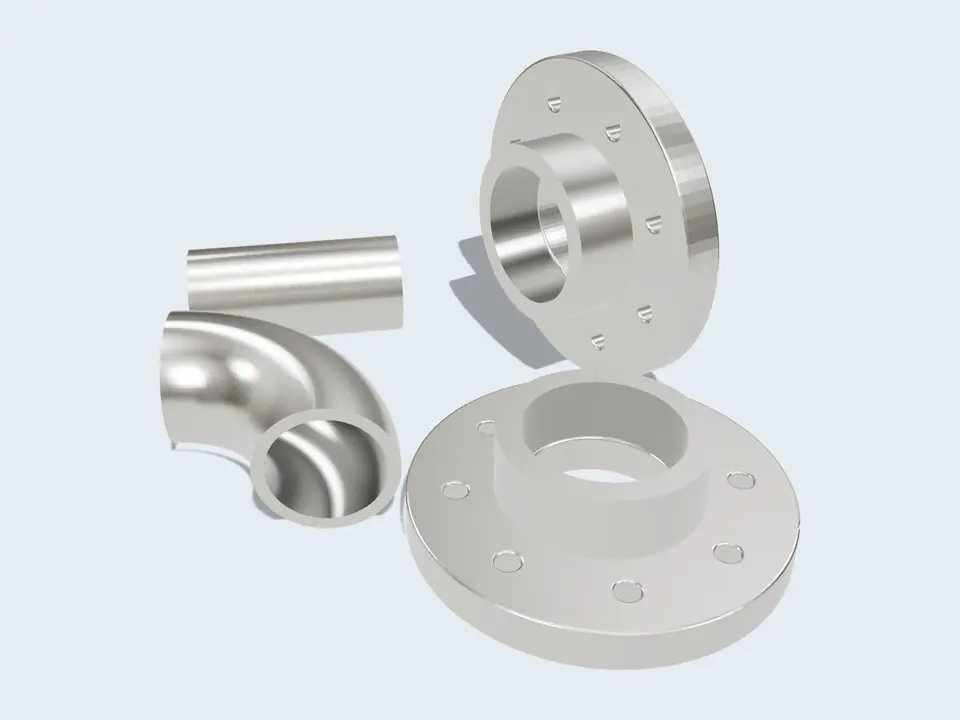
Carbon & Alloy Steel Pipe Fittings
Jubilant Impex supplies carbon steel, alloy steel and stainless steel pipe fittings in Bangalore: butt-weld fittings, forged…
View details →BS 3059 Boiler Tubes (Part I & II)
BS 3059 is the British Standard for steel boiler and superheater tubes.
View details →Power Plants & IBR Boilers
IBR boiler tubes and pipes are steel products made and tested to the Indian Boiler Regulations so they can be used in boilers and…
View details →
Oil & Gas
Most oil and gas piping is carbon steel, usually ASTM A106 Grade B seamless for process lines and A53 Grade B for utilities.
View details →
How to Read a Mill Test Certificate
To read a mill test certificate, first match the heat number on the certificate to the marking on the material.
View details →Need ASTM A335 P22 Pipe with a test certificate?
Send the material, grade, size and quantity. We confirm availability and price, with the test certificate details.