

- Home
- All Products
- Copper
- Copper Wire
Bare Copper Wire in E.C. Grade, by SWG or Millimetre
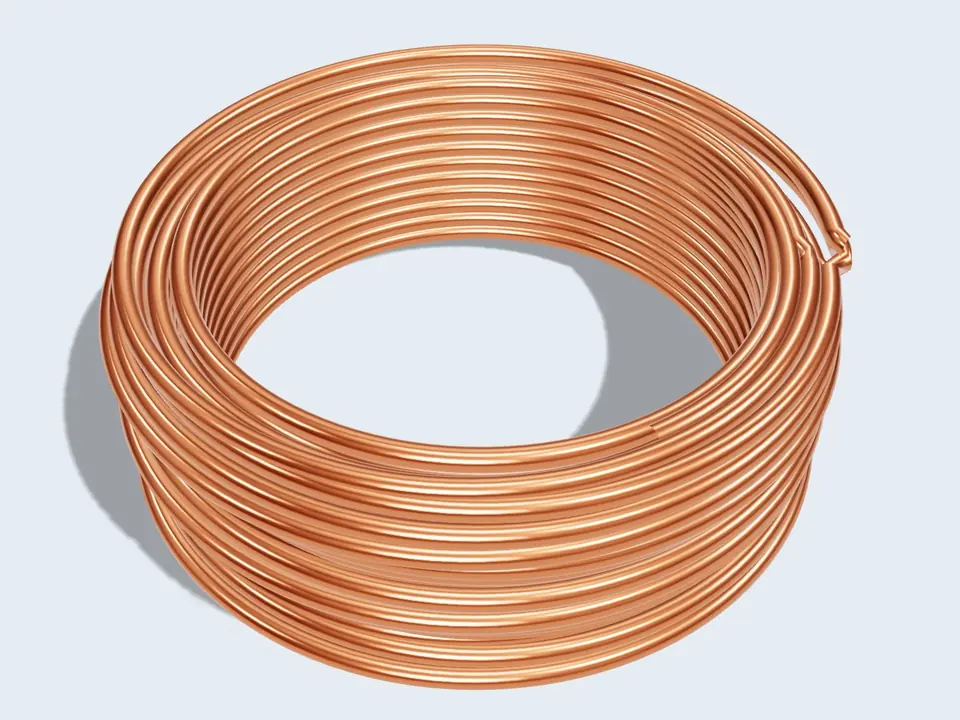
Jubilant Impex supplies copper wire in Bangalore in E.C. grade, as bare round wire in hard drawn or soft annealed temper, and in tinned or nickel-plated finish. Wire is sized in SWG or millimetres and sold by weight in coils. Typical uses are earthing, jumpers, winding, stranding and binding, with test certificates on request.
Copper wire orders go wrong in predictable ways: the size is given in one gauge and read in another, soft wire is supplied where hard was needed, or a tinned job arrives bare. Four details settle almost every enquiry, and this page goes through them with a gauge chart and a weight formula.
We deal in bare copper wire drawn from E.C. grade copper, with tinned and nickel-coated options.
Four things that define a copper wire order
- Size: diameter in millimetres, or a gauge number with the gauge system named (SWG and AWG numbers do not match)
- Temper: hard drawn for strength and straightness, soft annealed for bending, winding and crimping
- Finish: bare, tinned or nickel-plated
- Quantity and packing: total kilograms and the coil or spool weight your machine or crew can handle
SWG, AWG and millimetres
India still uses the British Standard Wire Gauge (SWG) widely for bare copper wire, especially for earthing and electrical contracting. American Wire Gauge (AWG) appears on imported equipment and in ASTM standards, and the metric diameter is used in IS specifications and most modern drawings. The numbers look similar but the sizes are not: 14 SWG is 2.032 mm, while 14 AWG is about 1.63 mm. When in doubt, give us the diameter in millimetres and we will work from that.
The chart below gives common SWG sizes with cross-section and theoretical weight. Earthing specifications usually state a cross-section in mm², so the area column is the one to check against a drawing. For lightning protection, IS/IEC 62305 sets 50 mm² as the usual minimum for copper conductors, which is larger than any size in this chart.
Hard drawn or soft?
Hard drawn copper wire (ASTM B1) is stiff and strong, roughly 340–460 MPa depending on size, and keeps about 96–97 % IACS. It is the choice for bare overhead conductors, exposed earth runs that must stay straight between clips, and lightning down conductors.
Soft annealed copper wire (ASTM B3) has full 100 % IACS and high elongation. It is used for windings, stranding into flexible conductors, binding and lashing, jumpers, buried earth conductors, and anything formed by hand. Indian general engineering wire is covered by IS 4412, and conductors for insulated cables by IS 8130.
View as table
| Metal | Density |
|---|---|
| Aluminium | 2.70 g/cm³ |
| Antimony | 6.68 g/cm³ |
| Zinc | 7.14 g/cm³ |
| Tin | 7.29 g/cm³ |
| Duplex 2205 | 7.80 g/cm³ |
| Carbon & mild steel | 7.85 g/cm³ |
| Stainless 304 | 7.93 g/cm³ |
| Incoloy 825 | 8.14 g/cm³ |
| Inconel 625 | 8.44 g/cm³ |
| Brass 70/30 | 8.53 g/cm³ |
| Gun metal | 8.72 g/cm³ |
| Monel 400 | 8.80 g/cm³ |
| Phosphor bronze | 8.86 g/cm³ |
| Hastelloy C276 | 8.89 g/cm³ |
| Nickel | 8.90 g/cm³ |
| Copper | 8.94 g/cm³ |
| Lead | 11.34 g/cm³ |
Tinned or nickel-coated wire
Tinned wire to ASTM B33 is the standard choice for marine, coastal and sulphur-laden environments and anywhere the wire will be soldered. Nickel-coated wire to ASTM B355 is for higher temperatures, typically PTFE-insulated wire and furnace leads. Both are normally drawn on soft annealed base wire. Our tinned copper page compares the coatings.
View as table
| Diameter | kg per km |
|---|---|
| 0.5 mm | 1.76 kg/km |
| 0.8 mm | 4.49 kg/km |
| 1 mm | 7.02 kg/km |
| 1.6 mm | 17.97 kg/km |
| 2 mm | 28.09 kg/km |
| 2.5 mm | 43.88 kg/km |
| 3 mm | 63.19 kg/km |
| 4 mm | 112.34 kg/km |
| 5 mm | 175.54 kg/km |
Copper wire is bought by weight
In the trade, bare copper wire is priced per kilogram and supplied in coils. To convert between length and weight, use: kg per km = diameter (mm) × diameter (mm) × 6.99. So 100 m of 3 mm wire weighs 3 × 3 × 6.99 ÷ 10 = about 6.3 kg. If a crew needs a specific length, tell us the length and we will work out the weight, or vice versa.
Coil weight matters on site. A heavy coil of hard drawn wire is awkward to pay out on a roof, while light coils of fine wire tangle easily. Say how the wire will be handled and we can suggest a sensible coil size.
| SWG | Diameter (mm) | Area (mm²) | Weight (kg/km) |
|---|---|---|---|
| 6 | 4.877 | 18.68 | 166 |
| 8 | 4.064 | 12.97 | 115 |
| 10 | 3.251 | 8.30 | 73.9 |
| 12 | 2.642 | 5.48 | 48.8 |
| 14 | 2.032 | 3.24 | 28.9 |
| 16 | 1.626 | 2.08 | 18.5 |
| 18 | 1.219 | 1.17 | 10.4 |
| 20 | 0.914 | 0.656 | 5.84 |
| 22 | 0.711 | 0.397 | 3.53 |
Wire or strip for earthing?
Many earthing layouts use both. Copper strip, such as 25 × 3 mm, is common for main earth conductors and ring mains because a flat section has more surface area for its weight, sits neatly on walls and cable trays, and bolts easily to earth bars. Round wire is usually chosen for branch connections to equipment, for bonding, and for runs that have to bend around obstacles. If the design gives only a cross-section in mm², either form can meet it, so the choice comes down to routing and termination. We supply both, so a single enquiry can cover the whole earthing schedule.
Checking wire you receive
A micrometer on a few points along the coil confirms diameter; out-of-round wire suggests poor drawing. A hand bend tells soft from hard. For conductivity, a resistance check on a measured length against the IACS value, corrected to 20 °C, is the real test, and the test certificate should report it for electrical work. Bright, uniform colour with no black streaks or slivers is a good first sign of clean drawing.
Where Copper Wire is used
Questions about Copper Wire
Still unsure? Call 080-41159995 or WhatsApp +91 98441 25506 and we will answer from the trade desk.
What does SWG mean for copper wire?
SWG is the British Standard Wire Gauge, a numbered size system where a larger number means a thinner wire. For example, 8 SWG is 4.064 mm and 14 SWG is 2.032 mm. It is still common in Indian electrical work, though metric diameters and mm² cross-sections are increasingly used on drawings.
How do I convert SWG to mm²?
Take the diameter in millimetres for the SWG number, then calculate area as 0.7854 × diameter × diameter. For 8 SWG, 4.064 mm gives 0.7854 × 4.064 × 4.064 = 12.97 mm². The chart on this page lists common sizes so you can match a drawing that specifies cross-section rather than gauge.
How do I calculate copper wire weight?
Multiply diameter in millimetres by itself, then by 6.99, to get kilograms per kilometre. For 2 mm wire: 2 × 2 × 6.99 = 28 kg per km, or 2.8 kg per 100 m. This assumes solid round copper at about 8.9 g/cm³; actual coil weights vary slightly with diameter tolerance.
Which copper wire is used for earthing?
Bare E.C. grade copper wire, sized to the cross-section in the earthing design. Hard drawn wire suits exposed runs and down conductors that must stay straight; soft annealed wire suits buried conductors and connections that are bent and crimped. In coastal or polluted sites, tinned copper wire lasts longer at joints.
What is the purity of copper wire?
Electrical copper wire is drawn from electrolytic tough pitch copper with at least 99.90 % copper including silver. Annealed wire must conduct at 100 % IACS under ASTM B3, and hard drawn wire at about 96–97 % under ASTM B1. A test certificate gives the actual analysis and conductivity for the lot.
Keep exploring
Copper
Jubilant Impex is a copper supplier on S.P. Road, Bangalore, dealing in electrolytic (E.C. grade) and commercial quality copper.
View details →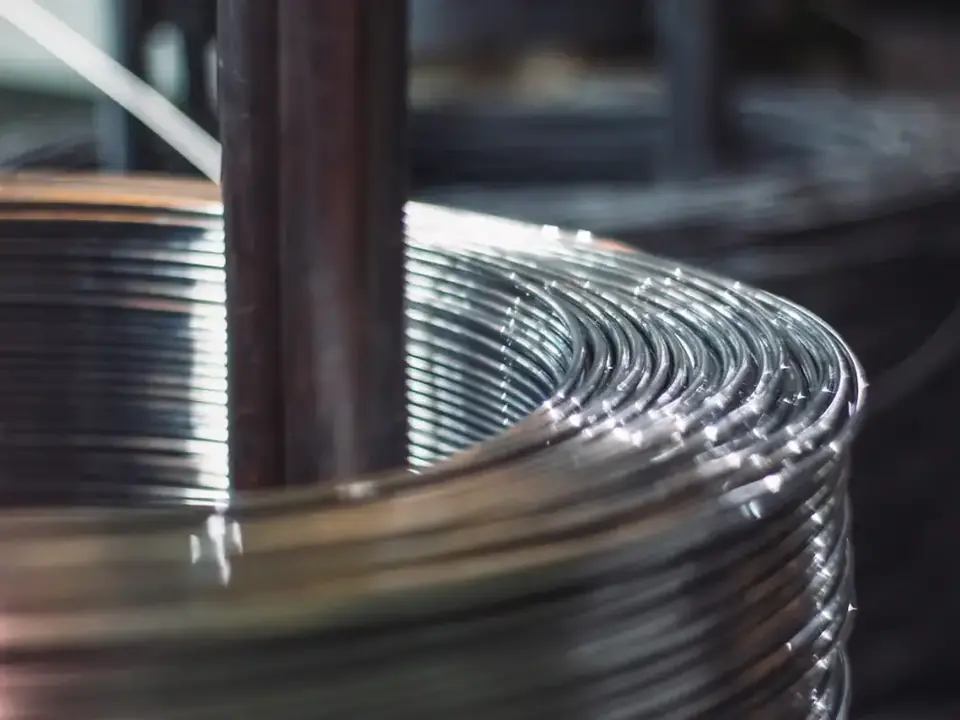
Hard Drawn Copper
Hard drawn copper is copper that has been cold drawn or rolled to size and not annealed afterwards.
View details →Soft Annealed Copper
Annealed copper is copper that has been heated after cold working so its grains recrystallise, making it soft, ductile and fully…
View details →
Tinned Copper
Tinned copper is copper wire, strip or busbar coated with a thin layer of tin.
View details →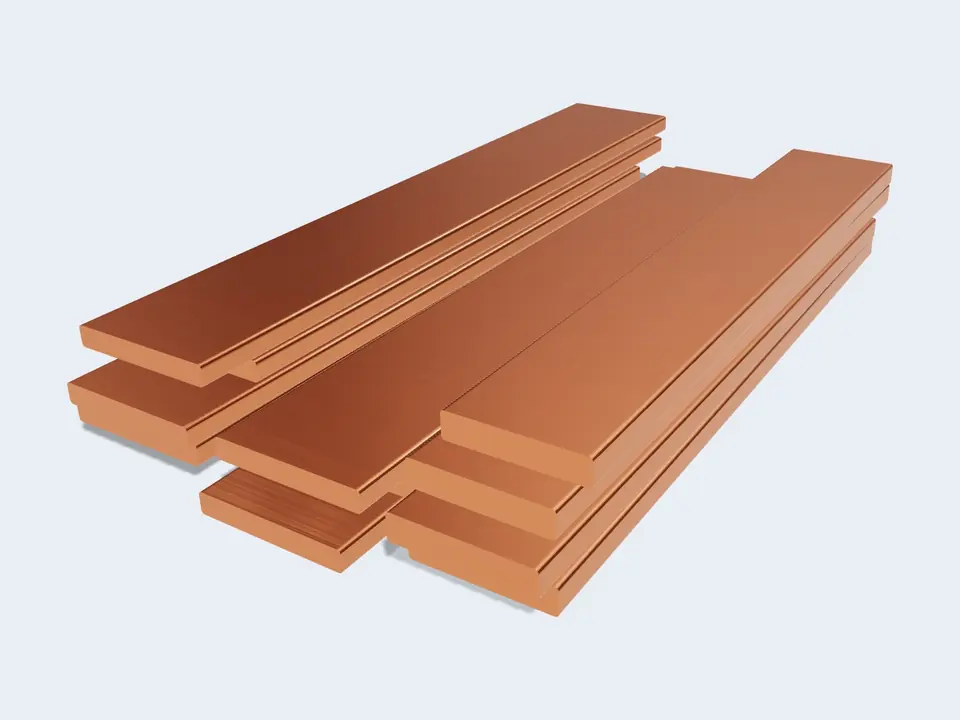
Copper Lightning Arrester & Earthing Material
A copper lightning arrester, in Indian site language, is the copper air terminal or spike fixed at the highest point of a…
View details →Electrical & Power Distribution
Electrical and power distribution equipment runs on EC grade copper, which is at least 99.9% pure with conductivity close to 100%…
View details →Need copper wire? Get a quote today.
Send the material, grade, size and quantity. We confirm availability and price, with the test certificate details.