
- Home
- All Products
- Copper
- Copper Lightning Arrester & Earthing Material
Copper Lightning Arresters, Conductors and Earthing Material
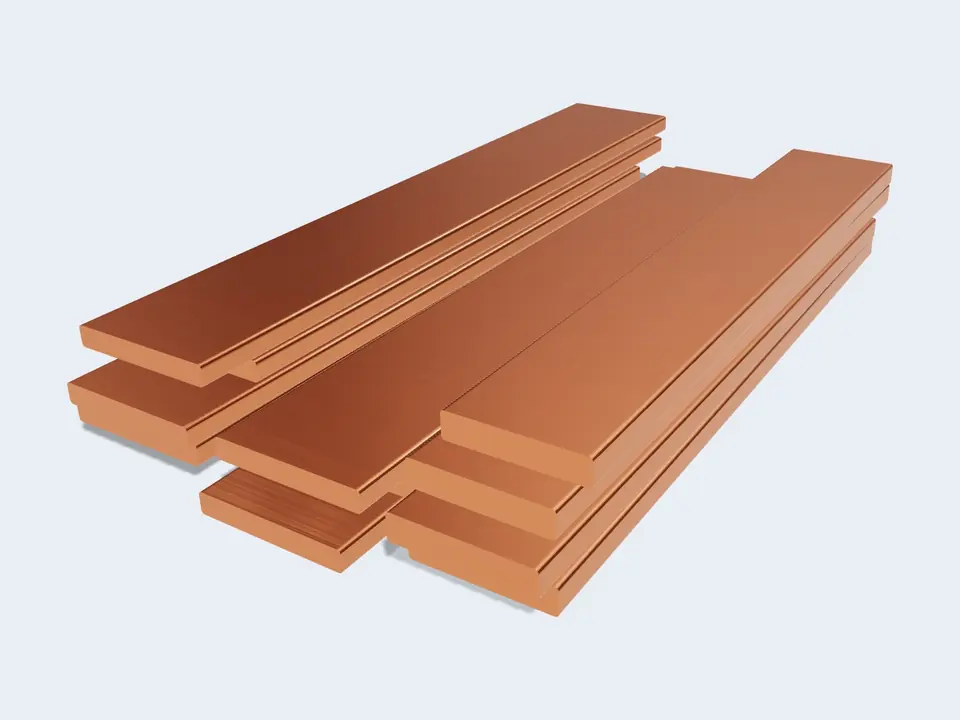
A copper lightning arrester, in Indian site language, is the copper air terminal or spike fixed at the highest point of a building, connected by copper tape or conductor to earth electrodes. Jubilant Impex in Bangalore supplies the copper for these systems: rods for spikes, flats and strips, wire and earth plates, in E.C. grade with test certificates.
Lightning protection in India has moved from rules of thumb to a proper standard. BIS adopted the IEC 62305 series as IS/IEC 62305, and consultants now size air terminals, down conductors and earth electrodes from its tables. Copper is one of the materials it lists, and the most common one on Indian roofs.
We supply the copper parts of a conventional system. This page explains what each part does, the minimum sizes the standard asks for, and how the earthing end connects to IS 3043.
Lightning arrester or lightning conductor?
On Indian sites, 'lightning arrester' or 'LA' means the pointed copper rod on the roof, often with one spike or a crown of several. Strictly, the standard calls that an air-termination rod, and the term lightning arrester (or surge arrester) belongs to a device that protects power lines and equipment from overvoltage. Both are needed in a complete scheme, but they are different products. When you order a copper lightning arrester from us, we understand it as the rooftop air terminal and the copper that goes with it.
The copper parts of a conventional system
- Air terminals: copper rods, plain or with spikes, fixed at roof corners, parapets, towers and tanks
- Roof conductors: copper tape or round conductor forming a mesh across the roof and linking the air terminals
- Down conductors: copper tape or conductor running down the walls to the ground, spaced around the building as the design requires
- Test joints: a bolted break near ground level so each earth electrode can be tested separately
- Earth electrodes: copper plates, rods or buried strip that discharge the current into the soil
- Bonding conductors: copper links tying metal structures, pipes and the electrical earth into one system
Minimum copper sizes under IS/IEC 62305
Table 6 of IS/IEC 62305-3 gives minimum cross-sections for air-termination conductors, air-termination rods and down conductors. For copper and tin-plated copper, solid tape, solid round and stranded conductors must be at least 50 mm². Solid round air-termination rods and earth lead-in rods must be at least 176 mm², which is a 15 mm diameter rod. A note allows 50 mm² (8 mm diameter) conductors to be reduced to 25 mm² where mechanical strength is not essential, and a rod of 9.5 mm diameter and at least 1 m long where wind load is not critical.
In practice, 25 × 3 mm copper tape (75 mm²) and 25 × 2 mm tape (50 mm²) are common choices for roof and down conductors, and 8 mm round conductor for neat runs. The designer's drawing has the final say.
| Configuration | Minimum cross-section | Notes |
|---|---|---|
| Solid tape | 50 mm² | Common sizes 25 × 2 mm and 25 × 3 mm |
| Solid round conductor | 50 mm² (8 mm dia) | May be 25 mm² where mechanical strength is not essential |
| Stranded conductor | 50 mm² | As for solid round |
| Solid round air-termination or earth lead-in rod | 176 mm² (15 mm dia) | 9.5 mm dia, 1 m min, where wind load is not critical |
The earthing end: plates, strips and IS 3043
IS 3043, the Indian code of practice for earthing, has long specified copper plate electrodes of at least 600 × 600 mm and 3.15 mm thick, buried with the top edge at least 1.5 m below ground, and copper strip electrodes of at least 25 × 1.6 mm. Lightning earth pits are usually interconnected with the electrical earth so the whole installation rises and falls together during a strike. Plate, strip and wire are covered on our copper sheets and plates and copper wire pages.
View as table
| Material | Conductivity |
|---|---|
| Copper E.C. (Cu-ETP) | 100% IACS |
| Aluminium (EC grade 1350) | 61% IACS |
| Aluminium 6063 | 53% IACS |
| Brass 70/30 | 28% IACS |
| Phosphor bronze | 15% IACS |
| Carbon steel | 10% IACS |
| Stainless 304 | 2.5% IACS |
Why copper instead of GI?
Galvanised steel is cheaper and is permitted by the standard, but it needs a larger section for the same duty and its zinc coating is consumed over time, especially underground and in polluted air. Copper conducts far better, survives decades in most soils, and bolts to copper earth bars without a bimetallic joint. Where both materials meet, use proper bimetallic connectors, because copper in contact with galvanised steel or aluminium in damp conditions drives corrosion of the less noble metal.
Theft is the other practical issue. Copper down conductors at ground level are a target on unattended sites, so many designers specify a guard or PVC sleeve over the bottom few metres and tamper-resistant fixings at the test joint.
View as table
| Metal | Density |
|---|---|
| Aluminium | 2.70 g/cm³ |
| Antimony | 6.68 g/cm³ |
| Zinc | 7.14 g/cm³ |
| Tin | 7.29 g/cm³ |
| Duplex 2205 | 7.80 g/cm³ |
| Carbon & mild steel | 7.85 g/cm³ |
| Stainless 304 | 7.93 g/cm³ |
| Incoloy 825 | 8.14 g/cm³ |
| Inconel 625 | 8.44 g/cm³ |
| Brass 70/30 | 8.53 g/cm³ |
| Gun metal | 8.72 g/cm³ |
| Monel 400 | 8.80 g/cm³ |
| Phosphor bronze | 8.86 g/cm³ |
| Hastelloy C276 | 8.89 g/cm³ |
| Nickel | 8.90 g/cm³ |
| Copper | 8.94 g/cm³ |
| Lead | 11.34 g/cm³ |
Bare or tinned, hard or soft
Bare copper is standard inland. Near the sea, around chemical plants and on sewage works, tinned copper tape and conductor last longer and keep joints clean, and IS/IEC 62305 treats tinned copper at the same sizes as bare. Exposed tape and conductor are usually hard or half hard so they stay straight between fixings; buried strip and conductor can be soft. Spike rods are made from E.C. grade copper round bar.
Send us the drawing or a bill of materials with sizes and quantities. We confirm availability at enquiry and can supply test certificates for consultant approval.
Where Copper Lightning Arrester & Earthing Material is used
Questions about Copper Lightning Arrester & Earthing Material
Still unsure? Call 080-41159995 or WhatsApp +91 98441 25506 and we will answer from the trade desk.
Which is better for a lightning arrester, copper or GI?
Copper is usually the better long-term choice. It has much higher conductivity, resists corrosion in soil and air for decades, and connects easily to copper earth bars. Galvanised iron is cheaper and allowed by IS/IEC 62305 at larger sizes, but its zinc layer wears away, especially below ground. Mixed systems need bimetallic connectors.
What size copper strip is used for lightning protection?
IS/IEC 62305-3 requires at least 50 mm² for copper tape used as roof and down conductors. In practice, 25 × 3 mm (75 mm²) and 25 × 2 mm (50 mm²) copper tape are widely used. The designer may specify heavier sections for exposed or high-risk structures, so follow the approved drawing.
How deep should a copper earth plate be buried?
Indian practice under IS 3043 places a copper plate electrode, at least 600 × 600 × 3.15 mm, vertically with its top edge at least 1.5 m below ground level. Multiple plates are spaced well apart so their resistance areas do not overlap. Moist, conductive soil around the plate helps achieve a low earth resistance.
What is the difference between a lightning arrester and a surge arrester?
In Indian site use, a lightning arrester is the rooftop copper rod that intercepts a direct strike and leads it to earth. A surge arrester is an electrical device fitted on power lines, panels or equipment to clamp overvoltages caused by lightning or switching. A complete protection scheme normally needs both, plus a good earthing system.
What does IS/IEC 62305 cover?
It is the Indian adoption of the IEC 62305 lightning protection series in four parts: general principles, risk management, physical damage to structures and life hazard, and protection of electrical and electronic systems within structures. Part 3 sets the materials and minimum sizes for air terminals, down conductors and earth electrodes.
Should lightning earth pits be connected to the electrical earth?
Yes, current practice under IS/IEC 62305 and IS 3043 is to bond the lightning protection earth and the electrical installation earth together. Separate, unconnected earths can develop large voltage differences during a strike, which can flash over and damage equipment. The bonding is usually made through test joints or an earth bar so electrodes can still be tested.
Keep exploring
Copper
Jubilant Impex is a copper supplier on S.P. Road, Bangalore, dealing in electrolytic (E.C. grade) and commercial quality copper.
View details →Copper Rods, Bars & Flats
Jubilant Impex supplies copper bus bar in Bangalore as E.C. grade flats, plus round, square and hexagonal copper rods, in hard,…
View details →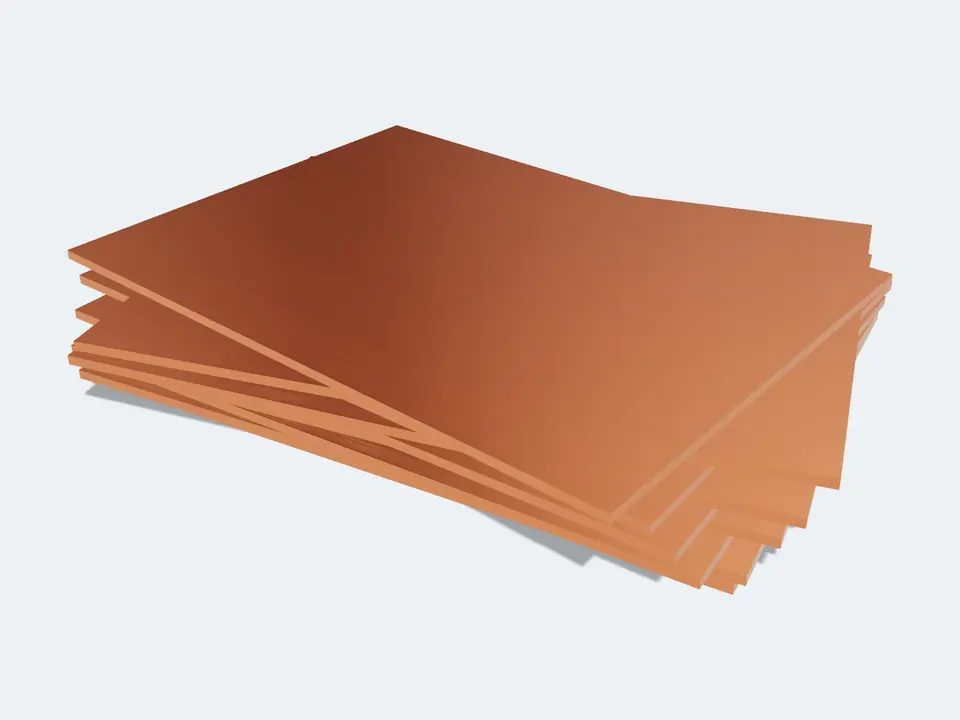
Copper Sheets, Plates & Circles
Jubilant Impex supplies copper sheet in Bangalore along with plates, strips and cut circles, in E.C. grade and commercial quality…
View details →
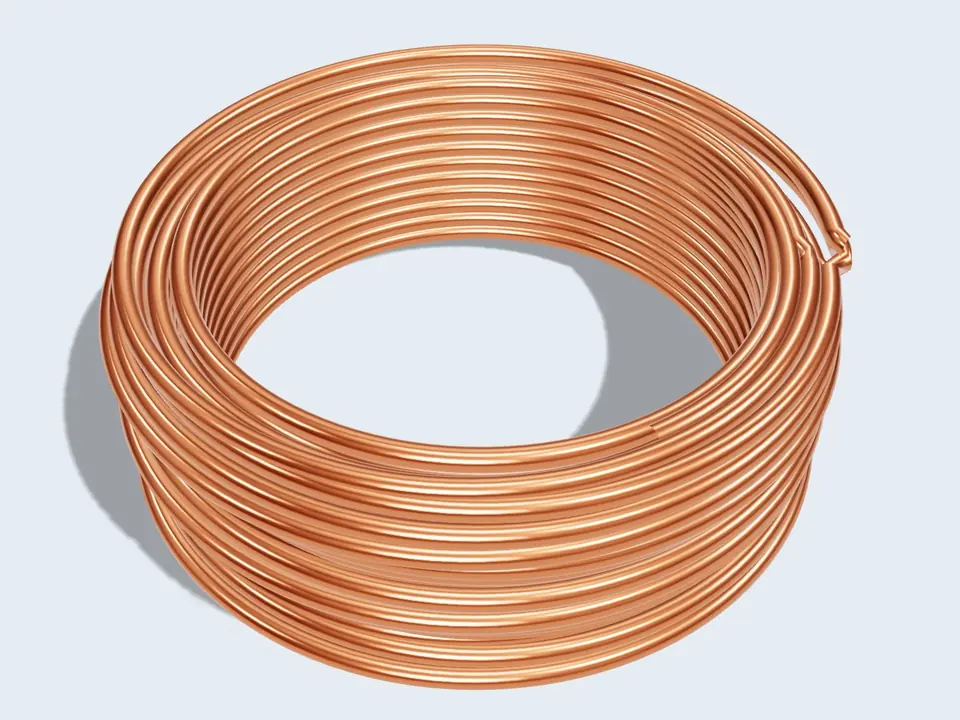
Copper Wire
Jubilant Impex supplies copper wire in Bangalore in E.C. grade, as bare round wire in hard drawn or soft annealed temper, and in…
View details →Tinned Copper
Tinned copper is copper wire, strip or busbar coated with a thin layer of tin.
View details →
Construction & Infrastructure
Construction projects use mild steel angles, channels, beams and plates to IS 2062 for structures, chequered plate for floors and…
View details →Electrical & Power Distribution
Electrical and power distribution equipment runs on EC grade copper, which is at least 99.9% pure with conductivity close to 100%…
View details →Need copper lightning arrester & earthing material? Get a quote today.
Send the material, grade, size and quantity. We confirm availability and price, with the test certificate details.