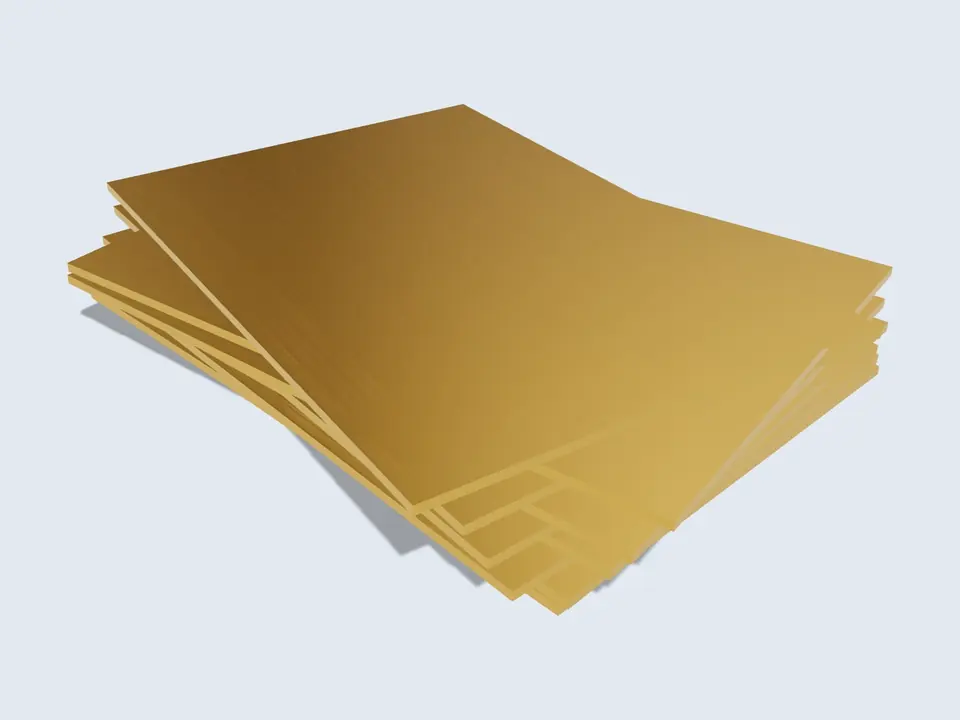
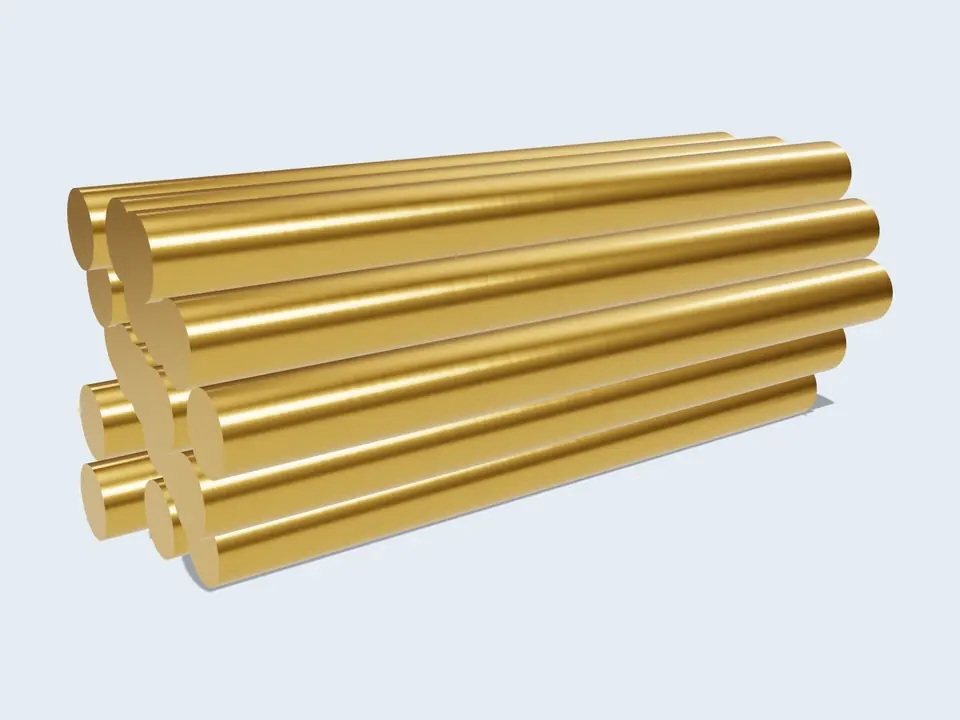
70/30, 63/37 and 60/40 brass are copper-zinc alloys named by their approximate copper-to-zinc ratio. 70/30 (C26000) has the best cold formability and corrosion resistance. 60/40 (C28000, Muntz metal) is a two-phase alloy that hot-forges and machines more easily but is more prone to dezincification. 63/37 sits between them and is the economical general-purpose cold-working brass.
In the trade, brass is ordered by ratio long before anyone mentions a UNS number. A sugar mill asks for 70/30 tube, a sheet-metal shop wants 63/37 strip, and a forging unit asks for 60/40 rod. Those numbers are shorthand for very different behaviour on the shop floor. A few percent of copper decides whether the metal will deep-draw without cracking, survive hot forging, or quietly lose its zinc in hard water.
Why a few percent of copper matters: alpha and beta
Copper dissolves zinc up to roughly 35–37% while keeping a single crystal structure called alpha. Alpha brass is soft and very ductile at room temperature, so it can be rolled, drawn and pressed cold with large reductions. Add more zinc and a second, harder phase called beta appears. Beta is stiff and less ductile when cold, but it becomes very plastic when hot.
70/30 is well inside the alpha region. 63/37 sits close to the limit and behaves essentially as an alpha brass. 60/40 is a duplex alpha-beta alloy. That single fact explains most of the differences in the table: cold working favours 70/30, hot working and machining favour 60/40.
70/30 brass: cartridge brass
With 68.5–71.5% copper in the C26000 composition, 70/30 has the highest ductility of the common brasses. It was developed for deep-drawn cartridge cases, which is where the name comes from, and it is still the choice for deep-drawn shells, eyelets, radiator cores, lamp fittings and heavily formed components. It also has the best corrosion resistance of the three, which is why tube is commonly drawn in 70/30 for heat-transfer duty.
In sugar plants, brass tubes have long been used for juice heaters and evaporators, and buyers there generally specify 70/30 composition. Our sugar mill quality pipes page covers that line in detail, and the 70/30 brass page gives full grade data.
- Zn (balance)
- Cu
- Other
View as table
| Grade | Cu |
|---|---|
| Brass 70/30 (Cartridge Brass) | 70 |
| Brass 63/37 (Yellow Brass) | 64 |
| Brass 60/40 (Muntz Metal) | 61 |
63/37 brass: the everyday cold-working grade
63/37, C27200 at 62.0–65.0% copper, gives up a little ductility against 70/30 but still cold-works well, and the lower copper content makes it cheaper. It is the workhorse for sheet and strip that is bent, pressed or moderately drawn: electrical parts, nameplates, hardware, decorative work, and general tube. For many pressings, 63/37 does the job of 70/30 at a lower price. If the part is deep-drawn in several stages, test 63/37 before switching. See the 63/37 grade page.
View as table
| OD × wall | grams per metre |
|---|---|
| 6.35 × 0.8 mm | 119 g/m |
| 9.52 × 0.8 mm | 187 g/m |
| 12.7 × 0.9 mm | 285 g/m |
| 15.88 × 1 mm | 399 g/m |
| 19.05 × 1 mm | 484 g/m |
| 25.4 × 1.2 mm | 778 g/m |
| 31.75 × 1.2 mm | 982 g/m |
| 38.1 × 1.5 mm | 1471 g/m |
60/40 brass: Muntz metal
60/40, C28000 at 59.0–63.0% copper, contains beta phase, so it is less suited to heavy cold work but excellent for hot rolling, hot forging and extrusion. It is stronger and harder than the alpha brasses in the same condition, and it machines better because the beta phase breaks chips more readily. It is used for hot-forged fittings and valve bodies, heavy plate, condenser tube plates, architectural sections and fasteners. The leaded free-cutting brasses used on autolathes are built on this alpha-beta base. More on the 60/40 grade page.
| Property | 70/30 | 63/37 | 60/40 |
|---|---|---|---|
| Common name | Cartridge brass | Yellow brass, common brass | Muntz metal |
| UNS | C26000 | C27200 | C28000 |
| EN designation | CuZn30 (CW505L) | CuZn37 (CW508L) | CuZn40 (CW509L) |
| Copper, % | 68.5–71.5 | 62.0–65.0 | 59.0–63.0 |
| Zinc | Remainder | Remainder | Remainder |
| Structure | Alpha | Alpha (near the limit) | Alpha + beta |
| Cold working | Excellent | Very good | Fair |
| Hot working | Fair | Fair | Excellent |
| Machinability (unleaded) | Lower | Moderate | Better |
| Dezincification resistance | Best of the three | Moderate | Lowest |
| Relative cost | Highest | Middle | Lowest |
Corrosion: dezincification and season cracking
Brasses with more than about 15% zinc can suffer dezincification in some waters, especially soft, high-chloride or stagnant water: zinc leaches out and leaves weak, porous copper. Alpha-beta 60/40 is more susceptible than alpha 70/30 because the zinc-rich beta phase is attacked first. Inhibited alpha brasses, with a small addition such as arsenic, are made specifically for water service.
All three grades can suffer season cracking, a form of stress corrosion cracking triggered by ammonia and residual stress from cold work. A low-temperature stress-relief anneal after forming is the usual cure for parts that will see ammonia, such as fittings in refrigeration and fertiliser plants.
Tempers, gauges and forms
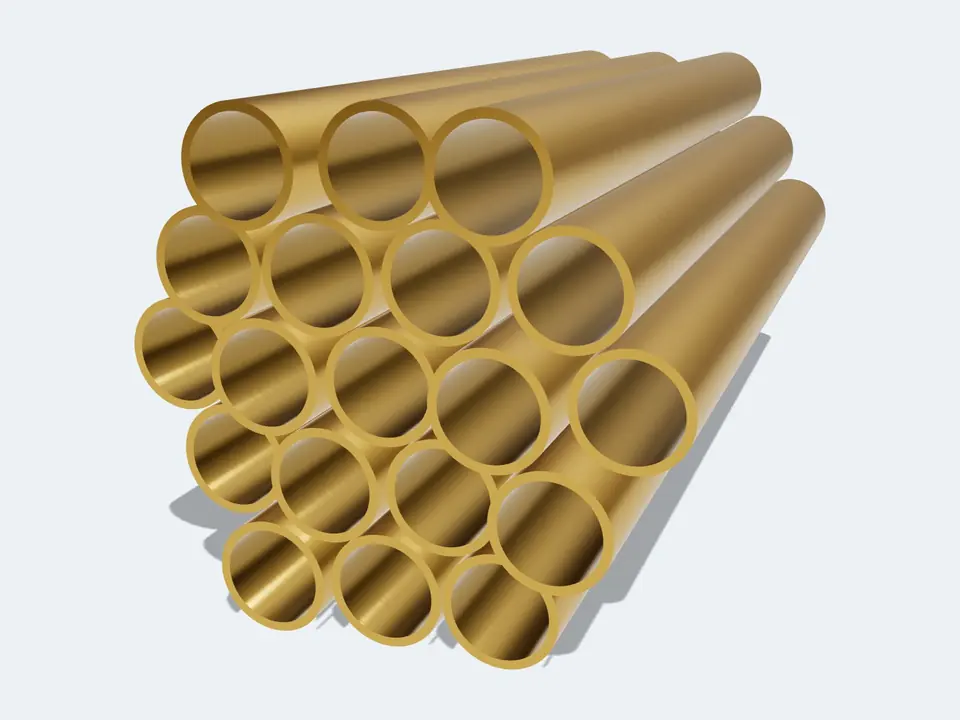
Brass is sold in a temper as well as a composition. Annealed, or soft, material is fully ductile for forming. Quarter-hard, half-hard and hard tempers are produced by cold rolling or drawing and give higher strength and springiness at the cost of formability. 70/30 and 63/37 are available across this range; 60/40 is usually supplied hot rolled or extruded. Sheet and strip thicknesses are often still quoted in SWG in the Indian trade, so state whether you mean SWG or millimetres when you order.
How to tell the grades apart
Colour is a weak guide. Higher-copper brass has a slightly warmer tone, but surface finish, lacquer and tarnish mask the difference. A handheld XRF analyser reads copper and zinc in seconds and is the reliable shop-floor check. For purchased material, the test certificate should report copper as a percentage, which you can check against the ranges in the table: 68.5–71.5 for 70/30, 62.0–65.0 for 63/37 and 59.0–63.0 for 60/40.
On site, a simple bend test also gives a hint: a strip of 70/30 bends flat on itself without cracking in the annealed condition, while 60/40 of the same thickness resists cold bending and may crack on a tight radius.
Brass or bronze?
The names are often mixed up. Brass is copper alloyed mainly with zinc. Bronze is copper alloyed mainly with tin, sometimes with phosphorus, aluminium or other elements. Phosphor bronze and gun metal, a copper-tin-zinc alloy, are harder wearing and more corrosion resistant than brass, and cost more. For bushes, bearings and marine fittings, look at our phosphor bronze and gun metal pages instead.
Choosing between them
We supply all three as rod, pipe, tube, sheet, plate and strip, plus spring quality brass. If you are unsure which ratio a drawing calls for, send the part description and we will suggest the grade to confirm with your engineer.
- Deep drawing, spinning, heavy cold forming: 70/30
- Heat-exchanger and sugar mill tubes: 70/30
- Pressed and bent sheet parts on a budget: 63/37
- General-purpose strip, electrical and hardware components: 63/37
- Hot forgings, extrusions, heavy plate: 60/40
- Machined parts where cold forming is not needed: 60/40 or leaded brass
- Long-term contact with aggressive water: inhibited 70/30, not 60/40
Frequently asked questions
What is the difference between 70/30 and 60/40 brass?
70/30 brass has about 70% copper and a single alpha phase, so it is very ductile for cold forming and resists corrosion better. 60/40 brass has about 60% copper and contains a second beta phase, making it stronger, easier to hot forge and machine, but less ductile cold and more prone to dezincification.
What is cartridge brass?
Cartridge brass is 70/30 brass, UNS C26000, with 68.5–71.5% copper and the rest zinc. It is named after its original use in deep-drawn ammunition cartridge cases and is still chosen for parts that need severe cold forming, such as drawn shells, eyelets and tubes.
What is Muntz metal used for?
Muntz metal is 60/40 brass, UNS C28000. Its alpha-beta structure makes it easy to hot roll, forge and extrude, so it is used for hot-forged fittings and valve bodies, heavy plates, condenser tube plates, architectural sections and fasteners. It is less suited to deep cold forming.
What is dezincification of brass?
Dezincification is a corrosion process in which zinc is selectively dissolved from brass, leaving a weak, porous, copper-rich layer that can leak or break. It occurs mainly in soft, chloride-rich or stagnant water and affects high-zinc and alpha-beta brasses such as 60/40 most.
Which brass is best for machining?
Leaded free-cutting brass, such as UNS C36000 with about 61.5% copper, 3% lead and the rest zinc, is the standard choice for high-speed machining. Among unleaded brasses, 60/40 machines better than 63/37 or 70/30 because its beta phase helps break chips.
What is season cracking in brass?
Season cracking is stress corrosion cracking of brass caused by residual stress from cold working combined with exposure to ammonia or ammonium compounds. It shows as intergranular cracks, often long after manufacture. A stress-relief anneal at a low temperature after forming prevents most cases.