
- Home
- All Products
- Brass
- Sugar Mill Quality Brass Pipes
Sugar mill quality brass tubes for juice heaters, evaporators and pans
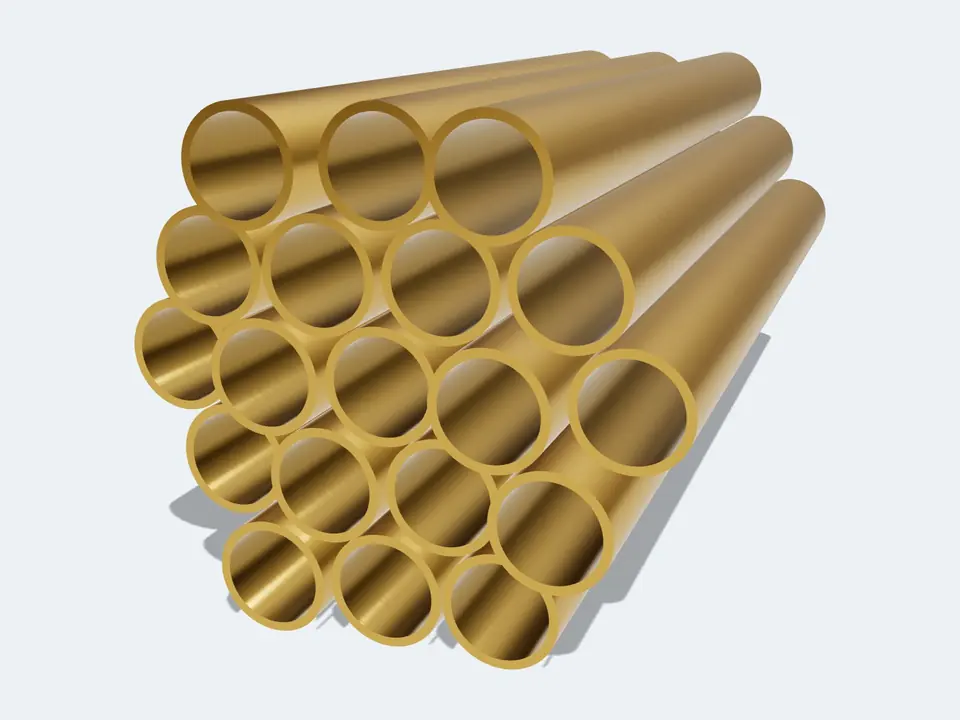
In Indian sugar mills, "sugar mill quality" brass tube usually means seamless 70/30 arsenical brass (CuZn30As, BS CZ126, UNS C26130), drawn to close OD and gauge tolerances for expanding into tube plates of juice heaters, evaporators and vacuum pans. Jubilant Impex in Bangalore supplies these tubes with a test certificate from a Government-recognised test house.
Every crushing season a sugar mill pushes hot, slightly acidic cane juice through thousands of tubes: first in the juice heaters, then in the multiple-effect evaporator bodies, then in the vacuum pans where the syrup is boiled to grain. When a tube fails, juice leaks into the steam side or vapour into the juice, and an effect has to be taken off line.
That is why mills are particular about tube quality, and why the off-season tube replacement order is one of the important purchases of the year for an engineering department in Karnataka or Maharashtra.
What "sugar mill quality" actually means
It is a trade phrase, not a standard. When mill engineers and tube dealers in India use it, they almost always mean seamless tube in 70/30 brass with a small arsenic addition, drawn to the OD and gauge the mill's heat exchangers were designed for, with an annealed or stress-relieved temper that will take expansion without splitting.
Three things separate it from general brass tube. The chemistry includes arsenic, which protects against dezincification in hot juice and condensate. The OD tolerance is tight, because the tube must expand evenly into the tube plate hole and seal. And the temper is controlled, since tubes that are too hard crack at the expanded end, while tubes that are too soft deform during handling and rolling.
Some mill specifications call for admiralty brass (70/30 with about 1 percent tin, UNS C44300, BS CZ111), particularly on condensers. If your drawing names admiralty, send it to us and we will confirm what we can supply.
Where the tubes go in a sugar mill
Juice heaters raise raw and clarified juice temperature using vapour bled from the evaporator. Tubes in these heaters typically run 38 to 50 mm OD and 3 to 6 metres long. The evaporator bodies, usually a set of four or five effects, carry the largest number of tubes in the calandria. Vacuum pans use shorter, wider tubes in their calandrias to boil massecuite. Brass is used throughout because it conducts heat well, resists the mildly acidic juice and can be expanded and re-expanded into tube plates during maintenance.
Why do brass tubes crack in sugar evaporators?
The usual culprit is ammonia. Cane juice releases small amounts of ammonia as it is heated, and it collects in the vapour and condensate on the steam side of later effects and juice heaters. Brass that carries residual stress, especially at the expanded ends near the tube plate, can then fail by stress corrosion cracking. The National Metallurgical Laboratory has published a case study tracing cracked 70/30 evaporator tubes to exactly this mechanism.
The practical defences are stress-relieved tubes, correct expansion (over-rolling leaves high stress at the tube plate), and good venting of non-condensable gases so ammonia does not concentrate. Erosion at tube inlets and dezincification in poorly treated water are the other common failure modes.
- Zn (balance)
- Cu
- Other
View as table
| Grade | Cu |
|---|---|
| Brass 70/30 (Cartridge Brass) | 70 |
| Brass 63/37 (Yellow Brass) | 64 |
| Brass 60/40 (Muntz Metal) | 61 |
Brass or stainless steel tubes?
Many mills have moved some duties, especially juice heaters, to stainless steel tubes, and engineering texts on juice heater design commonly give brass or SS 304 as the two tube options. Stainless steel does not suffer ammonia cracking or dezincification and lasts longer, but it conducts heat far less well, so a heater needs more surface for the same duty. Brass is easier to expand and re-expand, and existing heaters designed around brass tube dimensions are simpler to retube in brass.
If you are weighing the change, our stainless steel pipes and tubes page covers the SS side. For the brass itself, see the 70/30 brass grade page.
View as table
| OD × wall | grams per metre |
|---|---|
| 6.35 × 0.8 mm | 119 g/m |
| 9.52 × 0.8 mm | 187 g/m |
| 12.7 × 0.9 mm | 285 g/m |
| 15.88 × 1 mm | 399 g/m |
| 19.05 × 1 mm | 484 g/m |
| 25.4 × 1.2 mm | 778 g/m |
| 31.75 × 1.2 mm | 982 g/m |
| 38.1 × 1.5 mm | 1471 g/m |
Getting the retubing order right
Tube orders for the off-season usually go wrong in the details: a gauge that does not match the existing tube plate holes, lengths that leave no allowance for expansion and trimming, or tubes that arrive too hard to roll. Use the checklist below and send it with your enquiry. More on what we supply to the industry is on our sugar mills and distilleries page.
Plan the order early. Sugar mill brass tubes are bought in large numbers for a short off-season window, and a delay in confirming sizes can push the job into the crushing season. Sending us the drawing or a sample tube a few weeks ahead gives time to check gauge, length and temper, arrange the test certificate and agree delivery to the mill before the retubing crew is on site.
ASTM B111, C44300 admiralty brass tube, annealed (O61)
| Tensile strength | 310 MPa (45 ksi) min |
|---|---|
| Yield strength (0.5% extension under load) | 105 MPa (15 ksi) min |
| Item | Arsenical 70/30 | Admiralty brass |
|---|---|---|
| UNS | C26130 | C44300 |
| Cu % | 68.5–71.5 | 70.0–73.0 |
| Sn % | Not specified | 0.9–1.2 (tubular products) |
| As % | 0.02–0.08 | 0.02–0.06 |
| Pb % max | 0.05 | 0.07 |
| Fe % max | 0.05 | 0.06 |
| Indian standard | IS 1545 CuZn30As | IS 1545 CuZn29Sn1As |
| British / European | BS 2871-3 CZ126 / EN 12451 CuZn30As | BS 2871-3 CZ111 / EN 12451 CuZn28Sn1As |
| ASTM B111 | Not listed | Listed (C44300) |
Where Sugar Mill Quality Brass Pipes is used
How to order it right
Questions about Sugar Mill Quality Brass Pipes
Still unsure? Call 080-41159995 or WhatsApp +91 98441 25506 and we will answer from the trade desk.
Why are brass tubes used in sugar mills?
Brass conducts heat several times better than stainless steel, tolerates mildly acidic cane juice and is easy to expand and re-expand into tube plates during maintenance. Arsenical 70/30 brass also resists dezincification. These properties make it a long-standing choice for juice heaters, evaporators and vacuum pans.
Which tubes are used in sugar mill juice heaters?
Juice heaters normally use either brass tubes, usually arsenical 70/30, or stainless steel tubes such as SS 304. Typical sizes are 38 to 50 mm OD and 3 to 6 metres long. The choice depends on the heater design, the juice and vapour chemistry and how often the mill wants to retube.
What is arsenical brass?
Arsenical brass is 70/30 brass with a small arsenic addition, about 0.02 to 0.08 percent. The arsenic inhibits dezincification, so the tube keeps its strength in hot water and condensate. It is designated C26130 in the UNS system, CZ126 in British standards and CuZn30As in Indian and European standards.
What is admiralty brass?
Admiralty brass is a 70/30-type brass with about 1 percent tin and a small arsenic addition, designated UNS C44300 and BS CZ111. The tin improves resistance to corrosion in seawater and cooling water. It is widely used for condenser and heat exchanger tubes and is listed in ASTM B111.
What causes brass tube failure in sugar evaporators?
The most common cause is ammonia stress corrosion cracking, where ammonia released from heated juice attacks stressed brass near the expanded tube ends. Other causes include erosion at tube inlets, dezincification in poorly treated water and over-expansion during retubing. Stress-relieved tubes and good venting reduce the risk.
Is ASTM B111 applicable to 70/30 brass tubes?
No. ASTM B111 lists admiralty brass, aluminium brass, Muntz metal, copper-nickels and coppers, but not 70/30 cartridge or arsenical brass. Arsenical 70/30 condenser and heat exchanger tubes are ordered to IS 1545 in India, BS 2871 Part 3 in older British practice or EN 12451 in Europe.
Keep exploring
Sugar Mills & Distilleries
Sugar mill tubes are the heat-exchange tubes in juice heaters, evaporators and pans, traditionally drawn in 70/30 brass for its…
View details →Brass Pipes, Tubes & Capillary
Jubilant Impex supplies brass pipe and tube in Bangalore, drawn in 70/30, 63/37 and 60/40 brass, along with small-bore brass…
View details →
Brass 70/30 (Cartridge Brass)
70/30 brass, also called cartridge brass (UNS C26000, EN CuZn30, BS CZ106), contains 68.5–71.5% copper with zinc as the balance.
View details →
Stainless Steel Pipes & Tubes
Jubilant Impex is a stainless steel pipe supplier in Bangalore for seamless, welded (ERW) and capillary pipes and tubes in grades…
View details →ASME SA-179 Heat Exchanger Tubes
ASME SA-179 covers seamless cold-drawn low-carbon steel tubes, 1/8 to 3 inch OD, for tubular heat exchangers, condensers and…
View details →
Quality & Test Certificates
Jubilant Impex supplies metals with a test certificate in Bangalore through a Government-recognised test house, so chemical and…
View details →How to Read a Mill Test Certificate
To read a mill test certificate, first match the heat number on the certificate to the marking on the material.
View details →Need sugar mill quality brass pipes? Get a quote today.
Send the material, grade, size and quantity. We confirm availability and price, with the test certificate details.