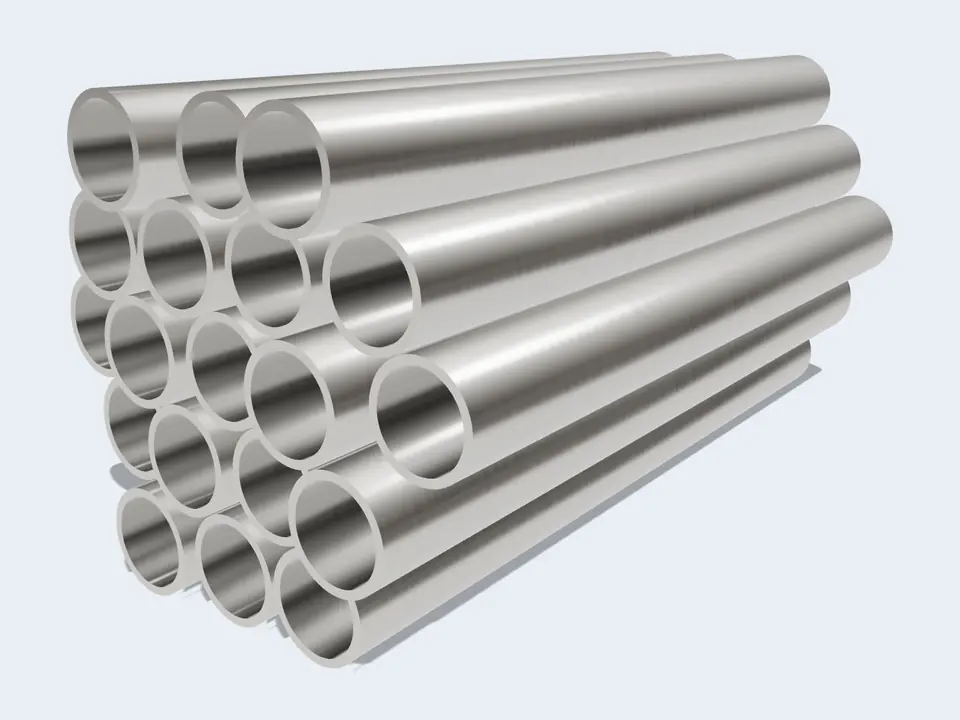
Stainless steel contains at least 10.5% chromium, which forms a protective oxide film, so it resists rust without coating. Carbon steel is mostly iron and carbon, is cheaper, easier to machine and often higher in yield strength, but needs paint, galvanising or a corrosion allowance. Choose stainless for corrosion, hygiene or appearance; carbon steel for cost-driven structural and pressure work.
In most plant projects this is not a philosophical choice. It is a line on a bill of materials where someone has to decide whether the extra price of stainless is justified. The honest answer depends on what the steel will touch, how hot it gets, and how long it must last without maintenance. This guide compares the two on the points that decide the purchase.
What makes stainless steel stainless?
Chromium. Once an iron alloy contains at least 10.5% chromium, a thin chromium oxide layer forms on its surface in air. It is a few nanometres thick, invisible, and it reforms by itself if scratched, as long as oxygen is available. Nickel, molybdenum and nitrogen are added on top to adjust structure and corrosion resistance. Carbon steel has no such film. Its iron oxide, rust, is porous and flakes away, exposing fresh metal underneath.
Is stainless steel stronger than carbon steel?
Not necessarily, and on yield strength often not. Compare two common pipe specifications. ASTM A106 Grade B carbon steel pipe requires 415 MPa tensile and 240 MPa yield minimum. ASTM A312 TP304 stainless pipe requires 515 MPa tensile but only 205 MPa yield. So 304 has higher ultimate strength but starts to deform permanently at a lower stress. Austenitic stainless is much tougher and more ductile, especially at low temperature, where carbon steel can turn brittle.
Hardened martensitic stainless steels, like 420 and 440C, and alloy carbon steels can both be made very hard. Strength alone rarely settles the choice.
- Fe (balance)
- Cr
- Ni
- Mo
- Mn
- Other
View as table
| Grade | Cr | Ni | Mo | Mn |
|---|---|---|---|---|
| SS 304 | 18.5 | 9.2 | 0.0 | 0.0 |
| SS 316 | 17.0 | 12.0 | 2.5 | 0.0 |
| ASTM A335 P11 Pipe | 1.2 | 0.0 | 0.5 | 0.4 |
| ASME SA-179 Heat Exchanger Tubes | 0.0 | 0.0 | 0.0 | 0.5 |
Corrosion and lifetime cost
Carbon steel corrodes in water, humid air and most process fluids, so designers add a corrosion allowance, typically extra millimetres of wall, and protect the outside with paint or galvanising. That is cheap at installation and costly over twenty years if the coating needs repeated maintenance or the line has to be replaced.
Stainless steel costs several times more per kilogram, but it may need no coating, no corrosion allowance in many services, and often a lighter wall. For water, food, pharma and chemical lines, the lifetime cost often favours stainless even though the purchase price does not. In dry, hot steam and oil service, carbon and alloy steel stay the standard, because corrosion is not the limiting factor and they handle temperature well.
View as table
| Grade | Tensile, min |
|---|---|
| SS 304 | 515 MPa min |
| SS 304L | 485 MPa min |
| SS 316 | 515 MPa min |
| SS 316L | 485 MPa min |
| ASTM A106 Grade B Pipe | 415 MPa min |
| ASTM A53 Grade B Pipe | 415 MPa min |
| ASME SA-179 Heat Exchanger Tubes | 325 MPa min |
Weight and wall thickness
The two metals are almost the same density, 7.85 g/cm³ for carbon steel and about 7.9–8.0 for austenitic stainless, so a pipe or plate of the same dimensions weighs nearly the same. The difference comes from wall. A carbon steel line in corrosive service often carries a corrosion allowance of a millimetre or more, pushing it up a schedule. The same duty in stainless may run in Sch 10S. On long runs, the lighter stainless wall can close a good part of the price gap and reduce the load on supports.
| Property | Carbon steel (ASTM A106 Gr B) | Stainless steel (ASTM A312 TP304) |
|---|---|---|
| Chromium | Not specified (residual) | 18.0–20.0% |
| Carbon | 0.30% max | 0.08% max |
| Tensile strength | 415 MPa min | 515 MPa min |
| Yield strength | 240 MPa min | 205 MPa min |
| Density (typical) | 7.85 g/cm³ | about 7.9–8.0 g/cm³ |
| Thermal conductivity (typical) | about 50 W/m·K | about 16 W/m·K |
| Thermal expansion (typical, 20–100 °C) | about 12 µm/m·°C | about 17 µm/m·°C |
| Magnetic | Yes | No (annealed) |
| Corrosion protection needed | Paint, galvanising or corrosion allowance | Usually none in suitable service |
| Relative material cost | Lower | Higher |
Heat: conductivity and expansion
Austenitic stainless steel conducts heat at roughly a third of the rate of carbon steel and expands about 40–50% more per degree. Two practical results. Heat exchangers and jacketed vessels in stainless need more area for the same duty. And long stainless lines between fixed points need more allowance for thermal movement. In fabrication, the low conductivity concentrates heat at the weld, so stainless distorts more and needs controlled heat input.
At high temperature, carbon steel scales and loses strength above about 425 °C, which is where chrome-moly alloy steels like ASTM A335 P11 and P22 take over for steam lines.
Welding and machining
Mild and carbon steel are the easiest metals to weld and machine. Austenitic stainless welds well too, but needs clean conditions, stainless filler and attention to heat tint, which should be removed by pickling or polishing to restore corrosion resistance. It also work-hardens quickly during machining, so tools must keep cutting rather than rubbing. Free-machining 303 exists for that reason.
Joining stainless to carbon steel is routine, usually with a 309L-type filler that tolerates dilution from the carbon steel side. Keep the joint out of wet service where possible, because the carbon steel side will corrode preferentially at the junction.
Magnetism and contamination
Carbon steel is strongly magnetic. Austenitic stainless is not, which is useful in some electrical and instrument applications. One trap for fabricators: grinding carbon steel near stainless, or using carbon steel brushes and clamps on it, embeds iron particles that rust and stain the stainless surface. Keep tools and storage racks separate.
Hygiene, appearance and cleaning
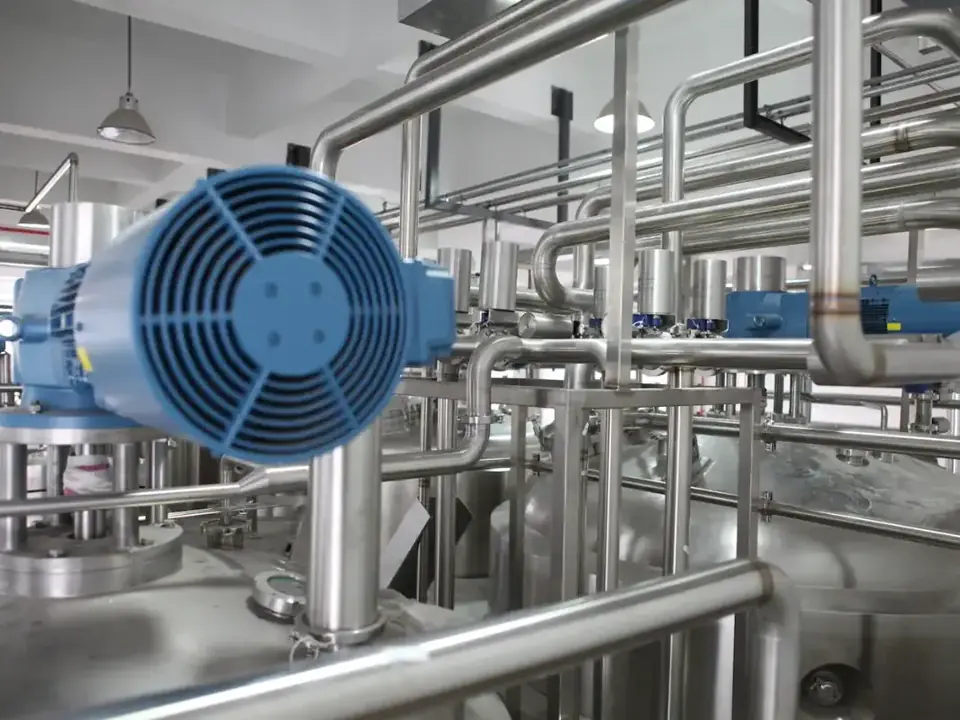
Food, dairy and pharma plants use stainless for reasons beyond corrosion. A smooth, non-porous, uncoated surface can be cleaned and sanitised repeatedly with hot caustic and acid without shedding paint or rust into the product. Carbon steel with a coating cannot match that, and coating failure becomes a contamination risk. Where appearance matters, such as visible railings, kitchen equipment and building facades, stainless also avoids the repaint cycle entirely.
When to choose which
- Structural frames, supports, platforms: carbon or mild steel, painted or galvanised (mild steel sections)
- Steam and boiler lines: carbon steel or chrome-moly alloy pipe, often with IBR
- Hydraulic lines: carbon steel seamless pipe
- Potable water, food, dairy and beverage: stainless 304 or 316L
- Pharma and purified water: stainless 316L
- Chemical service: stainless or higher alloys, depending on the chemical
- Coastal or wash-down areas where coatings fail: stainless
What about alloy steel?
Alloy steels such as chrome-moly ASTM A335 P11 and P22 sit between the two. They carry 1–2.25% chromium and some molybdenum for strength at high temperature, but nowhere near the 10.5% chromium needed to be stainless. They rust like carbon steel and are chosen for hot steam and boiler service, not for corrosion resistance.
Getting both from one supplier
Many projects need both metals: carbon steel for structure and steam, stainless for product contact. We stock stainless steel and alloy and carbon steel pipe side by side, so a mixed bill of materials can be quoted together with test certificates for each line.
Frequently asked questions
Is stainless steel stronger than carbon steel?
Not always. Austenitic 304 stainless pipe has higher minimum tensile strength than A106 Grade B carbon steel pipe (515 vs 415 MPa) but lower minimum yield strength (205 vs 240 MPa). Hardened carbon and martensitic stainless steels can both be very strong. Stainless is usually tougher at low temperature.
Does carbon steel rust?
Yes. Carbon steel rusts when exposed to moisture and oxygen because its iron oxide layer is porous and does not protect the metal beneath. It needs paint, galvanising, oil, inhibitors or a corrosion allowance in wet or humid service.
How can you tell stainless steel from carbon steel?
A magnet is the quickest first check: carbon steel is strongly magnetic, while 304 and 316 are not, although ferritic and martensitic stainless grades are magnetic too. Unpainted carbon steel also rusts quickly when wet. For certainty, use a PMI analyser or check the test certificate.
Can you weld stainless steel to carbon steel?
Yes. Dissimilar welds between stainless and carbon steel are common and are usually made with a 309L-type filler, which has enough chromium and nickel to absorb dilution from the carbon steel without cracking. The carbon steel side should be painted or kept out of wet service.
Why is stainless steel more expensive than carbon steel?
Stainless steel contains costly alloying elements, chromium and usually nickel and sometimes molybdenum, and needs more processing such as annealing and pickling. Carbon steel is mostly iron with a small amount of carbon and manganese, so its raw material and production costs are lower.