
- Home
- All Products
- Ingots
- Aluminium LM4 Ingots
Aluminium LM4 Alloy Ingots for General Castings
LM4 is an aluminium casting alloy with about 5 percent silicon and 3 percent copper (Al-Si5Cu3), specified in BS 1490 and matched by IS 617 alloy 4223. It casts well in sand and gravity dies, machines cleanly and can be heat treated for higher strength. Jubilant Impex supplies aluminium LM4 ingots in Bangalore with a test certificate.
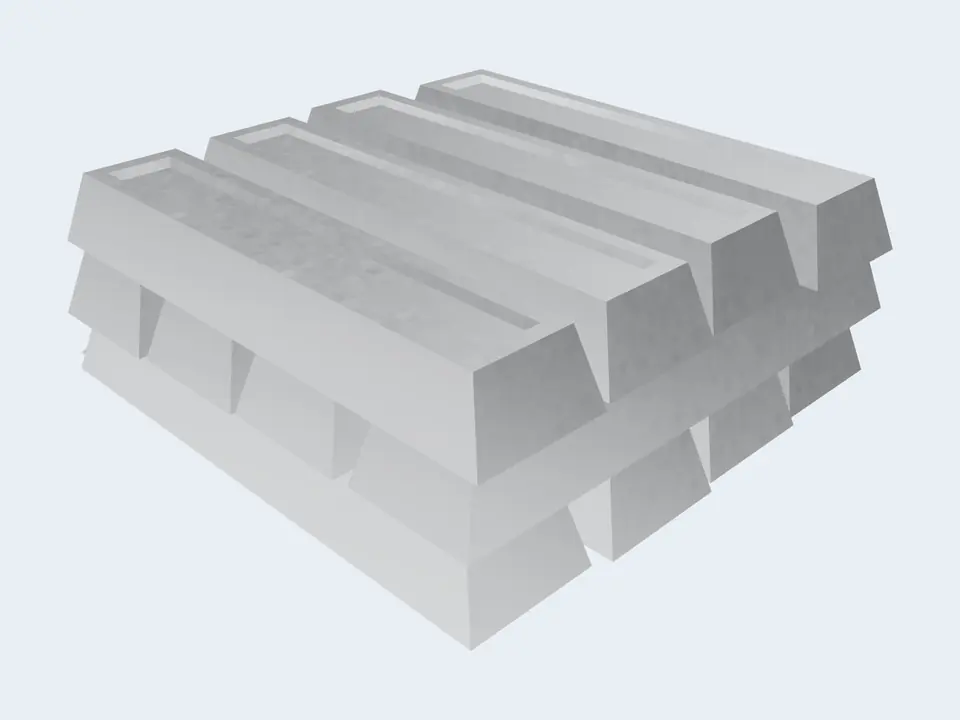
Aluminium LM4 Ingots specifications
Per BS 1490 LM4 / IS 617 alloy 4223 (wt %, max unless range), weight %
| Si | 4.0–6.0 |
|---|---|
| Cu | 2.0–4.0 |
| Mg | 0.15 max |
| Fe | 0.8 max |
| Mn | 0.2–0.6 |
| Ni | 0.3 max |
| Zn | 0.5 max |
| Pb | 0.1 max |
| Sn | 0.1 max |
| Al | Remainder |
BS 1490 LM4, separately cast test bars (minimum values)
| Tensile strength, M (as cast), sand cast | 140 MPa min |
|---|---|
| Tensile strength, M (as cast), chill cast | 160 MPa min |
| Tensile strength, TF (fully heat treated), sand cast | 230 MPa min |
| Tensile strength, TF (fully heat treated), chill cast | 280 MPa min |
| Elongation, M, sand cast | 2% min |
Designations in other standards
| BS 1490 | LM4 |
|---|---|
| IS 617 | 4223 |
| Nominal ISO-style | Al-Si5Cu3 |
| DIN (former, approximate) | G-AlSi6Cu4 |
| AA (approximate) | 319.0 |
Enquire about Aluminium LM4 Ingots
Tell us grade, size, quantity and delivery location. Every consignment ships with a test certificate.
Request a quoteWhatsApp +91 98441 25506Or call 080-41159995
How Aluminium LM4 Ingots measures up
- Al 92%
- Si 5.0%
- Cu 3.0%
- Mn 0.4%
View as table
| Element | Nominal % |
|---|---|
| Al | 92% |
| Si | 5.0% |
| Cu | 3.0% |
| Mn | 0.4% |
View as table
| Property | Specified |
|---|---|
| Tensile strength, M, sand cast | 140 MPa min |
| Tensile strength, M, chill cast | 160 MPa min |
| Tensile strength, TF, sand cast | 230 MPa min |
| Tensile strength, TF, chill cast | 280 MPa min |
If a foundry in Peenya or Hosur Road keeps only one aluminium alloy for general jobbing work, there is a fair chance it is LM4. Pump bodies, gearbox covers, motor end shields, manifolds, brackets, pulleys and machine parts all come out of it. It is not the most fluid alloy, nor the most corrosion resistant, but it does most things well enough and it machines nicely.
This page covers the LM4 composition limits, what the M and TF conditions mean, how it compares with LM6, and what to watch for when melting LM4 ingots.
What is LM4 aluminium used for?
LM4 is a general engineering casting alloy. The silicon gives it reasonable fluidity and keeps shrinkage manageable; the copper gives strength and makes it free machining. The result is an alloy that suits medium-sized castings of moderate complexity, where the part will be machined and will carry some load.
Typical castings are pump and valve bodies, compressor and gearbox housings, inlet manifolds, motor housings and end covers, electrical fittings, pulleys and general machine parts. Pump makers, motor manufacturers and automotive component suppliers all buy it for these parts.
Can LM4 be heat treated?
Yes, and that is one of its main advantages over LM6. The copper content lets LM4 respond to precipitation hardening. In BS 1490 terms, LM4-M is the as-cast condition and LM4-TF is fully heat treated: solution treated, quenched and then artificially aged.
Fully heat treated LM4 roughly doubles its as-cast tensile strength in chill castings, at the cost of ductility. If a design calls for LM4-TF, tell your heat treater the casting method, as sand and chill castings respond slightly differently, and remember that the properties in the table are for separately cast test bars, not for every section of a real casting.
| Point | LM4 | LM6 |
|---|---|---|
| Nominal chemistry | Al-Si5Cu3 | Al-Si12 |
| Copper | 2.0–4.0% | 0.1% max |
| Heat treatable | Yes (TF) | Not normally |
| Fluidity | Good | Excellent |
| Corrosion resistance | Moderate | Very good, including seawater |
| Machinability | Good | Fair; silicon wears tools |
| Typical parts | Pump bodies, housings, manifolds | Thin-wall, marine and pressure-tight castings |
How LM4 behaves in the foundry
LM4 has a wide freezing range compared with LM6, which makes it more prone to shrinkage porosity in thick sections and heavy junctions. Good feeding with risers and chills matters. It is suitable for sand casting and gravity die casting, and it is used for some pressure die castings too.
The copper also means LM4 is less corrosion resistant than the low-copper alloys. It is fine for most indoor, oil-wetted and general outdoor parts, but for seawater, marine fittings or food contact many designers choose LM6 instead. Pressure-tightness is moderate; for leak-tested castings, LM6 or a properly fed LM4 casting with impregnation is common.
Gravity die castings in LM4 come out with a finer grain and better properties than sand castings, which is why the chill-cast figures in the table are higher. If you are converting a part from sand to gravity die, expect to revisit gating and feeding rather than simply pouring the same alloy into a metal mould.
Melting LM4 ingots
Charge clean, dry ingots and preheat them at the furnace before adding to a molten heel. Degas the melt to remove hydrogen, which otherwise shows up as gas porosity. Keep returns, gates and risers segregated by alloy; LM4 scrap mixed into an LM6 melt will push copper over the LM6 limit of 0.1 percent, and that cannot be undone.
Do not overheat the melt. Extra temperature increases hydrogen pickup and oxide formation without improving casting quality. Iron pickup from bare steel tools and crucibles should be avoided too, since iron forms brittle needle-shaped compounds; coat ladles and stirrers.
What the certificate should show
Ingot certificates for LM4 should report silicon, copper, magnesium, iron, manganese, nickel, zinc, lead and tin against the BS 1490 or IS 617 limits. Jubilant Impex supplies LM4 ingots with a test certificate through a Government-recognised test house. For the rest of our foundry metals, see the ingots page, and for machining-shop context, our engineering and machining page.
Where Aluminium LM4 Ingots is used
Questions about Aluminium LM4 Ingots
Still unsure? Call 080-41159995 or WhatsApp +91 98441 25506 and we will answer from the trade desk.
What is LM4 aluminium used for?
LM4 is used for general engineering castings that are machined and carry moderate load, such as pump and valve bodies, gearbox and compressor housings, motor housings, manifolds, pulleys and brackets. It suits sand and gravity die casting, and it can be heat treated to the TF condition when higher strength is needed.
Can LM4 be heat treated?
Yes. LM4's copper content lets it be precipitation hardened. BS 1490 covers LM4 in the M (as cast) and TF (fully heat treated) conditions. In the TF condition a chill-cast test bar must reach at least 280 MPa tensile strength, against 160 MPa as cast, though ductility falls in exchange.
What is the Indian equivalent of LM4?
The Indian Standard equivalent of BS 1490 LM4 is IS 617 alloy 4223, an aluminium-silicon-copper casting alloy with 4.0 to 6.0 percent silicon and 2.0 to 4.0 percent copper. Its composition limits closely match LM4, so foundries in India often quote the two designations together on drawings and certificates.
Is LM4 good for machining?
Yes. LM4 is regarded as a good machining casting alloy because its copper content and moderate silicon give clean chips and a decent finish, with less tool wear than high-silicon alloys such as LM6. That is one reason it is popular for housings and bodies with many machined faces, threads and bores.
Why is LM4 less corrosion resistant than LM6?
LM4 contains 2 to 4 percent copper, and copper in aluminium alloys reduces their resistance to corrosion, especially in wet, salty or chemical environments. LM6 is limited to 0.1 percent copper, so it keeps aluminium's natural corrosion resistance much better and is preferred for marine and outdoor castings.
Keep exploring
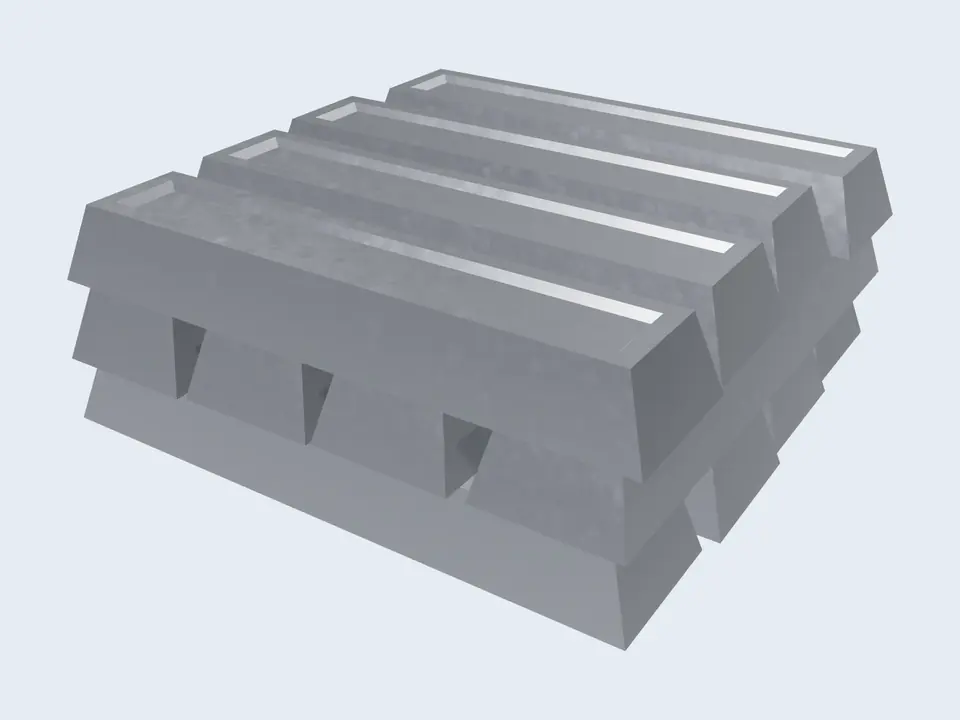
Ingots
Jubilant Impex supplies lead, zinc and tin ingots and aluminium LM4 and LM6 alloy ingots from Bangalore.
View details →Aluminium LM6 Ingots
LM6 is an aluminium casting alloy containing 10 to 13 percent silicon and almost no copper, specified in BS 1490 and matched by…
View details →
Aluminium
Jubilant Impex supplies aluminium from Indian mills, Hindalco (including the old Indal range) and Balco, from its S.P. Road…
View details →
Engineering & Machining
Machine shops buy bar stock by how it cuts and what the part must do.
View details →
How to Read a Mill Test Certificate
To read a mill test certificate, first match the heat number on the certificate to the marking on the material.
View details →
Request a Quote
To request a quote for stainless steel pipes or any metal from Jubilant Impex in Bangalore, send the material, grade, standard,…
View details →Need Aluminium LM4 Ingots with a test certificate?
Send the material, grade, size and quantity. We confirm availability and price, with the test certificate details.